


Adam Jones Tool article
Common Adam Jones Tool Mistakes to Avoid
Getting closer to the Adam Jones sound means correcting the habits that work for simpler styles but undermine the controlled, articulate heaviness his approach requires.
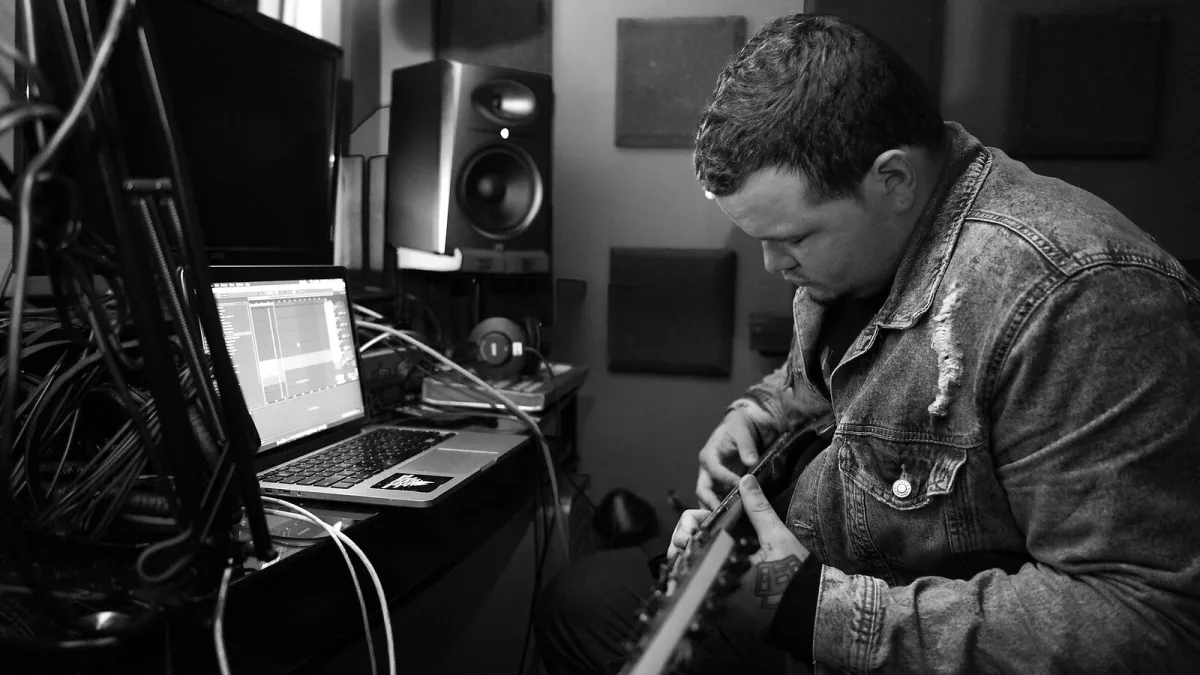
The most common mistakes when attempting the Adam Jones Tool guitar sound are all rooted in the same misunderstanding: assuming that heaviness comes from maximum gain, maximum volume, or maximum complexity. Jones's actual approach is disciplined restraint. Getting closer to his tone means correcting habits that work for simpler styles.
Mistake 1: Using Too Much Gain
This is the most frequent error. Players hear the heaviness of Tool's records and assume the guitar is saturated to its limits. It isn't. Jones's gain settings on the Mesa/Boogie Dual Rectifier are high but not maximal — he runs the red channel at roughly 2 o'clock, not fully open. Excessive gain creates a smeared, undifferentiated sound where individual strings merge into a wall of distortion. The real tone is heavy and thick but you can still hear the separate notes under it. If you're losing articulation, reduce the gain.
Mistake 2: Scooping the Mids Too Heavily
The Mesa/Boogie Dual Rectifier has a reputation for a mid-scooped character, and some players push this to extremes. A heavily mid-scooped tone sounds enormous in isolation but loses definition in context — it sounds muddy rather than heavy, and disappears in a band mix. Jones uses a mild scoop, with mids at roughly 11 o'clock, not cut entirely. Keep some midrange in the tone; it provides the definition that makes his playing audible under the weight of the distortion.
Mistake 3: Ignoring the Volume Pedal
Many players skip the volume pedal entirely, treating it as an optional extra. In this style, it is a central tool for dynamic control. Jones manages the amp's gain response and overall dynamics through the volume pedal rather than the guitar's volume knob, which allows much finer and more continuous control. Without it, the amp runs at a fixed gain level regardless of the musical context. Practise using the pedal actively during playing — not just as a kill switch.
Mistake 4: Ignoring Rhythm Precision
Tool's compositions are built on precise rhythmic patterns, often in unusual time signatures. Playing the riffs loosely — with imprecise note lengths, wavering timing, or accents in the wrong places — makes them fall apart. The heaviness of the guitar sound depends partly on the rhythmic precision: when every note lands exactly where it should, the locked-in feel adds weight that no amount of gain can replicate. Use a metronome. Play slowly. Increase tempo only when accuracy is clean.
Mistake 5: Treating the Wah as an Occasional Effect
Jones uses his wah pedal as a tonal shaping tool as much as a swept effect. He often leaves it engaged at a fixed mid-sweep position, using it to add a vocal, nasal coloration to specific passages without moving the pedal. Treating the wah as something you sweep for dramatic effect, then disengage, misses a significant part of his tonal palette. Experiment with leaving it on at different fixed positions and listen to how it changes the character of the distortion.
Mistake 6: Playing Too Hard
Jones plays with a moderate picking attack, not hammering the strings. Hard picking creates uneven volume across strings, harder attack transients that the amp's gain stage distorts differently, and physical tension in the hands. Lighter, more consistent picking at high gain produces a smoother, more controlled tone that records and sits in a mix better. Practise keeping the picking arm relaxed and the stroke even at moderate depth.
For a full setup guide, see how to set up the Adam Jones Tool rig. For gear advice, the Adam Jones Tool overview covers the full approach.




Comments