


Adam Jones Tool article
Adam Jones Tool for Beginners: A Complete Guide
Adam Jones's guitar style rewards beginners who approach it systematically. This guide explains where to start — before the expensive gear matters.
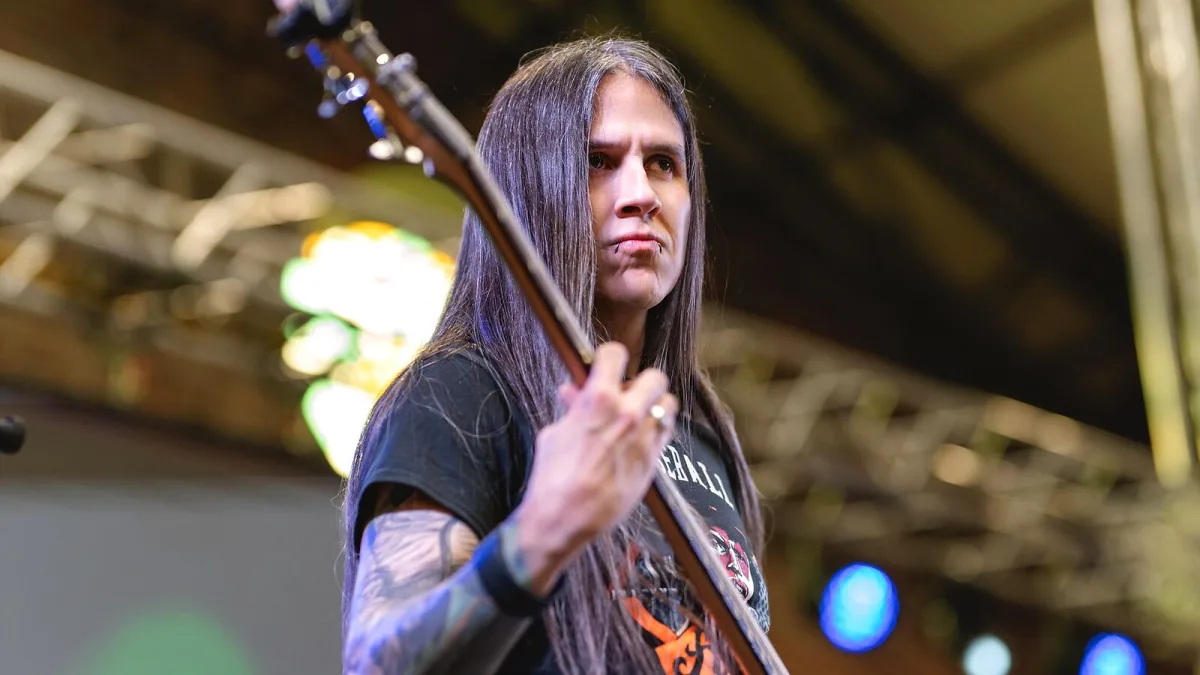
The Adam Jones Tool guitar style is a rewarding area to explore as a beginner — not because it is easy, but because its core principles are clear and systematic. Jones built his sound around a small number of well-chosen components and a very deliberate approach to playing. That makes it something a new player can begin to understand and practise even before they have access to the specific gear.
Understanding the Adam Jones Tool Approach
Jones is the guitarist for Tool, an American progressive metal band. His role in the band is specific: he creates dense, layered guitar parts that support and interact with complex rhythmic structures, rather than taking extended solos or carrying a melody. His playing is rhythmically precise, heavily distorted but controlled, and serves the composition first.
That compositional discipline is the first thing a beginner should understand. This is not guitar playing about flash or speed. It is about locking in to a rhythmic framework — often in unusual time signatures like 5/8, 7/8, or 5/4 — and executing each note cleanly despite the weight of the distortion.
What Gear Do You Actually Need to Start?
Jones uses a Gibson Les Paul Custom and a Mesa/Boogie Dual Rectifier amplifier. As a beginner, you do not need either of those to start learning his approach. What you do need is:
- A guitar with humbucking pickups: any guitar with a humbucker in the bridge position will work to start. A Les Paul-style instrument is ideal, but not essential early on.
- A high-gain amplifier or modelling unit: a solid-state amplifier with a decent gain channel, or a modelling device like a Fender Mustang or Boss Katana, will let you approximate the tone while you learn.
- A wah pedal (optional at first): useful for understanding his approach, but not required for the initial stages.
The key is getting a tone that is heavy but controlled — not a wall of undifferentiated noise, but distortion you can hear through, where individual strings are audible under the gain.
Where to Begin Technically
Start with three specific skills before worrying about tone or gear:
- Steady picking at low dynamics. Jones plays at a consistent picking depth, not hammering the strings. Practise power chords at low volume, keeping your picking attack even. This is the foundation of his articulate-under-distortion sound.
- Counting in unusual time signatures. Pick any Tool song and listen to the guitar part while tapping the beat. Start with "Schism" (5/4 and 4/4 alternating) or "Forty-Six and 2" (a relatively consistent groove). Do not try to play the part — just feel the pulse and understand where the bar lines fall.
- Single-note accuracy under gain. Set your amplifier to a high-gain tone and play individual notes on the low E and A strings. Listen for clarity. If notes blur into each other, reduce gain until they separate. This is what Jones does — his gain threshold is lower than it sounds on record.
A Practical Starting Point
Learn the main riff from "Schism" or "Forty-Six and 2" slowly, using a metronome. Both songs use power chords and single notes at moderate tempo, are in relatively accessible tunings, and illustrate his approach to rhythmic riffing. Do not try to play them at speed; play them at 60–70% speed until every note is clean and every rhythmic accent lands correctly. Speed follows accuracy.
Once you are comfortable with those, try some of the more syncopated passages in "Stinkfist" or the main riff of "Sober". These are still approachable but introduce the odd-time character that is central to his playing.
What Comes Next
As your technique develops, you can move toward the gear more seriously. A used Mesa/Boogie Dual Rectifier is the amplifier that will get you to his actual tone. Upgrading to a Gibson Les Paul (or a well-specced Epiphone equivalent) will give you the sustain and midrange weight that matters. Both are optional until your playing can take advantage of them.
For detailed gear guidance, the buyer's guide covers the full rig. For a step-by-step setup walkthrough, see the setup guide.





Comments