


Neumann Tlm 103 roundup
The Best Neumann Tlm 103s for the Money
The Neumann TLM 103 comes in a handful of configurations — here is which one to buy, what to pair it with, and where the real value decisions lie.
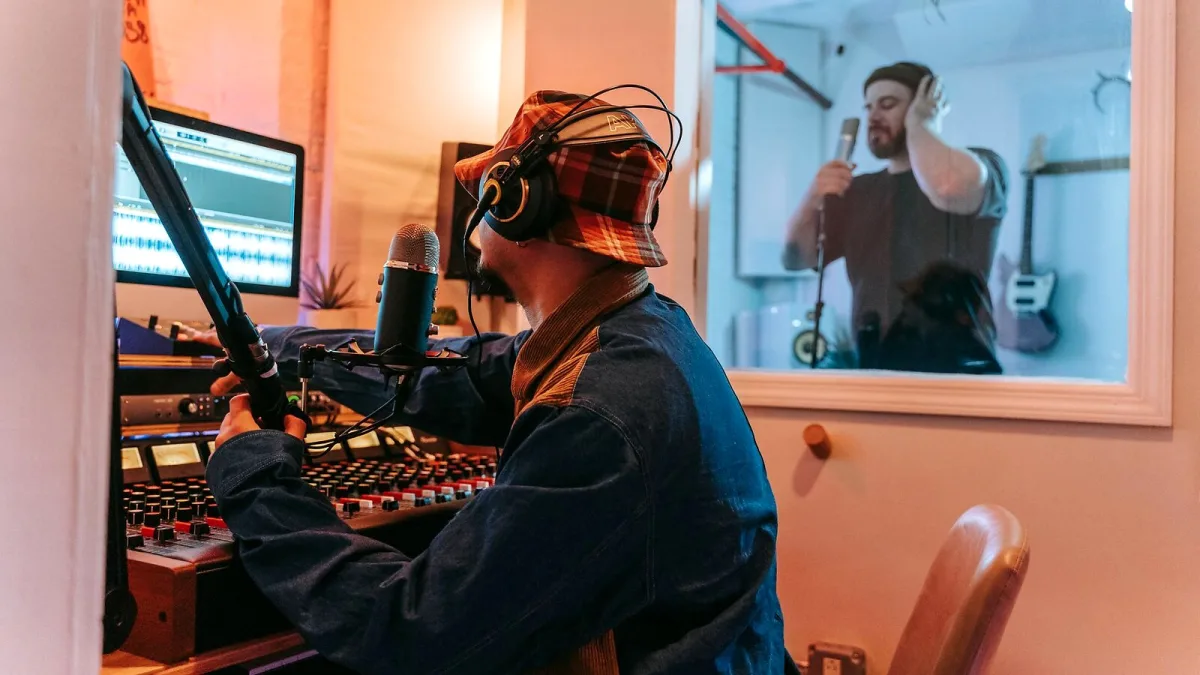
The Neumann TLM 103 comes in a handful of configurations, and around it sits an enormous range of options for how you put your signal chain together. The microphone itself is what it is — a fixed-cardioid large-diaphragm condenser with 7 dB-A self-noise and a presence-forward character. But which version you buy, and what you pair it with, changes what you actually end up with at the end of the cable. Here is how to get the most value for what you spend.
The Standard TLM 103 Studio Set: The Obvious Starting Point
For most buyers, the TLM 103 Studio Set is the right choice — full stop. It ships with the microphone, a shock mount and a carrying case, and the acoustic and electronic specifications are identical to any other standard TLM 103. The 7 dB-A self-noise, 23 mV/Pa sensitivity, fixed cardioid pattern and transformerless circuitry are all present and correct. There is no cheaper version that sacrifices performance, because Neumann does not make one.
What you are buying is fundamentally the same capsule, the same circuit and the same voicing regardless of the finish or the box it comes in. If you want the standard Studio Set, buy the standard Studio Set. It will not let you down acoustically.
The 25 Years Edition: Worth It or Collectors' Pricing?
Neumann also offers the TLM 103 – 25 Years Edition, an anniversary variant. The published acoustic specifications — self-noise, sensitivity, frequency range, maximum SPL — are the same as the standard model. This is a cosmetic and commemorative distinction, not a capsule or circuit upgrade. If the finish appeals to you and the price difference is manageable, it is a legitimate option. If you are buying purely for sound quality, the standard set is the better value proposition — the money goes on the microphone, not the anniversary badge.
Where the Real Value Decision Happens: Your Signal Chain
Here is the thing that often goes missing in a "best for the money" conversation about this microphone: the TLM 103's performance is highly dependent on what comes after it in the chain. A world-class microphone into an underpowered, noisy preamp is a waste. A modestly treated room with a decent preamp can absolutely justify the investment. Where you spend the money matters as much as whether you spend it on a given version of the TLM 103.
Three realistic scenarios:
- Home vocal studio, limited budget for the rest of the chain: The TLM 103's high sensitivity (23 mV/Pa) means it needs less preamp gain than many large-diaphragm condensers, which actually works in your favour here. A mid-tier audio interface with a clean, adequate preamp — rather than a budget unit with a noisy, low-headroom input — unlocks the microphone's low noise floor. The TLM 103 does the heavy lifting; the interface needs to not get in the way.
- Voice-over or podcasting setup: Pristine, speech-intelligible recording is where this microphone earns its reputation most directly. Combine it with a solid-state preamp (or a capable interface), a pop filter, and basic acoustic treatment — a reflection filter behind the microphone if nothing else. That combination covers a lot of ground for spoken-word content at a consistently professional level.
- Serious home recording or semi-professional studio: Here the TLM 103 shines as part of a properly treated room with a dedicated external preamp. The microphone's 7 dB-A noise floor means the preamp and converter quality become the ceiling, not the floor. Invest in room treatment first; then the microphone genuinely delivers on the spec sheet.
The TLM 103 D: The Historical Variant and Why It Is Rarely the Right Answer
Neumann produced the TLM 103 D, an AES42 digital microphone that incorporates onboard analogue-to-digital conversion and digital signal processing. Neumann now lists it as a historical product. It is worth understanding what it was: a digital microphone that outputs an AES/EBU digital stream rather than an analogue signal, requiring specialist digital microphone preamplifier infrastructure rather than a conventional microphone input.
Unless you are specifically building or extending an AES42 digital microphone system — which is a specialist architecture used in specific broadcast and recording installations — this is not the version to look for. For the vast majority of setups, the standard analogue TLM 103 is the right answer, connecting via XLR to any phantom-powered input.
Accessories That Genuinely Affect the Result
A few add-ons that shift the practical value of the TLM 103 substantially:
- Pop filter: Not optional. The TLM 103's sensitivity makes plosives and breath noise conspicuous. A decent double-mesh pop filter — placed 5–10 cm in front of the capsule — removes that problem cleanly. Cost is negligible relative to the microphone.
- Reflection filter or acoustic panels: A quiet microphone in a reflective room is a noisy recording. Budget acoustic panels or a behind-the-mic reflection filter extend the microphone's usefulness in a less-than-perfect space. This is often better value than upgrading from an adequate interface to a premium one.
- Elastic shock mount: The TLM 103 Studio Set includes Neumann's own shock mount. If you are replacing it or buying separately, use an elasticated suspension type. Desk vibrations and low-frequency rumble from air conditioning are picked up by a microphone this sensitive.
What You Are Not Getting, Regardless of Configuration
However you configure your purchase, the TLM 103 remains a fixed-cardioid, solid-state condenser. There is no switchable pattern, no tube circuit and no built-in attenuation pad. It does not give you the multi-pattern flexibility of a Neumann U 87, and it does not give you valve warmth. If those are things you need, a different microphone is the answer. The TLM 103 specialises in low noise, high sensitivity and a detailed, presence-forward character — and within that lane, it does its job extremely well.
If you are still working out whether this microphone suits your setup from scratch, the full buyer's guide covers compatibility and room requirements in more detail. And if you want to understand why the microphone sounds the way it does, the TLM 103 explainer runs through the technical fundamentals.
The Short Version
For most buyers, the standard TLM 103 Studio Set is the best value configuration of the Neumann TLM 103 range — identical acoustic performance to the anniversary edition, with accessories included. Pair it with a quiet room, a competent preamp or interface, and a pop filter, and you have one of the most effective vocal and spoken-word recording setups available. Spend your remaining budget on acoustic treatment before upgrading other components — that is where the marginal improvement is most audible.




Comments