


Neumann Tlm 103 roundup
Neumann Tlm 103: A Complete Buyer's Guide
The Neumann TLM 103 is exceptional for vocals in a treated room — but its forward presence and high sensitivity mean the room and signal chain matter just as much as the microphone itself.
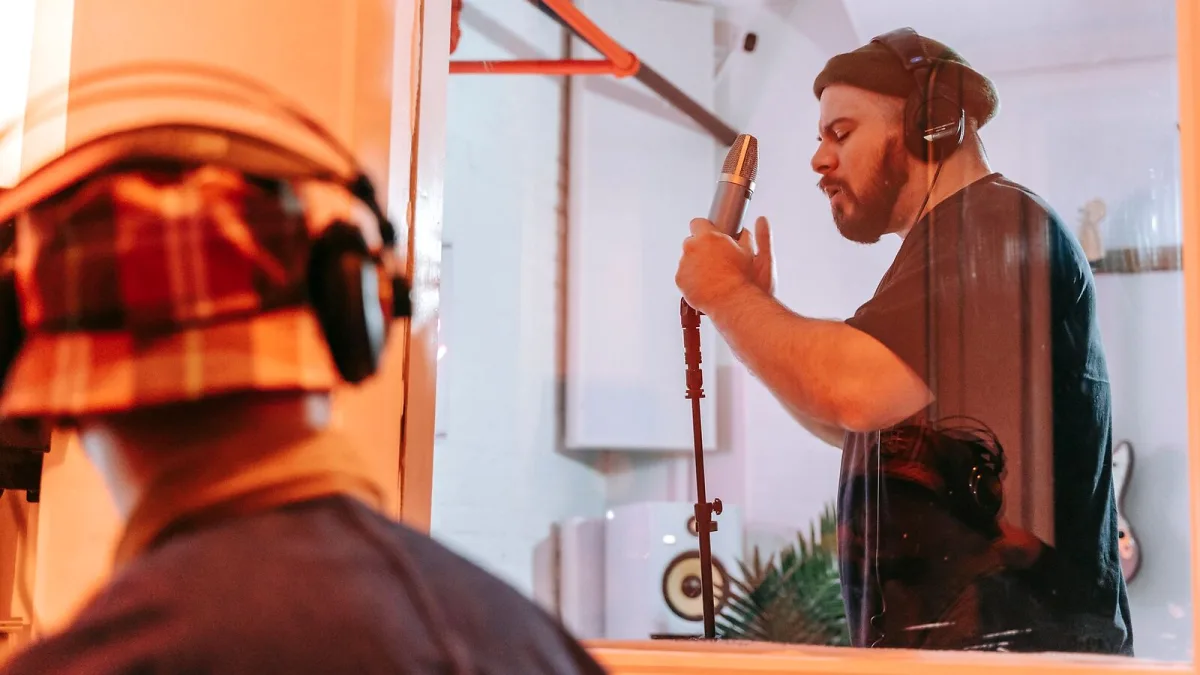
Deciding whether to buy a Neumann TLM 103 is not simply a question of budget. It is a question of what you are actually recording, how your room sounds, and whether this microphone's particular character is going to work with those sources. Get those answers right and the investment makes sense; get them wrong and you have a very expensive problem. Here is what to think about before you buy.
What You Are Actually Getting for Your Money
The Neumann TLM 103 is a large-diaphragm condenser with a fixed cardioid pattern and transformerless circuitry. Its headline specification is a 7 dB-A self-noise level — one of the lowest on the market for a microphone in this category. It runs on standard 48-volt phantom power and delivers a balanced analogue output. Sensitivity is 23 mV/Pa, which is on the high side, meaning it produces a strong signal even before you add preamp gain.
When you buy the TLM 103 Studio Set you typically receive the microphone itself, a shock mount and a case. The shock mount is worth having from day one — it mechanically isolates the capsule from low-frequency vibration transmitted through a mic stand or desk, and this microphone is sensitive enough to pick up the hum of a bus driving past your building if you skip it.
The Sound Character: Know It Before You Buy
The most important thing to understand about it is its presence lift — a rise in the upper midrange and treble response, broadly across the 6–15 kHz region. This is not a neutral, flat-response microphone. It is voiced to project vocals and speech forward, giving a clean, detailed, forward sound that works very well in dense mixes. Mixdown magazine has described this as helping vocals "easily cut through mixes."
Whether that is a feature or a problem depends entirely on your sources:
- Clear, warm voices with natural body — the presence lift adds sparkle and air without sounding harsh.
- Bright or sibilant voices — the lift can push "s" and "sh" sounds into difficult territory. A de-esser or off-axis placement can help, but if your vocalist already has a very bright, thin tone, this may not be the right match.
- Voice-over, narration, podcasting — excellent. The intelligibility and detail work brilliantly for diction-heavy content.
- Acoustic guitar and quieter instruments — the detail retrieval is impressive, though in a bright room the high-frequency emphasis can start to feel scratchy.
- Electric guitar cabinet — generally not the first choice. A dynamic or ribbon usually suits a hot, aggressive amp better.
Room Requirements: The Part Nobody Talks About Enough
That 7 dB-A self-noise is genuinely outstanding. But this creates a trap for buyers who skip the room question: a quiet microphone does not fix a noisy room. The lower the microphone's noise floor, the more you will hear the room. Computer fan hum, air conditioning, distant traffic, thin-walled rooms with reflective parallel surfaces — all of it becomes more apparent when your microphone is this sensitive.
Before you spend money on this microphone, be honest about your recording environment. The TLM 103 will genuinely reward a treated, quiet room with pristine results. In an untreated bedroom, a cheaper microphone with some acoustic panels might serve you better than an expensive microphone that exposes every problem.
Preamp Compatibility and Headroom
Because of its high sensitivity of 23 mV/Pa, it delivers a strong output signal. That is usually a good thing — it means you need less preamp gain, which keeps the noise floor low from the preamp stage too. But it does mean some preamps and audio interfaces can overload their input stage before you add much gain at all, particularly at lower gain settings where headroom can be tighter.
Before buying, check whether your current preamp or interface handles high-output microphones comfortably. A preamp with a pad switch (a selectable attenuation of typically 10–20 dB on the input) is useful to have in reserve. You do not need an exotic preamp — many straightforward solid-state preamps pair well with the TLM 103 — but you do need one with adequate headroom.
Which Version to Buy
Neumann currently offers the standard TLM 103 Studio Set and a 25 Years Edition. The core acoustic and electronic specifications are the same between them — same capsule, same transformerless circuit, same 7 dB-A self-noise and 138 dB maximum SPL. The edition variant is a cosmetic and anniversary distinction, not a performance upgrade. Buy whichever version suits your budget and preference in finish.
The TLM 103 D — a historical AES42 digital variant with onboard conversion — is no longer a current product and requires specialist digital microphone infrastructure. Unless you specifically need an AES42 digital microphone and have compatible hardware, it is not the right starting point. For a deeper look at how the TLM 103 stacks up across use cases and price tiers, see the value guide and the full TLM 103 explainer.
What the Neumann TLM 103 Is Not
A few purchasing myths are worth dismantling. The Neumann TLM 103 is not a multi-pattern microphone — its cardioid pattern is fixed with no omni or figure-of-eight option. If you need pattern switching for mid-side recording, stereo techniques or ambience capture, you will need a different microphone. It is also not a tube microphone. Its solid-state, transformerless circuit has a clean, modern character; it does not have the second-harmonic warmth that valve microphones are associated with.
It is also not a direct substitute for the Neumann U 87. The U 87 has three switchable patterns, a different acoustic voicing and a different transformer-based output stage. They are both Neumann large-diaphragm condensers, but they are not interchangeable tools. The TLM 103 is the lower self-noise, high-output choice; the U 87 is the more flexible, classic-voiced choice.
Practical Checklist Before Buying
| Question | What you need for the TLM 103 to make sense |
|---|---|
| Is your room treated? | Ideally yes — absorption behind and around the vocalist, minimal reflections |
| Is your preamp/interface adequate? | Solid-state unit with sufficient headroom for a high-sensitivity mic |
| Do you use a pop filter? | Essential — plosives and breath noise are conspicuous at this sensitivity |
| Is your primary source vocal/speech? | Yes — this is where it excels; other sources may need a different tool |
| Does your voice/source suit a bright, present character? | Test it if possible, or be ready to manage sibilance with placement or processing |
The Bottom Line
The Neumann TLM 103 earns its reputation, but it is not the right microphone for every situation. It is exceptional for vocals and speech in a properly treated room with a competent preamp. It has a voice — a forward, present, detailed one — and that voice needs to suit your source. Do your homework on room and signal chain before you buy, and if you can, test it against your own voice. The beginner's guide covers setup and first steps if you are new to large-diaphragm condensers.





Comments