


Scales and Modes article
The Ultimate Guide to Scales and Modes
Scales and modes are the bedrock of music theory — once you see how they connect, the whole harmonic system clicks into place.
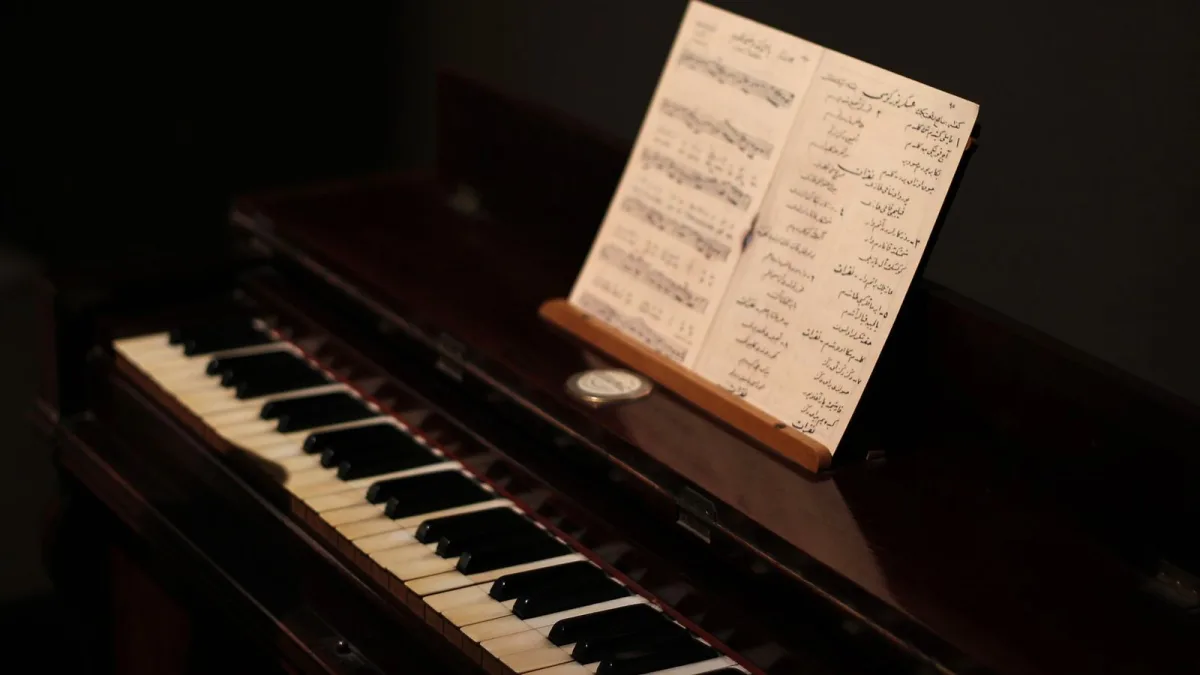
Scales and modes are two of the most foundational ideas in music theory — and yet they confuse learners more than almost anything else. Once you understand what they actually are (and how they connect to one another), a great deal of music begins to make sense in a new way. This guide takes you through both concepts from the ground up.
What Is a Scale?
A scale is an ordered set of notes — usually seven — arranged by pitch, ascending or descending within an octave. The intervals (the distances between notes) give each scale its distinctive character. The major scale, for instance, has a bright and settled quality; the natural minor scale sounds darker and more contemplative.
These are not just abstract theory. Every melody you have ever sung or played draws on one. When composers choose a key, they are choosing a tonal home for their piece — a set of notes that will feel "at rest" together, and from which departure creates tension.
The most common scales in Western music are:
- Major scale — the bright, familiar "do re mi" pattern (intervals: W W H W W W H, where W = whole step, H = half step).
- Natural minor scale — a darker, more introspective sound, with a flattened third, sixth and seventh compared to the major.
- Harmonic minor — like the natural minor, but with a raised seventh that creates a distinctive, almost classical pull toward the tonic.
- Melodic minor — raises both the sixth and seventh on the way up, then reverts to natural minor descending — a scale that moves graciously in both directions.
- Pentatonic scale — a five-note pattern (two notes removed from the major or minor) widely used in folk, blues and rock for its forgiving, "nothing sounds wrong" quality.
- Blues scale — the pentatonic minor with an added blue note (flattened fifth) that gives it its characteristic gritty expressiveness.
What Are Modes?
Here is where many learners feel the ground shift beneath them. Modes are not separate constructs invented from scratch — they are the seven possible starting points within the major scale. Think of the C major scale (C D E F G A B). If you start on D instead of C and play all the same notes, you get the Dorian mode. Start on E, and you get Phrygian. Each starting point produces a subtly different arrangement of intervals, giving each mode its own flavour.
This is the key insight: scales and modes share the same building blocks. What changes is the tonal centre — the note around which everything else orbits.
The Seven Diatonic Modes
The seven modes derived from the major scale are known as the diatonic modes. Each one takes its name from an ancient Greek region (though the correspondence to ancient Greek theory is largely nominal — these names were reassigned in medieval Europe).
Major-Type Modes
- Ionian (Mode I) — this is simply the major scale itself: bright, resolved and optimistic.
- Lydian (Mode IV) — like the major scale but with a raised fourth, giving it a dreamy, floating quality. Commonly used in film scores for magical or otherworldly moments.
- Mixolydian (Mode V) — a major scale with a flattened seventh. It has a bluesy, rock-and-roll edge, and is the mode behind much of blues, folk and classic rock.
Minor-Type Modes
- Dorian (Mode II) — a minor mode with a raised sixth, which lightens its mood slightly. It is one of the most widely used modes in jazz, folk and Celtic music.
- Phrygian (Mode III) — a darker minor mode with a flattened second that gives it a Spanish or flamenco flavour. Common in metal and world music.
- Aeolian (Mode VI) — the natural minor scale, the most familiar minor mode of all.
- Locrian (Mode VII) — the odd one out: a diminished mode with a flattened second and fifth. It is theoretically interesting but rarely used melodically because it lacks a stable tonic chord.
How Scales and Modes Are Used in Practice
Understanding these concepts becomes genuinely useful once you start applying them to real music. A guitarist soloing over a D minor chord progression might choose D Dorian rather than D Aeolian because the raised sixth adds brightness without losing the minor feel. A pianist improvising over a G7 chord naturally reaches for G Mixolydian. A composer writing a tense cinematic cue might use Phrygian to introduce unease.
Modes are particularly central to jazz improvisation, where the concept of modal jazz — popularised by Miles Davis's landmark 1959 album Kind of Blue — shifted the focus from rapid chord changes to extended passages in a single tonality. The slower harmonic rhythm gave soloists more freedom to explore the character of each tonal colour.
In classical music, this harmonic vocabulary underpins every tonal composition from the Baroque period onward. Understanding the relationship between the two also makes it easier to read musical keys, key signatures and harmonic progressions.
Where to Start Learning Scales and Modes
If you are new to all of this, there is a clear order of attack. Start with the major scale in one key — C major is the natural starting point because it uses no sharps or flats. Once that pattern (whole-whole-half-whole-whole-whole-half) is in your fingers and ears, add the natural minor, then the pentatonic. Those three tonal foundations alone will take you a very long way.
When you are ready for modes, begin with Dorian and Mixolydian — they are the two most used in popular music. Learn them from the same root note rather than as "starting on a different degree," which can be confusing at first. Hear what makes each one feel different: that is the ear training that makes theory useful rather than academic.
It is worth exploring common mistakes musicians make with this subject to make sure you are building solid habits from the start.
The Bottom Line
Scales and modes are not separate mountains to climb — they are the same landscape viewed from different vantage points. Once you understand that modes grow directly from scales, and that both are simply ways of organising the intervals between notes, the whole system clicks into place. Start with the major scale, build slowly, and listen carefully to what each arrangement of notes does to the mood of the music. That listening is the heart of it all.




Comments