


Musical Notes article
The Ultimate Guide to Musical Notes
Musical notes represent pitch and duration. This guide explains note names, the staff and clefs, how note values work, and how sharps, flats and rests fit into the system.
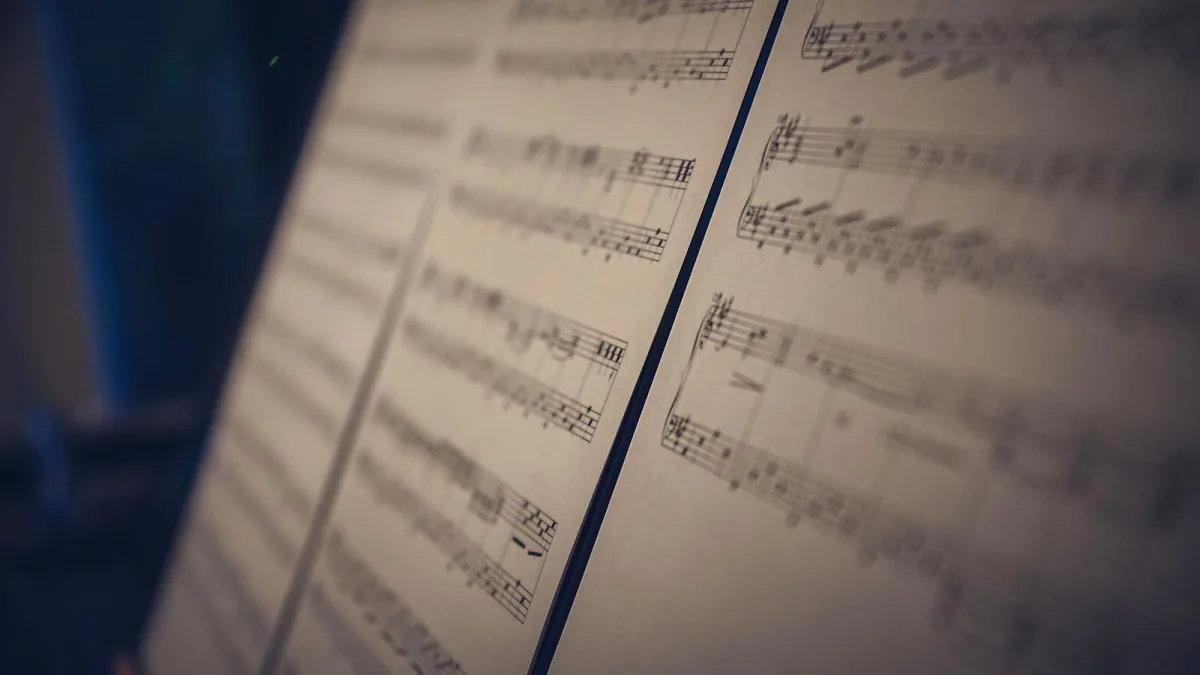
Musical notes are the building blocks of written music — symbols that represent specific pitches and durations, allowing composers to record music and musicians to read and perform it. Understanding how musical notes work is the first step in reading and writing music, and the system is more logical than it first appears.
The Note Names
In Western music, there are seven natural note names: A, B, C, D, E, F, and G. These repeat in higher and lower octaves — when you play a C higher up on the keyboard, it has the same letter name but sounds an octave above. The system cycles through these seven names continuously, so after G comes A again, one octave higher. Most learners start with middle C, which sits at the centre of the piano keyboard and is one of the most important reference points in music.
The Staff
Musical notes are written on a staff — five horizontal lines on which notes are placed either on a line or in a space between lines. The position of a note on the staff tells you its pitch: the higher the note on the staff, the higher the pitch. Two clefs are used most commonly. The treble clef is used for higher pitches — it is the clef you see in most piano music for the right hand, as well as for instruments like the violin and flute. The bass clef is used for lower pitches, covering the left hand of piano music and instruments like the cello and double bass.
Note Durations
As well as pitch, each note indicates how long to hold each sound. The four most common note values are: the whole note (four beats), the half note (two beats), the quarter note (one beat), and the eighth note (half a beat). These values are relative — they describe proportions rather than fixed times, which is why the tempo marking at the start of a piece matters. A quarter note is four times shorter than a whole note, and a half note sits in between. Dots and ties can extend note values further.
Sharps, Flats, and Naturals
Between many of the natural notes are additional semitones, indicated by accidentals. A sharp raises a note by one semitone; a flat lowers it by one. On a piano keyboard, the black keys correspond to these in-between notes. A natural sign cancels a previous sharp or flat, returning the note to its standard pitch. Key signatures at the start of each line of music tell the performer which notes are routinely sharpened or flattened throughout the piece, so the accidentals do not have to be written individually each time they appear.
Rests
Silences in music are also written out explicitly using rest symbols. Each note value has a corresponding rest: a whole rest, a half rest, a quarter rest, and so on. Rests are as important as the notes themselves — they shape the rhythm, add breathing space, and define the character of a phrase. A melody that ignores rests sounds rushed or structurally muddled, even if the notes are played correctly.
How Notes Are Learned in Practice
Most beginners learn to read musical notes by memorising landmark positions on the staff and filling in the notes between them. Common mnemonics help: "Every Good Boy Deserves Football" for the lines of the treble clef (E, G, B, D, F), and "FACE" for the spaces. Associating note names with positions on a keyboard reinforces the link between the written symbol and the actual sound. Regular sight-reading practice — even of simple melodies — builds the ability to convert written notes into music quickly and automatically.
Where to Go Next
Understanding musical notes is only the beginning: the common musical notes mistakes guide covers the errors beginners make most often and how to correct them.



Comments