


Music Notation article
The Ultimate Guide to Music Notation
Music notation is the written language of music — a logical system anyone can learn. This guide takes you from the basics of the stave to articulation, dynamics and beyond.
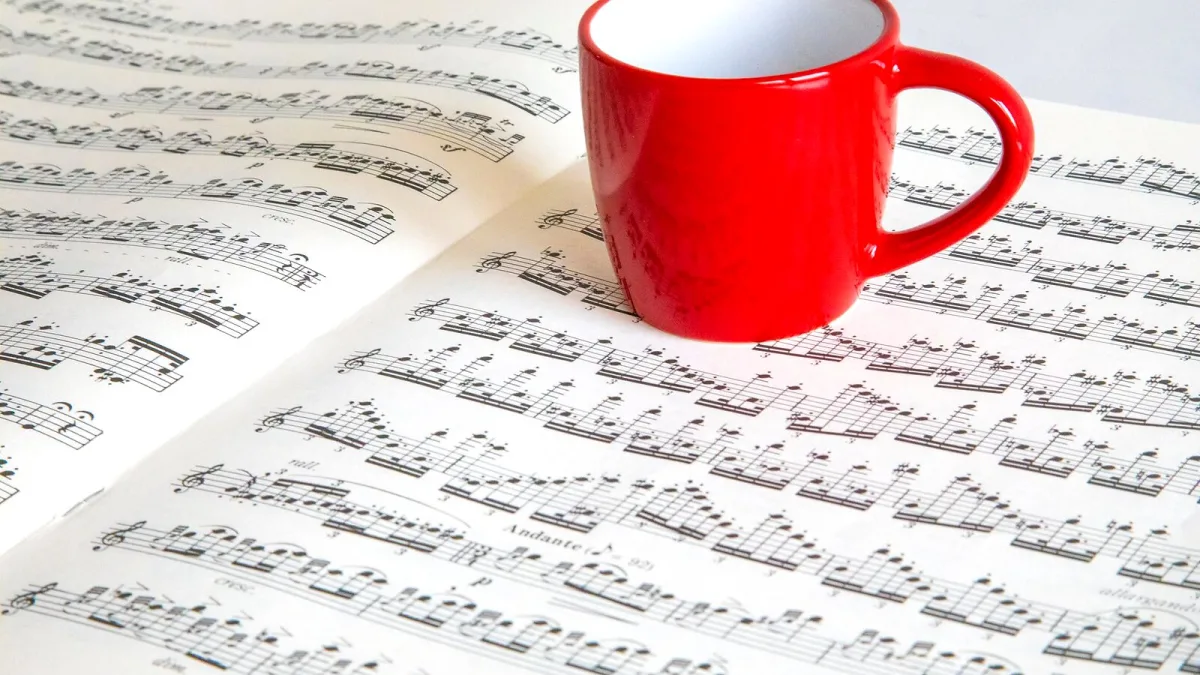
Music notation is the written language of sound — a system that allows composers, arrangers and performers to communicate musical ideas across time and space. Once you understand the logic behind it, reading and writing music opens up an entirely new relationship with the pieces you play and the music you hear. This guide takes you through everything you need to know, from the basics of the stave to articulation, dynamics and beyond.
The Stave and Clefs
The stave (also called a staff) is five horizontal parallel lines on which notes are placed. The position of a note on the stave tells you its pitch: higher on the stave means a higher pitch, lower means lower.
At the beginning of every stave sits a clef — a symbol that defines what pitch each line and space represents:
- Treble clef (G clef) — wraps around the second line, which represents G above middle C. Used for higher-pitched instruments and voices: violin, flute, oboe, soprano, alto, and the right hand of the piano.
- Bass clef (F clef) — has two dots flanking the fourth line, which represents F below middle C. Used for lower-pitched instruments and voices: cello, double bass, trombone, tuba, bass guitar, bass voice, and the left hand of the piano.
- Alto and tenor clefs (C clefs) — less common but important for viola (alto clef, middle line = middle C) and upper-range cello and trombone parts (tenor clef).
A helpful mnemonic for reading treble clef: the lines from bottom to top spell Every Good Boy Deserves Favour (E, G, B, D, F) and the spaces spell FACE. For bass clef, the lines are Good Boys Deserve Favour Always (G, B, D, F, A) and the spaces are All Cows Eat Grass.
Note Values and Duration in Music Notation
Every note symbol tells you both its pitch (from its position on the stave) and its duration (from its shape). The standard note values in British terminology are:
- Semibreve (whole note) — an open oval, four beats in common time.
- Minim (half note) — an open oval with a stem, two beats.
- Crotchet (quarter note) — a filled oval with a stem, one beat.
- Quaver (eighth note) — a filled oval with a stem and one flag, half a beat.
- Semiquaver (sixteenth note) — a filled oval with a stem and two flags, a quarter beat.
Each note value is exactly half the duration of the one above it. A dot placed after a note increases its value by half again — so a dotted crotchet is worth one and a half beats (one beat + half a beat). A double dot adds three-quarters of the original value.
Every note value has a corresponding rest — a symbol representing silence of the same duration. Rests are just as important as notes: silence is part of the music.
Time Signatures
The time signature appears at the start of a piece (and again whenever it changes) as two numbers stacked vertically:
- The top number tells you how many beats are in each bar.
- The bottom number tells you what kind of note counts as one beat (4 = crotchet, 8 = quaver, 2 = minim).
So 4/4 means four crotchet beats per bar — the most common time signature in popular and classical music, often called common time. 3/4 gives a waltz feel — three crotchet beats per bar. 6/8 is a compound time signature with six quaver beats grouped into two sets of three, giving a characteristic lilting rhythm heard in jigs and pastoral music.
Key Signatures and Accidentals
A key signature appears between the clef and the time signature at the start of each line. It consists of sharps or flats placed on specific lines and spaces, indicating which notes are raised or lowered throughout the piece.
For example, a key signature with one sharp (F#) indicates G major or E minor. A key signature with three flats (Bb, Eb, Ab) indicates Eb major or C minor.
Accidentals are symbols placed immediately to the left of individual notes to modify their pitch:
- Sharp (#) — raises the pitch by a semitone.
- Flat (b) — lowers the pitch by a semitone.
- Natural — a square symbol that cancels a preceding sharp or flat, returning the note to its unmodified pitch.
An accidental applies to all notes on the same pitch within the same bar, but is cancelled by the next bar line — unless the key signature specifies it.
Articulation and Expression
A score conveys far more than pitch and rhythm. Composers indicate how notes should be played through a rich set of markings:
Articulation
- Staccato — a dot above or below the note head; play it short and detached.
- Tenuto — a short horizontal line; hold the note for its full value, slightly emphasised.
- Accent (>) — play the note with a stress.
- Legato / slur — a curved line connecting a series of notes; play them smoothly and connected. (Distinguish this from a tie, which joins two notes of the same pitch and adds their durations together.)
Dynamics
Dynamics indicate how loud or soft to play. From softest to loudest: pp (pianissimo — very soft), p (piano — soft), mp (mezzo-piano — moderately soft), mf (mezzo-forte — moderately loud), f (forte — loud), ff (fortissimo — very loud). Gradual changes are indicated by crescendo (< — get louder) and decrescendo or diminuendo (> — get softer) markings, sometimes called hairpins.
Tempo Markings
Tempo — how fast or slow the music moves — is traditionally indicated in Italian above the stave. Common markings include:
- Grave — very slow and solemn
- Largo — broad and slow
- Andante — at a walking pace
- Moderato — at a moderate speed
- Allegro — fast and lively
- Presto — very fast
Modern scores often supplement these with a metronome marking (e.g. crotchet = 120), which precisely indicates the number of crotchet beats per minute.
Repeat Signs and Navigation
Rather than writing out repeated sections in full, standard notation uses repeat signs: a double bar line with two dots facing the section to be repeated. Navigate longer pieces with:
- Da capo (D.C.) — go back to the very beginning.
- Dal segno (D.S.) — go back to the segno sign (marked S with a cross through it).
- Al fine — play to the word Fine (the end).
- First and second time bars — play the first-time bar on the first pass, skip it and play the second-time bar on the repeat.
Further Resources
For those who are just getting started or finding the process a bit daunting, the companion piece on common music notation mistakes to avoid is well worth reading alongside this guide — it addresses the errors that trip up most learners early on and shows you how to correct them with confidence.
The Bottom Line
Music notation is, at heart, a beautifully logical system built on consistent rules. Once you understand that every symbol in music notation has a specific meaning — pitch, duration, expression, navigation — reading a score becomes far less daunting. Take it section by section: start with note values and the stave, add time and key signatures when those feel settled, then layer in articulation and dynamics. There is no rush, and every piece you read makes the next one easier.



Comments