


Ear Training article
The Ultimate Guide to Ear Training
Ear training turns what you hear into something you can use — here's a complete, practical guide to developing your musical hearing from the ground up.
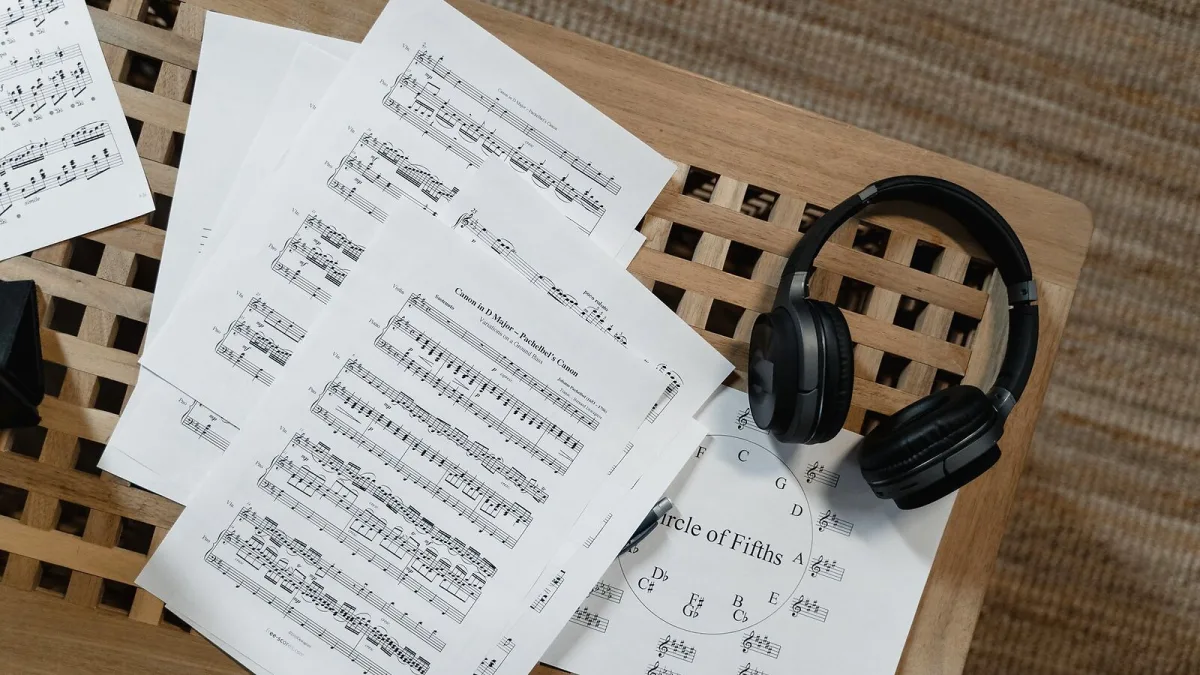
Ear training is the practice of learning to recognise musical elements by sound alone — intervals, chords, rhythms, scales and melodies — without relying on notation, tablature or visual reference. It is one of the most consistently valuable skills a musician can develop, yet it is often neglected in favour of technical instrumental practice. This guide covers the key components, how to work on them and what to realistically expect from a structured practice approach.
Why Aural Awareness Matters
A musician who can hear what they're playing — and what others are playing — works more fluently than one who relies entirely on learned fingerings and written notation. Practical benefits include:
- Transcription — the ability to work out music by ear rather than always needing sheet music or tablature.
- Improvisation — confident improvisation requires being able to anticipate where harmonies are moving and hear how melodic ideas relate to the underlying chord structure.
- Sight-singing and dictation — essential skills in classical and choral contexts, as well as useful for any musician who needs to communicate ideas quickly.
- Tuning — the ability to hear whether you're in tune rather than relying entirely on a tuner.
- Learning by ear — playing in sessions, working out parts for rehearsal, and communicating musical ideas verbally all become faster and more accurate.
The Core Components of Aural Skills
Interval Recognition
An interval is the distance in pitch between two notes. Recognising intervals by ear is foundational to aural development. Intervals are described by quality (major, minor, perfect, augmented, diminished) and number (second, third, fourth and so on). A major third sounds different from a minor third; a perfect fifth sounds different from an augmented fifth.
A widely used approach for beginners is associating each interval with a familiar song. A minor second is the opening of the Jaws theme; a perfect fifth is the opening of the original Star Wars theme; a major sixth is the opening of My Bonnie Lies Over the Ocean. These associations give the ear something to attach to before the interval is recognisable on its own terms.
Regular short practice — listening to and identifying a handful of intervals daily — builds recognition faster than occasional extended sessions.
Chord Recognition
Chord recognition involves identifying chord quality and type by ear: major, minor, diminished, augmented, dominant seventh, major seventh and so on. This extends to recognising chord voicings (the distribution of notes across registers) and chord inversions (which note is in the bass).
Begin with the basic four qualities: major and minor triads (the most common), diminished and augmented. Once these are reliable, add seventh chords. The quality of a chord is closely tied to its emotional character — minor chords are broadly darker than major, diminished has a tense, unstable quality, dominant seventh has a strong tendency to resolve. Working with this emotional vocabulary alongside technical recognition helps anchor the learning.
Scale and Mode Recognition
Recognising scale types by ear — major, natural minor, harmonic minor, melodic minor, and the modes (Dorian, Phrygian, Lydian, Mixolydian and so on) — builds a vocabulary for identifying the tonal character of melodies and improvised lines. Each scale has a distinctive pattern of intervals that, once familiar, becomes audible.
Major and natural minor are the most common in Western music and should be secure before exploring modes. Harmonic minor has a distinctive raised seventh that creates a characteristic tension; Dorian minor has a raised sixth that gives it a slightly brighter character than natural minor. These differences are subtle but perceptible with practice.
Rhythm Recognition and Dictation
Rhythmic aural work develops the ability to identify and notate rhythmic patterns accurately. This includes time signatures, note values (quaver, crotchet, minim, etc.), syncopation, triplets and more complex rhythmic figures. Clapping, tapping or vocalising rhythms directly is an essential practical element — passive listening to complex rhythms is less effective than physically reproducing them.
Melodic Dictation
Melodic dictation involves listening to a melody and writing it down in notation. This integrates interval recognition, rhythmic identification and basic harmonic awareness. It is a standard exercise in formal music education and develops the skill of holding and analysing melodic information in real time.
Practical Approaches to Aural Practice
Ear training develops best through daily practice of short duration rather than infrequent extended sessions. Ten to fifteen focused minutes each day produces better results than an hour once a week. Key approaches include:
- Singing intervals and scales: vocalising what you're learning reinforces the connection between hearing and music-making. Solfège — the system of syllables (do, re, mi, fa, sol, la, ti) attached to scale degrees — is widely used in formal training precisely because it gives the ear-voice connection a consistent vocabulary.
- Transcription exercises: working out known melodies by ear on your instrument, then unknown ones, progressively develops the skill of translating heard music into playable notes.
- Active listening: when listening to music, consciously identify elements — the chord quality, the scale the melody uses, the time signature, the intervallic leap in a melodic phrase. Passive listening does not build the analytical hearing that active listening develops.
- Dedicated aural apps and software: dedicated interval, chord and scale recognition software provides immediate feedback, which is particularly useful for self-directed learners. Many allow difficulty levels to be adjusted as recognition improves.
Relative Pitch vs Absolute Pitch
Relative pitch — the ability to identify intervals and harmonic relationships based on context — is trainable by any musician at any stage of development. Absolute pitch (also called perfect pitch) — the ability to identify a pitch without any reference point — is far less common and is generally considered to develop primarily in early childhood. Ear training programmes focus on developing relative pitch, which is sufficient for the vast majority of musical applications.
How Long Does It Take?
Reliable interval recognition typically develops within a few weeks to a couple of months of regular practice. Chord quality recognition follows at a similar pace if practice is consistent. Mastery of more complex harmonic and rhythmic dictation takes longer — often a year or more of serious study — but each stage of improvement is immediately useful in practical musical contexts.
Consistency matters far more than effort per session. A musician who practices ear training for ten minutes every morning for six months will develop far more reliable aural skills than one who attempts occasional intensive sessions.
Getting Started
The most important thing is to start with something manageable: a small set of intervals, the major and minor triad, one rhythm exercise. Build from there incrementally rather than attempting everything at once. For a structured approach to avoiding the most common pitfalls in ear training practice, see the common ear training mistakes to avoid.
Bottom Line
Ear training is one of the highest-return investments a musician can make. The skills it builds — hearing intervals, recognising chords, transcribing melodies, following harmonic movement — transfer directly to every musical activity, whether performing, composing, improvising or learning new music. Consistent, focused daily practice is the method. Start simple, stay consistent, and the results will follow.





Comments