


Pocket Operator article
A Guide to Pocket Operator
Teenage Engineering's Pocket Operator range packs synthesis, sampling and step sequencing into a device the size of a credit card. Here's what each model does and how the whole family works.
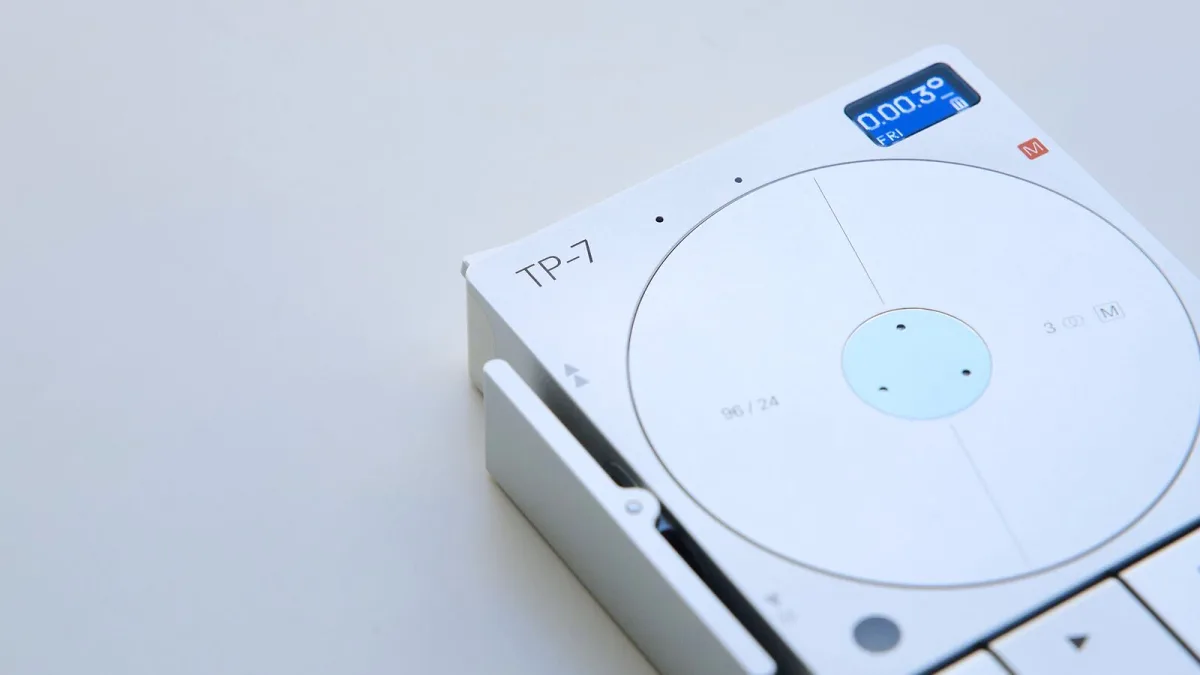
There’s something immediately appealing about a device the size of a credit card that can sequence drums, play bass lines and sample your voice — all from two AAA batteries. The Pocket Operator range from Teenage Engineering is exactly that: a family of compact, battery-powered music instruments designed for hands-on creativity in a very small space.
What Is a Pocket Operator?
A Pocket Operator is a miniature sequencer, synthesizer or sampler built on an exposed circuit board with a small LCD display, tactile buttons, two parameter knobs and a wire stand. Teenage Engineering describes the design philosophy as “small device, big sound.” The lack of a conventional enclosure keeps costs down and the form factor remarkably compact — the whole unit fits in a pocket, or on a lanyard round your neck.
Despite the compact size, each unit packs in 16-step pattern sequencing, parameter locks, effects, a built-in speaker and a 3.5 mm audio and sync connection. Two AAA batteries power the device for approximately one month of normal use.
The Range: Different Instruments for Different Sounds
The family is not a single product; it’s a collection of specialized instruments, each with its own sound engine and workflow. They divide broadly into four categories:
Drum Machines
- PO-12 Rhythm: The classic drum machine model, great for rhythmic programming.
- PO-24 Office: Uses unconventional noise-based sounds built from office environments.
- PO-32 tonic: A drum synthesizer that works with Sonic Charge’s MicroTonic software, allowing you to edit and transfer synthesized drum sounds from a computer.
Synthesizers
- PO-14 Sub: A bass synthesizer for thick low-end lines.
- PO-16 Factory: A melodic synthesizer with up to 64 patterns of up to 64 steps each, across four tracks.
- PO-20 Arcade: A game-inspired synthesizer with chiptune and 8-bit textures.
- PO-28 Robot: A live synthesizer with a distinctive robotic sound character.
Samplers and Vocal Instruments
- PO-33 K.O!: A micro-sampler with a built-in microphone, 40 seconds of sample memory, eight melodic and eight drum sample slots, and 16 effects. This is the most flexible model for importing your own sounds.
- PO-35 Speak: A vocal synthesizer and sampler optimized for speech-based sounds.
Special Editions
- PO-137 Rick & Morty: A themed PO-35 variant with Adult Swim sounds and graphics.
- Capcom series: Special editions using the PO-33 K.O! and PO-28 Robot as their base, with Street Fighter sounds.
- Metal series: Themed special editions based on existing Pocket Operator architectures.
How the Sequencer Works
Every Pocket Operator uses a pattern-based step sequencer. You program a pattern by pressing the numbered buttons to enter notes or hits, and then the unit loops that pattern continuously. The key feature is parameter locks: by recording different knob positions at individual steps, you can make each step of a pattern have a different pitch, decay, filter or other parameter value. It’s how you get movement and variation from such a small number of physical controls.
Patterns can be chained for live performance, and multiple units can be synchronized via their 3.5 mm connections — one acts as the clock source, others follow. Effects can be applied on-the-fly during playback for improvisation and performance control.
The Exposed Design: Practical Points
The bare circuit board is distinctive, but it means the unit needs some care. It’s not waterproof or protected against hard impacts. A simple case or sleeve is worth having if you carry it around regularly. The wire stand folds out from the back and keeps the unit at a comfortable angle on a flat surface.
Audio output is via the 3.5 mm socket; the built-in speaker is useful for previewing but not a replacement for proper monitoring. The PO-33’s built-in microphone is surprisingly usable for quick sampling, though the 40 seconds of total memory is shared across all sample slots, so you’ll need to think about how you allocate it.
Who Are They For?
This range suits musicians who want a tactile, immediate instrument for sketching ideas, building loops or performing live, without carrying heavy gear. They’re particularly useful for electronic producers who want something compact for travel, teachers looking for an accessible entry point into hardware sequencing, and curious instrumentalists who want to explore synthesis and sampling hands-on rather than through a screen.
They have real limits — small display, model-specific workflows, limited memory on sampler models — but those same constraints tend to produce focused, decisive results quickly.
Getting Started
The official guides from Teenage Engineering are clear and well-organised. Since each model has its own button combinations and workflow, the best approach is to download the specific guide for your model and spend a session working through the basics: entering a pattern, editing steps, using parameter locks and experimenting with effects. Once the core workflow clicks, the rest follows naturally.
For guidance on which model to choose, visit our Pocket Operator buyer’s guide. If you’re completely new to the concept, the beginner’s guide walks you through your first session step by step. And for a handy checklist of what to watch out for, our common mistakes guide is worth a read before you start.




Comments