


Modular Synth Modules article
The Ultimate Guide to Modular Synth Modules
A wall of patch cables looks like chaos until you can name the pieces. Here's the full map of modular synth modules and how they talk to each other.
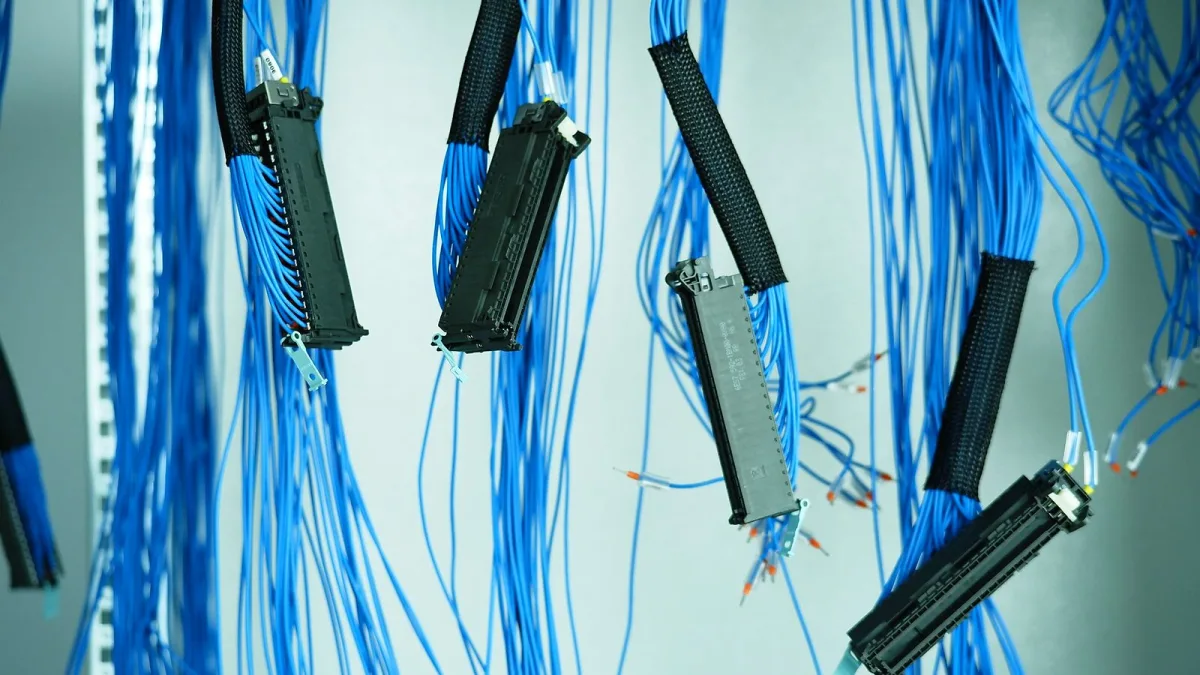
The first time you see a wall of patch cables, it looks like chaos. It isn't. Every modular synth is really just a collection of modular synth modules wired together in whatever order you choose, and once you can name the pieces, the whole picture clicks into place. Here's the full map.
What Makes a Module "Modular"
A normal synthesizer has a fixed signal path baked in by the manufacturer. A modular system throws that away. Instead, you buy separate modules — an oscillator here, a filter there — and decide how they connect using patch cables. That decision is the entire point: you design the instrument as you build it, rather than accepting someone else's layout.
Nearly every contemporary system uses the Eurorack format, a shared physical standard that lets modules from dozens of manufacturers slot into the same powered case. It isn't the only modular tradition — Moog and Buchla built very different, older systems with their own conventions — but it's by far the dominant one today.
The Four Families of Modules
However large a rack gets, almost everything in it belongs to one of four jobs:
| Family | What it does | Typical examples |
|---|---|---|
| Sound generators | Create the raw waveform or audio | Oscillators (VCOs), noise generators, sample players |
| Sound shapers | Change the tone or texture | Filters (VCFs), waveshapers, ring modulators |
| Modulation & control | Move other parameters over time | Envelope generators, LFOs, attenuators |
| Mixing & utility | Combine, route or convert signals | Mixers, multiples, quantizers, slew limiters |
A beginner rack usually leans hard on the first family and forgets the last two — more on why that's a mistake in our guide to common errors, linked below.
The Signals That Tie It All Together
Modules talk to each other using a handful of signal types, and understanding them removes most of the mystery:
- Pitch CV (control voltage) — tells an oscillator which note to play.
- Gate — stays "on" for as long as a note is held.
- Trigger — a short pulse that fires an envelope or event once.
- Clock — a repeating pulse that keeps sequencers and dividers in time.
Crucially, audio and modulation often travel down the very same type of cable — a modular system doesn't strictly separate them the way a mixing desk does.
A Patch, Step by Step
Here's roughly what happens inside a simple melodic voice built from modular synth modules:
- An oscillator generates a raw waveform.
- A sequencer or keyboard sends it pitch CV and a gate.
- An envelope generator turns that gate into a shaped, time-varying voltage.
- A VCA uses the envelope to control the oscillator's volume.
- A filter shapes the tone before the signal reaches the output.
Swap, add or remove any one of those steps and you get a genuinely different instrument — that's the entire appeal.
Why the Humble VCA Matters So Much
New patchers often assume a VCA (voltage-controlled amplifier) is just a volume knob, so it's the module most often skipped. In practice it's what lets an envelope actually shape a sound's loudness over time — without one, notes simply switch on and off like a light switch, with none of the natural rise and fall that makes a patch feel alive.
Digital, Analogue, or Both?
Analogue modules tend to prize hands-on, immediate character — a filter that sounds a certain way because of its exact circuit. Digital modules can pack sequencing, effects, oscillators and sample manipulation into a single, compact multifunction unit, sometimes at the cost of a menu or two to navigate. Most modern racks freely mix both, and there's no purity test to pass.
Try It Free Before You Buy Anything
You don't need a single cable to learn how any of this behaves. VCV Rack is a free software environment that models real modules on your computer, and it's a genuinely sensible way to understand signal flow before spending a penny on hardware.
The Bottom Line
Modular synth modules are only intimidating from a distance. Once you can sort a rack into generators, shapers, modulation and utilities, and you know what CV, gate and trigger actually mean, the wall of cables turns into a set of very logical building blocks. Ready to actually plan a rack? Our buyer's guide covers exactly that, our beginner's guide walks through your very first patch, and our list of common mistakes will save you a wasted purchase or two.





Comments