


Desktop Synthesizer article
The Ultimate Guide to Desktop Synthesizer
Desktop synthesisers deliver sound design flexibility and compact studio integration without built-in keyboards. Compare synthesis types and find your perfect module.

Desktop synthesisers have revolutionised music-making for producers, composers, and electronic musicians. Unlike keyboard synthesisers that combine sound engine with keys, desktop units (also called module synthesisers or rackmounts) focus purely on sound generation and shaping, leaving key input to controllers or sequencers. This modularity offers profound creative freedom, compact studio footprints, and the ability to build deeply customised sonic systems.
What Is a Desktop Synthesiser?
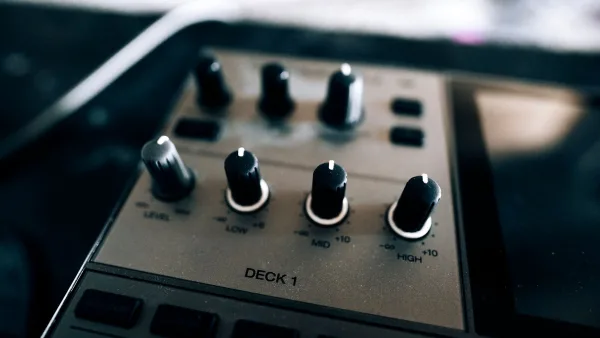
A desktop synthesiser is a sound-generating instrument housed in a compact, rack-mountable or tabletop enclosure without built-in keyboard. The front panel features knobs, buttons, and screens for parameter editing; the back panel carries MIDI inputs, audio outputs, and control voltage (CV) connections. Desktop units range from compact single-voice modules to powerful multi-timbral workstations that can layer and sequence multiple sounds simultaneously.
The fundamental advantage of the desktop form factor is flexibility. Rather than committing to a specific keyboard layout and feel, you choose your input device independently—a controller keyboard, a pad controller, a step sequencer, or even a computer running sequencer software. This separation of function enables deeper sound design and more ergonomic studio layouts.
Types of Desktop Synthesisers
Virtual Analogue (VA) Synthesisers
Virtual analogue synthesisers emulate the circuits and topology of classic analogue synthesisers using digital signal processing. Instruments like the Elektron Analog Rytm and the Behringer Neutron pack the sonic character of 1970s and 1980s synthesisers into compact units. VA synthesisers typically feature straightforward sound-design workflows, intuitive interface layouts, and warm, characterful tone. They're ideal for producers versed in traditional synthesis or those seeking a specific vintage aesthetic.
FM Synthesis Modules
FM (Frequency Modulation) synthesis, pioneered by Yamaha, creates complex timbres by using one oscillator to modulate the frequency of another. Desktop FM units like the Elektron Analog Four or Korg Monotron deliver the expressive, often bell-like or otherworldly tones FM is famous for. FM synthesis requires different mental models than subtractive synthesis, but rewards exploration with unique sonic territory.
Wavetable Synthesisers
Wavetable synthesis uses tables of complex waveforms and morphs between them to generate sounds. Desktop wavetable units like the Waldorf Streichfett offer intricate timbral possibilities and are particularly suited to ambient, experimental, and textural music. Wavetable synthesisers often feature extensive modulation possibilities for evolving, complex patches.
Sample-Playback Synthesisers
Some desktop units combine sample playback with synthesis—instruments like the Elektron Analog Rytm (which also includes sampling) or the Elektron Model:Samples allow you to load, manipulate, and sequence audio samples alongside synthesised sound. This hybrid approach suits beat-making and production workflows.
Workflow and Integration
Most desktop synthesisers expect to be controlled externally. MIDI control is standard—plug a keyboard, step sequencer, or computer into the MIDI input, and you're immediately making sound. CV/Gate connections allow Eurorack modules or other vintage gear to modulate and trigger the synthesiser. This integration capability is particularly valuable for producers building complex, interconnected systems.
Sequencers built into many desktop units (like the Elektron Analog Rytm's 64-step sequencer) enable stand-alone music-making without external controllers. You can record, edit, and arrange music entirely within the unit, making desktop synthesisers surprisingly self-contained for beat-making and composition.
Sound Design and Sonic Character
Desktop synthesisers excel at deep sound design. The compact form factor and hands-on interface encourage tactile exploration. Twisting knobs and manipulating parameters in real-time yields immediate sonic feedback, fostering creative discovery. Unlike software synthesisers (where editing often involves menu diving), hardware desktop units reward spontaneous, expressive parameter manipulation.
The specific tonal character depends on synthesis method and design philosophy. VA modules tend toward warm, characterful analogue tone; digital modules can deliver crisp, precise, or experimental sounds. Many producers choose desktop synthesisers specifically for a tonal character they couldn't achieve with software or controller keyboards.
Size and Studio Integration
A typical desktop synthesiser measures roughly 50–70 cm wide and 10–20 cm deep—substantially smaller than a keyboard synthesiser with keys. This compact footprint makes desktop units ideal for producers with limited desk space or those building modular systems where space is at a premium. A desktop synthesiser can sit neatly on a studio rack, shelf, or stand alongside other gear.
Cost Considerations
Desktop synthesisers range from budget modules (under £200) to premium units exceeding £3,000. Mid-range options (£400–1,000) offer strong value: genuine synthesis capabilities, expressive interfaces, and proven build quality. Premium units often justify their cost through superior sound quality, extensive modulation routing, or innovative synthesis methods.
Used desktop synthesisers hold value reasonably well. A five-year-old Elektron or Moog module typically sells at 60–75% of its original price, making secondary markets a practical option for budget-conscious producers.
Popular Desktop Synthesiser Brands
Elektron (Sweden) dominates the compact desktop space with instruments like the Analog Rytm, Analog Vier, and Digitakt. Their interface design and sequencing capabilities are industry-leading. Moog (USA) manufactures semi-modular desktop units that offer deep synthesis with straightforward workflows. Korg (Japan) produces accessible desktop modules across multiple price points. Teenage Engineering and native instruments provide software-adjacent controllers and synths bridging hardware and digital.
Learning Curve and Accessibility
Desktop synthesisers vary tremendously in learning curve. Elektron products, whilst deep, have intuitive interfaces that reward experimentation. Moog semi-modulars balance accessibility with sound-design depth. Deep modular systems and complex FM synthesis require patience and study but yield profound creative rewards.
If you're new to synthesis, starting with a straightforward VA desktop module is advisable. As your skills develop, exploring FM, wavetable, or complex modular setups becomes natural and rewarding.
Conclusion
Desktop synthesisers offer creative freedom, compact studio integration, and tonal character that desktop synth devotees wouldn't trade for traditional keyboards. Whether you're beginning your synthesis journey or building a professional production rig, a desktop module opens sonic possibilities and encourages hands-on, tactile music-making that defines the appeal of hardware synthesis.




Comments