


Piano Labels for Keys roundup
The Best Piano Labels for Keys for the Money
You don't need to spend much to solve the 'which key is which' problem. Here's how the options compare on cost, teaching value and fit.
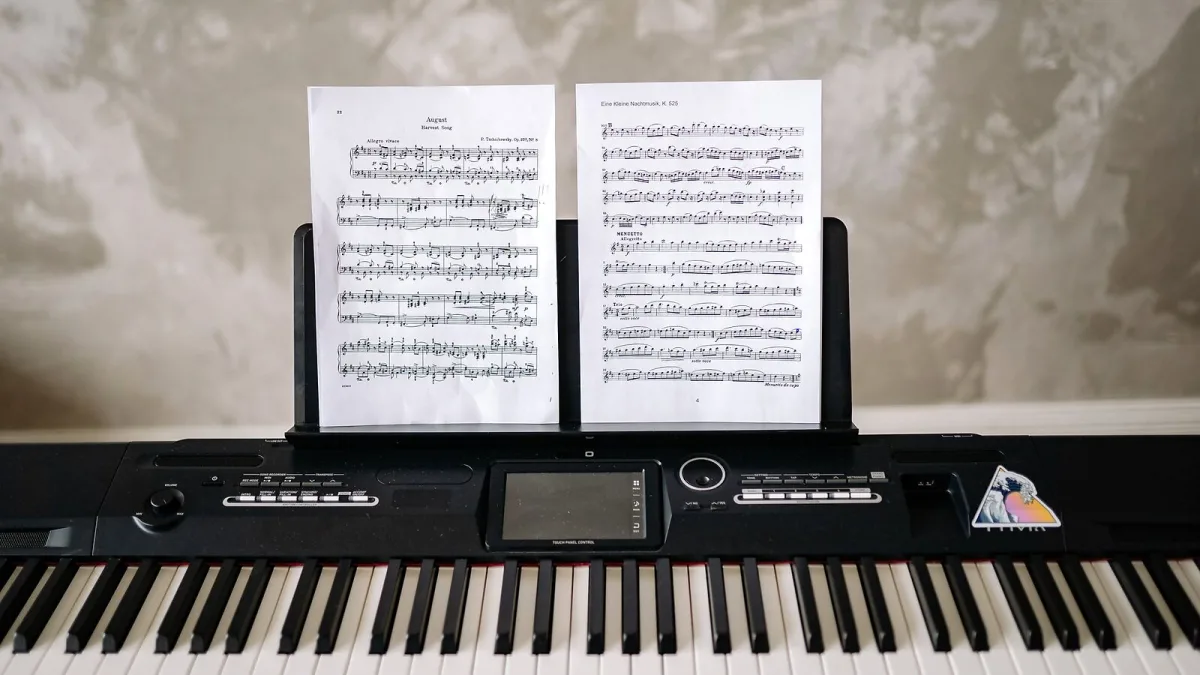
You genuinely don't need to spend much on piano key labels, and in some cases you don't need to spend anything at all. Let's work through the options by how much they cost, how well they teach, and who each one actually suits.
Best Free Option: Print Your Own Diagram
A simple keyboard diagram, printed at home and propped behind the keys, costs nothing and works surprisingly well. You lose the convenience of glancing straight down at the key itself, but you gain a reusable reference that moves with you between instruments and never peels, fades or leaves residue.
Best for: anyone happy to glance up occasionally, or trying things out before spending anything.
Best for Most Beginners: Landmark-Only Stickers
A small set marking just the Cs, or the Cs and Fs, is genuinely the sweet spot for value. It's inexpensive, it's quick to apply, and because it teaches you to count outward from a landmark rather than simply recognise a labelled key, it tends to build real navigation skill faster than a fully labelled keyboard does.
Best for: most beginners, most of the time.
Best for a Complete Beginner: Full Letter-Name Sets
If the musical alphabet itself is still new, a full set covering every key removes one layer of difficulty while a learner focuses purely on hand position and rhythm. It costs a little more and it's the type most likely to be leaned on too long, but for a genuine first-timer that trade-off is often worth it.
Best for: very young learners, or complete beginners who find landmark-counting overwhelming at first.
Best for a Weighted Digital Piano: Above-the-Key Strips
On an instrument with a proper weighted action, value isn't only about price — it's about not risking how the keys feel or respond. A removable strip positioned above the key fronts shows every note name without touching the playing surface at all, which makes it the safer choice even if it costs a touch more than basic stickers.
Best for: anyone on a weighted digital piano who doesn't want anything on the actual keys.
Best Long-Term Value: Reusable Silicone Overlays
A single silicone sheet that lays over the keys and lifts off in one piece tends to cost more upfront than a sticker set, but it survives being removed and reapplied far better, which matters if more than one person in the house is learning, or if you want to bring labels back out occasionally after removing them.
Best for: households with more than one learner, or anyone who expects to use labels on and off over time.
How the Piano Key Labels Compare
| Option | Approximate cost | Best value for |
|---|---|---|
| Printed diagram | Free | Trying the idea before spending anything |
| Landmark-only stickers | Low | Most beginners |
| Full letter-name set | Low to moderate | Complete beginners and young children |
| Above-the-key strip | Moderate | Weighted digital pianos |
| Reusable silicone overlay | Moderate to higher | Multiple learners or repeated use |
Don't Overspend on This
It's tempting to assume the priciest, most complete-looking set must teach best, but a fourteen-label landmark set very often outperforms an expensive full kit, simply because it asks the learner to think rather than just read. If you want the full picture of how the underlying keyboard pattern works before you decide, our complete explainer is worth reading first, and our buyer's guide covers the practical checks in more depth.
The Bottom Line
There's no single best set of piano key labels — only the best one for your budget, your instrument and how you learn. Start cheap, start with landmarks where you can, and upgrade only if you genuinely need to. Our beginner's guide is the natural next step once you've picked an option, and our list of common mistakes to avoid will help you get more out of whichever one you choose.





Comments