


Piano Labels for Keys article
Piano Labels for Keys Explained: Features, Types and Tips
A confusing keyboard becomes a lot friendlier with the right labels. Here's what they are, the types you'll find, and how to use them well.
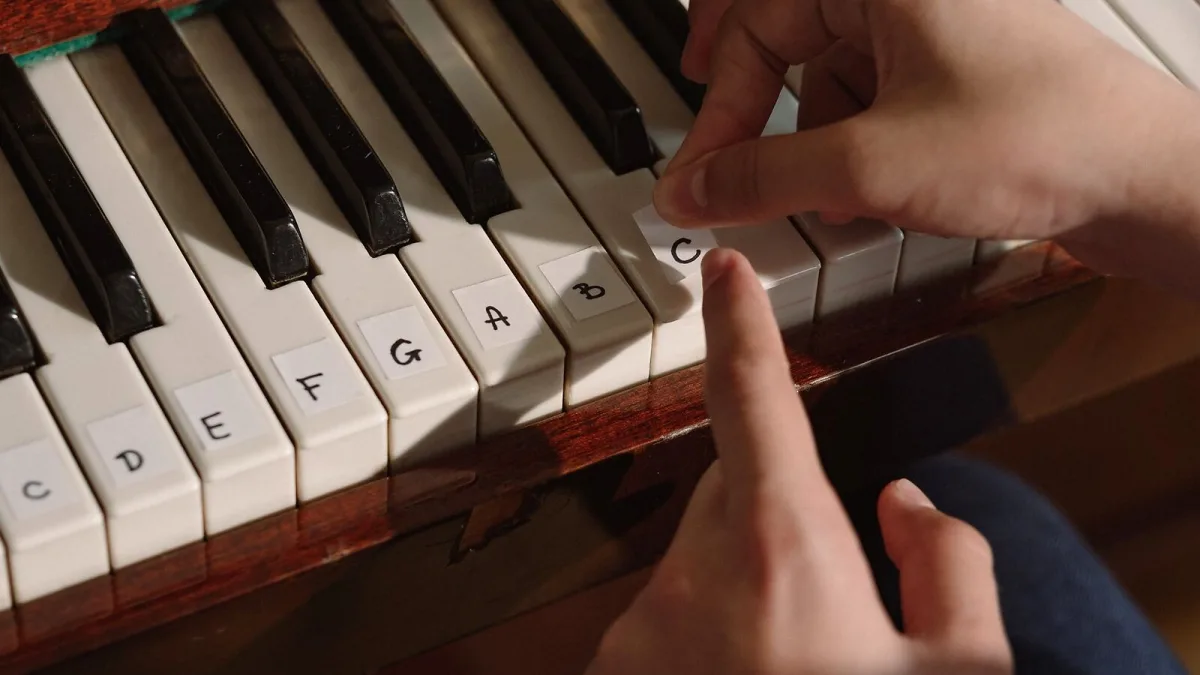
If you've ever watched a beginner freeze halfway along a keyboard, not sure which white key is which, piano key labels are usually the answer someone reaches for next. Let's look properly at what they are, the different types you'll come across, and how to use them so they actually help rather than becoming a permanent crutch.
What Are Piano Key Labels?
They're simply small stickers, strips or overlays that show a note's letter name directly on (or just above) a piano or keyboard key, so a learner can match what they see to what they hear without guessing. They're a teaching aid, not a permanent feature — the goal is always to eventually play without needing them at all.
How the Keyboard Pattern Actually Works
Before choosing any labels, it helps to understand why the keyboard is laid out the way it is. The black keys repeat in a simple pattern: two black keys, a small gap, three black keys, then the pattern begins again. That pattern is your fastest landmark.
- The white key immediately to the left of any two-black-key group is always C.
- The white key immediately to the left of any three-black-key group is always F.
- From either landmark, the neighbouring white keys simply continue the musical alphabet: C, D, E, F, G, A, B, then back to C.
Notice there's no black key between E and F, or between B and C — those pairs sit only a semitone apart already, so nothing needs to separate them.
The Different Types of Labels
Full Letter-Name Sets
These cover every key with its letter — useful for a complete beginner still learning the musical alphabet, but the type most likely to create dependence if left on too long.
Landmark-Only Labels
A lighter approach: label only the Cs, or the Cs and Fs together. Because those two landmarks let you count outwards to any other note, a full 88-key piano can be usefully marked with as few as fourteen labels.
Colour-Coded Labels
Each pitch gets a consistent colour rather than a letter. This can suit very young learners, but colour systems aren't standardised between products, so a set from one brand won't necessarily match another.
Above-the-Key Strips
Rather than sticking to the playing surface at all, a removable strip sits above the key fronts or along the fallboard, showing note names without touching the keys themselves — a tidy option if you're wary of anything affecting how the keys feel.
Sharps, Flats and Why Some Black Keys Have Two Names
A black key isn't simply "a sharp" or "a flat" — its correct name depends on musical context, and each one has two valid names called enharmonic equivalents.
| Position | Common names |
|---|---|
| Black key above C | C♯ / D♭ |
| Black key above D | D♯ / E♭ |
| Black key above F | F♯ / G♭ |
| Black key above G | G♯ / A♭ |
| Black key above A | A♯ / B♭ |
Which name is "correct" simply depends on the key signature or chord you're playing in — both point at the exact same physical key.
Getting the Most Out of Yours
- Start with landmarks (C, or C and F) rather than a fully labelled keyboard — it teaches navigation, not just recognition.
- Choose removable, non-abrasive labels, and clean the keys with a dry or barely damp cloth first.
- Avoid anything thick enough to change how a key feels under the finger, especially on a weighted digital action.
- Set yourself a rough removal point once you can find C and its neighbours without looking — the label's job is done at that point.
If you're choosing your first set, our complete buyer's guide covers what to actually check before you buy, and our beginner's guide walks through applying and using them step by step.
The Bottom Line
Used sensibly, piano key labels are a genuinely helpful shortcut past the most confusing early stage of learning — they just work best as a temporary bridge rather than a permanent map. For the specific pitfalls that undo their usefulness, see our piece on common mistakes to avoid, and if you'd like a value-focused comparison of the different approaches, our breakdown of the best options for the money is worth a read too.





Comments