


Childrens Piano article
Children's Piano Lessons: A Complete Guide
A quality children's piano launches musical education. Discover which type suits your child's age and ambition, from budget portables to investment-level acoustic instruments.

Introducing children to music through piano study opens doors to lifelong learning, creative expression, and cognitive development. A quality children's piano provides the foundation for this journey—whether it's an acoustic instrument in a home studio, a weighted digital option for serious students, or a fun portable keyboard for casual exploration. Choosing the right children's piano depends on age, musical ambition, space constraints, and budget, but the investment pays dividends in discipline, confidence, and joy.
Why Piano Matters for Children
Piano study develops coordination, discipline, and musical literacy simultaneously. Unlike many instruments that require considerable physical development, children as young as four can begin learning piano. The keyboard layout is intuitive, making music theory accessible. Children who study piano show improved academic performance, particularly in mathematics and language development. Beyond academics, piano instills confidence, provides emotional outlet, and builds resilience through practice and performance.
Choosing Your First Children's Piano
Three main options suit different situations:
Acoustic Pianos for Serious Study
A full-size acoustic piano is the gold standard for children progressing beyond absolute beginner level. A quality children's piano offers authentic hammer-action keys, responsive touch, and the acoustic resonance that develops proper technique. New acoustic pianos cost £3000–10,000; used options start lower. They demand space, regular tuning (twice yearly for active students), and maintenance. For families committed to music education, an acoustic children's piano is the best long-term investment.
Weighted Digital Pianos
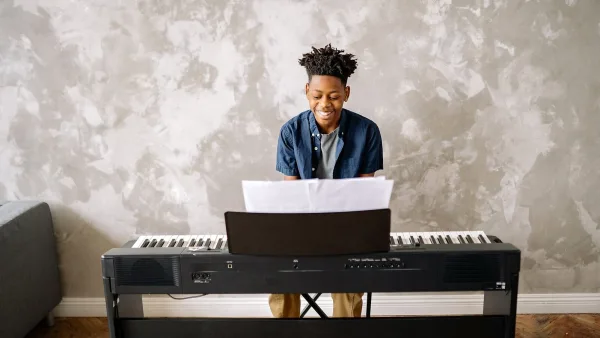
These bridge acoustic and digital worlds, offering weighted hammer-action keys that mimic acoustic touch, digital convenience, and affordability. A good children's piano in this category costs £400–1500 and requires no tuning. They're ideal for serious students without space for an acoustic instrument. Digital options work well for children aged 8–18 advancing through grades.
Portable Keyboards
Unweighted keyboards under £300 serve beginners exploring interest in music. They're fun, affordable, and perfect for children under age 8 or those wanting casual, exploratory play. However, they don't develop proper technique—the keys lack the weighted resistance of real pianos, so students may form bad habits.
Key Features of a Good Children's Piano
Regardless of type, a quality children's piano should offer:
- 88 weighted keys: Even beginners benefit from full-size keyboards with weighted action. Smaller keyboards limit learning and require upgrading later.
- Touch sensitivity: Digital options should respond dynamically to how hard or soft a child plays, teaching musical expression.
- Built-in metronome: Essential for developing rhythm and practising timing.
- Recording capability: Letting children record and listen back encourages self-assessment and motivation.
- Durability: Children's instruments take knocks. Quality construction matters for longevity.
- Reasonable cost: Expensive don't mean better for beginners. Mid-range children's pianos offer excellent value.
Age and Readiness
A child's age influences the right children's piano choice:
Ages 4–6: Portable keyboards or unweighted children's pianos work fine if focus is exploring. Don't invest in an acoustic piano until commitment is evident.
Ages 7–10: Children developing actual skills need weighted-key children's pianos or entry-level acoustic models to avoid bad habits.
Ages 11+: Serious students should use full-size pianos—acoustic or high-quality digital—with weighted keys.
Space and Acoustic Considerations
Acoustic children's pianos demand space—a baby grand needs 5 feet width, upright pianos about 2 feet depth. They also produce sound, which matters in apartments. Digital children's pianos solve both problems, allowing headphone practice and requiring minimal space. For families in tight quarters, a weighted digital children's piano is often the best compromise.
Budget Guidance
Set realistic expectations:
- Budget children's pianos (£100–300): Portable keyboards—fine for exploration, not for serious study.
- Mid-range digital (£400–1200): Weighted-key children's pianos suitable for developing students.
- High-end digital (£1500+): Premium weighted children's pianos rivalling acoustic feel.
- Acoustic (£3000–10,000+): Investment-level children's pianos for serious, long-term study.
Remember: an expensive children's piano won't make a child practice. A quality, appropriately-priced instrument that feels responsive and inviting encourages engagement more than luxury price tags.
Finding a Teacher and Supporting Practice
A children's piano is only half the equation. Quality instruction transforms potential into skill. A good teacher assesses your child's readiness, works at appropriate pace, and keeps practice engaging. Expect 30–45 minute weekly lessons for beginners, progressing to hour-long sessions as skills develop.
Support home practice: establish routine, provide a quiet practice space near the children's piano, celebrate progress, and avoid pressure. Children who practise 20–30 minutes daily progress rapidly; those practising sporadically plateau quickly.
The Long View
Investing in a children's piano is investing in your child's development. Early musical training builds confidence, discipline, and joy. Whether your child becomes a professional musician or simply discovers lifelong pleasure in music, those early piano lessons—and the instrument that started them—remain priceless. Choose a children's piano that suits your situation, find a good teacher, encourage consistent practice, and watch your child grow.



Comments