


Grand Piano article
Grand Piano Explained: Features, Types and Tips
The grand piano is the instrument by which all others are measured. Understanding its mechanism, sizes and what different manufacturers offer helps you make an informed choice.
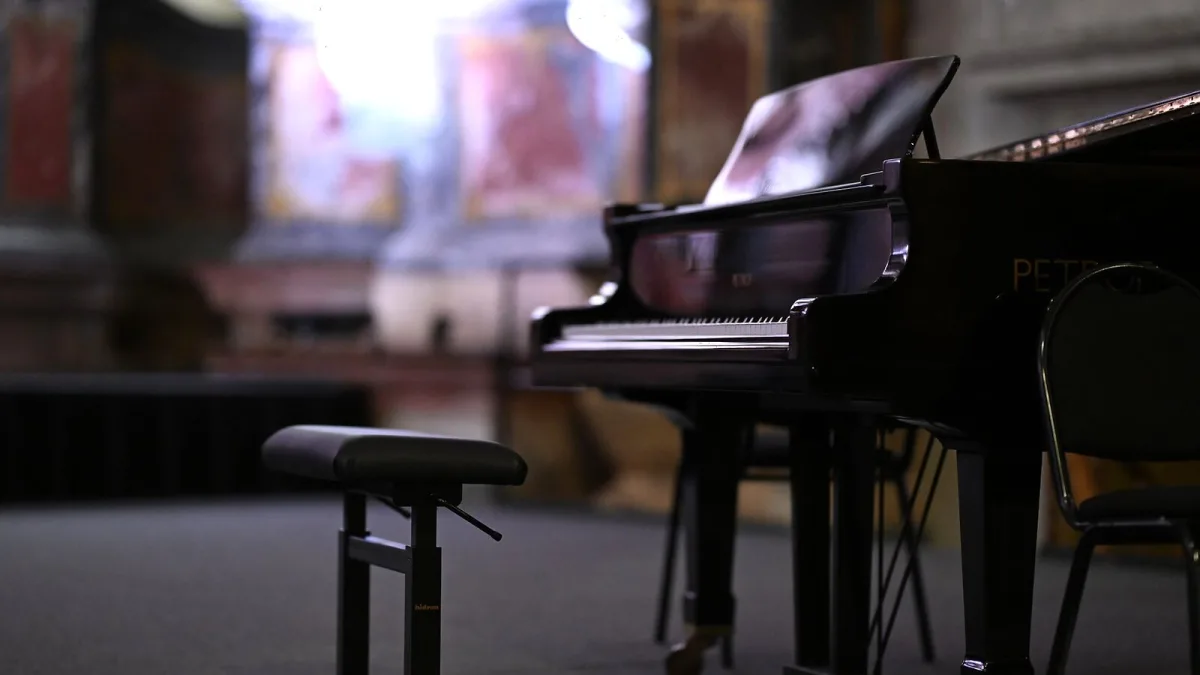
The grand piano is the instrument by which all other pianos are measured. Its horizontal stringing, longer string lengths, and gravity-assisted key action give it a tonal richness and expressive range that no other design has ever fully replicated. Understanding what makes a grand piano what it is — and what the considerable range of types and sizes actually means in practice — is the starting point for anyone thinking seriously about one.
How a Grand Piano Works
At the heart of any grand piano is the grand action mechanism. When you press a key, a series of levers lifts a felt hammer which strikes the string (or, for lower notes, a group of strings tuned in unison). In a grand, gravity resets the hammer after each strike, which allows much faster repetition than is possible on an upright — typically repeating a note at up to around ten times per second in a quality instrument.
The strings run horizontally away from the player. This orientation allows longer string lengths than are practical in a vertical instrument, and longer strings vibrate more freely and sustain longer. The soundboard — a large curved panel of resonating wood beneath the strings — amplifies these vibrations into the warm, projecting tone that distinguishes a quality acoustic grand.
The Three Pedals
Most grand pianos have three pedals, each serving a distinct purpose:
- Damper pedal (right) — lifts all the dampers from the strings at once, allowing notes to sustain beyond the point at which the key is released. The most frequently used pedal in classical and most other styles.
- Sostenuto pedal (centre) — lifts only the dampers of notes that are already depressed when the pedal is engaged, allowing selected notes to sustain while others play normally above them. Used in specific passages in some classical repertoire.
- Una corda pedal (left) — shifts the entire action slightly to the right, causing the hammers to strike fewer strings per note and producing a softer, more veiled tone colour.
Sizes and Types of Grand Piano
Grand pianos are classified primarily by length, measured from the front of the keyboard to the end of the instrument:
| Type | Approximate length | Typical use |
|---|---|---|
| Baby grand | Under 5’6” (168 cm) | Domestic, living rooms with space constraints |
| Parlour grand | 5’6”–6’ (168–183 cm) | Home use, teaching studios |
| Medium grand | 6’–6’6” (183–198 cm) | Home studios, smaller performance spaces |
| Ballroom / professional | 6’6”–7’6” | Professional teaching, mid-sized concert halls |
| Concert grand | Over 7’6” (229 cm) | Concert halls, professional performance |
Size directly affects tone. A longer grand piano produces a fuller bass register and greater dynamic range. The compromise of a baby grand — inevitable in smaller spaces — is a less developed bass response, though a well-made baby grand from a quality manufacturer will still produce a deeply satisfying sound.
The Major Manufacturers
This market is defined by a small number of manufacturers with long-established reputations.
- Steinway & Sons — the name most associated with concert performance. Their Model D concert grand (274 cm) is used by the majority of the world’s major concert halls. Model B (211 cm) and Model S (155 cm) serve smaller spaces.
- Yamaha — Japan’s largest piano manufacturer, known for consistency of manufacture and a clear, bright tone. Their C and CX series cover studio to concert use; the CFX is their flagship concert grand.
- Kawai — a strong Japanese alternative to Yamaha, often praised for their action and value at the mid-range price point.
- Bösendorfer — Viennese manufacturer known for instruments with an extended bass range (97 or 97 notes), now owned by Yamaha. A distinctive, warm sound with a loyal following among pianists.
- Fazioli — an Italian manufacturer founded in 1981, producing instruments widely considered among the finest in the world at commensurately high prices.
- Bechstein and Blüthner — prestigious German manufacturers with strong presences in Europe and distinct tonal characters.
Tips for Choosing and Playing a Grand Piano
A grand piano is a long-term investment that will last generations if maintained properly. When evaluating one:
- Play it yourself, even if your technique is basic — feel the action weight and how it responds to touch.
- Listen for evenness across the keyboard; individual notes that stand out in volume or tone can indicate regulation issues or uneven hammers.
- Consider the room. A large concert grand in a small room will overpower the space acoustically; a baby grand in a large hall will struggle to project.
- Factor in ongoing costs: tuning (typically twice a year), regulation, and periodic voicing of the hammers.
Find Out More
If you are considering purchasing, our complete buyer’s guide covers what to look for and what to avoid. For specific models across different budgets, see our guide to the best grand pianos for the money. New to the instrument? Our beginner’s guide starts from the very beginning.
The Bottom Line
The instrument is a remarkable mechanical achievement — a system of thousands of components working in precise coordination to produce one of the most expressive sounds in music. Understanding the types, sizes, manufacturers and maintenance needs will help you make a decision that suits your room, your level, and your budget, and choose an instrument that will reward you for decades.





Comments