


Arturia Minifreak roundup
Arturia Minifreak: A Complete Buyer's Guide
The Arturia MiniFreak rewards curiosity and patience — here is a clear, methodical look at who it suits and what to consider before buying.
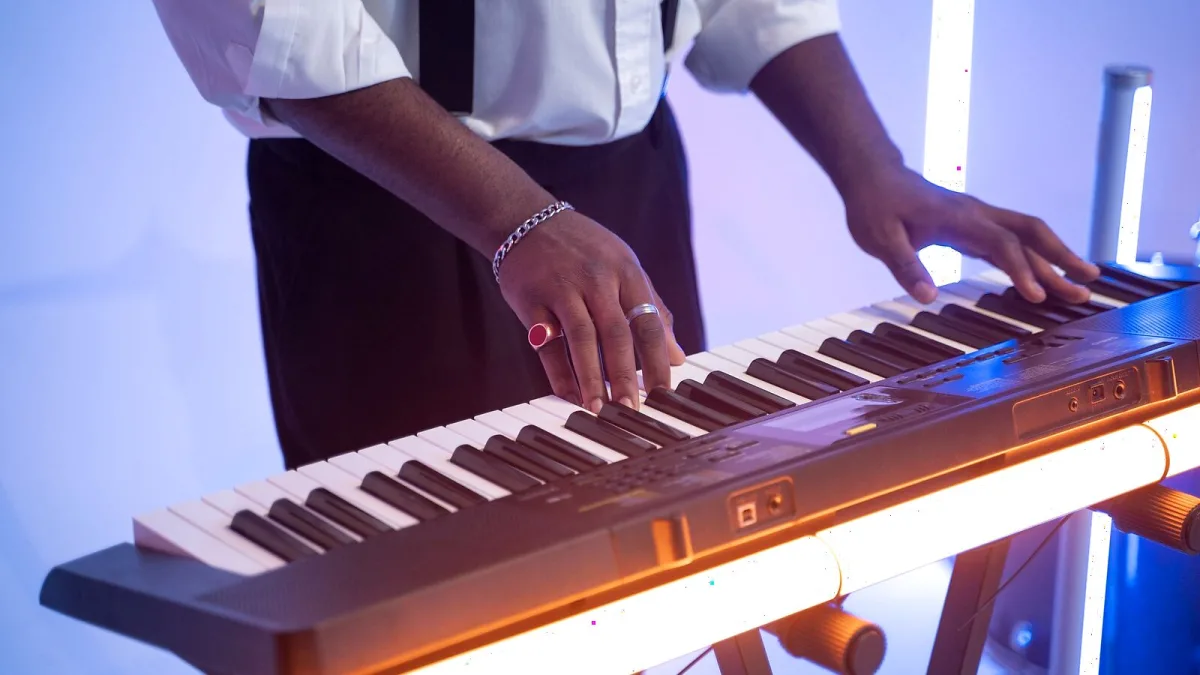
Buying a synthesizer is a significant decision, and the Arturia MiniFreak sits at an interesting point in the market — it is not the simplest entry-level choice, but it is not a specialist tool that requires years of synthesis experience either. It rewards curiosity and patience, and understanding its particular qualities before you buy will help you decide whether it is the right instrument for where you are now.
Who the MiniFreak Is For
This synthesizer is designed for electronic music production, sound design and performance. It suits producers who want to move beyond presets into genuinely hands-on synthesis; keyboardists who want a modern, expressive polyphonic instrument with character; and studio musicians who want something that sounds different from sample libraries and basic workstation patches.
It is probably not the ideal first keyboard for a complete beginner who wants to learn classical piano technique — the Slim-key action is not a piano action and the instrument is built around synthesis rather than acoustic keyboard emulation. But for anyone with curiosity about electronic sound, it is accessible with a moderate amount of learning.
The Core Specification: What You Are Paying For
The instrument offers six-voice polyphony, two independent digital sound engines, polyphonic analogue filters, a 37-key velocity-sensitive keyboard with aftertouch, a 64-step sequencer and three effects slots. That combination — particularly the dual-engine design with analogue filtering — is what distinguishes it from simpler digital keyboards at lower price points.
Key purchase considerations:
- Polyphony: six voices means you can play chords and pads comfortably. The 12-voice paraphonic mode gives additional note capacity when the shared voice architecture is acceptable.
- Aftertouch: the ability to modulate parameters by pressing harder after a note is struck is a genuine expressive advantage. Many keyboards at this price level omit it.
- Analogue filters: polyphonic analogue filters — one per voice — contribute warmth and organic variation that digital filters alone do not replicate in the same way.
- Firmware expansion: Arturia has consistently added synthesis engines and features through free firmware updates. As of Firmware 5.0 (September 2026), the instrument supports user sample and wavetable import.
Standard versus Vocoder Edition
The standard model and the Vocoder Edition share the same core architecture. The Vocoder Edition adds an integrated gooseneck microphone and dedicated vocoder processing, using the microphone input as the modulator signal. If vocoding is a technique you want to use, the dedicated hardware microphone is a convenience. If you are not planning to use vocoder effects, the standard model is the sensible choice.
What You Need to Use It Well
The MiniFreak is a standalone synthesizer — it makes sound without a computer. However, pairing it with the free MiniFreak V software unlocks several important capabilities: firmware updates, preset library management, deep editing from a large screen and, since Firmware 5.0, user sample import. You will need a Mac or PC and a USB connection for this.
For studio recording, you will also need:
- An audio interface with at least one stereo or two mono inputs (the instrument has stereo output).
- A DAW if you plan to record audio or use the companion software plugin alongside the hardware.
- MIDI if you want to control the instrument from a different keyboard or DAW track.
It does not need an external amplifier for studio use — plug it into your interface. For practice or performance without recording, a keyboard amplifier or a pair of powered monitor speakers works well.
Comparing with the MicroFreak
Arturia's MicroFreak is the closest conceptual sibling. The MiniFreak adds six-voice polyphony (the MicroFreak has paraphony), a larger keyboard with aftertouch and key velocity, analogue filters, dual engines and a more developed effects section. If polyphonic playing and a traditional keyboard format matter to you, the MiniFreak is the appropriate step up. If you primarily want a compact, experimental monophonic or paraphonic instrument and the smaller form factor is important, the MicroFreak remains a genuine option.
A Realistic Assessment
It rewards exploration. Its synthesis range is wide, its modulation system is deep and its firmware trajectory has been genuinely generous. It is not the most straightforward synthesizer to programme from scratch, particularly the more complex digital engines, but it is not impenetrable — the hands-on panel, clear interface and free MiniFreak V editor make the learning curve manageable.
If you want more detail on how the engines and modulation work before committing, the full explainer covers the architecture clearly. For first steps once you have it, the beginner's guide walks you through getting started without feeling overwhelmed.
The Bottom Line
This is a genuinely capable hybrid polyphonic synthesizer at a competitive price. Its dual-engine design, analogue filters, aftertouch keyboard and firmware expansion make it a serious instrument that grows with you. If you are ready to invest time in learning synthesis, it will repay that investment substantially.





Comments