


Tuning a Fiddle article
Tuning a Fiddle Explained: Features, Types and Tips
That quiet ritual before a session starts, explained properly: how fiddle tuning actually works, and why it's built on fifths.
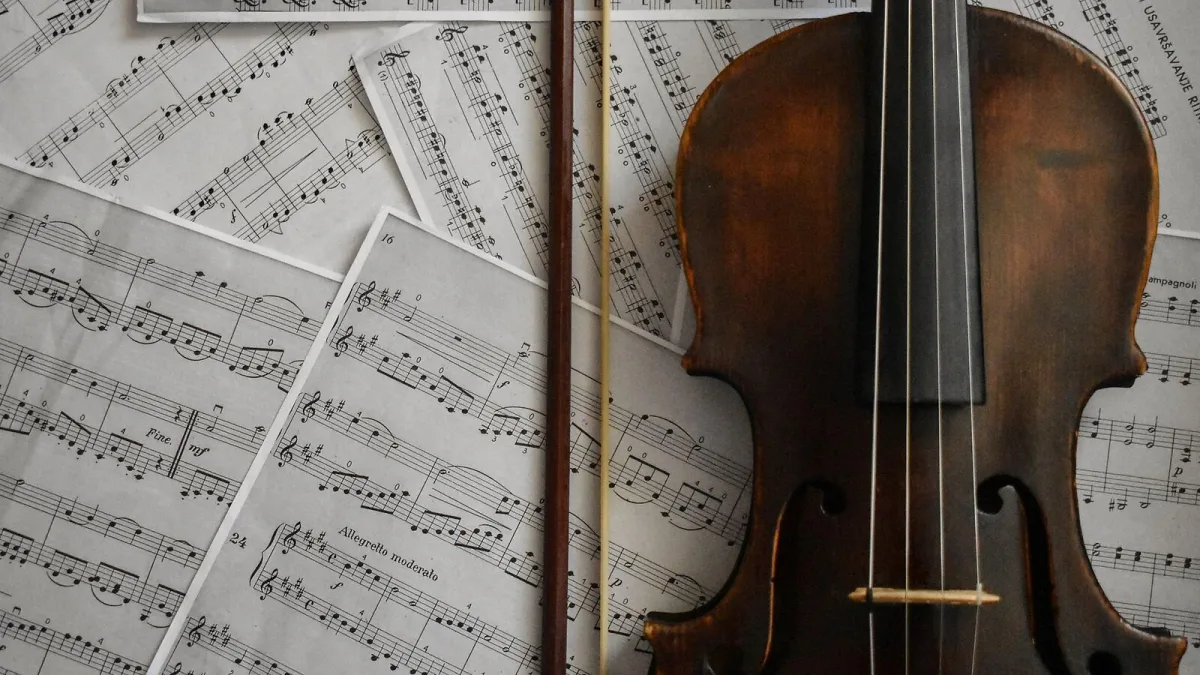
There's a particular quiet ritual to tuning a fiddle before a session starts — that first sweep across the strings, listening for the fifths to settle into place. It looks simple from the outside. It is simple, once you know what you're actually listening and reaching for. Let's take it slowly.
The standard tuning, and why it's built on fifths
A fiddle's four strings run, lowest to highest, G–D–A–E — each neighbouring pair separated by a perfect fifth. That interval isn't arbitrary. Adjacent open strings reinforce each other acoustically, giving the instrument a broad, resonant range and letting a player use an open string as a drone or a reference while playing a melody on the string beside it. Get two neighbouring strings correctly related, and you can genuinely hear it: the sound locks together rather than wobbling against itself.
Most modern players tune the A string to 440 Hz as their reference point, though ensembles, period groups and regional traditions sometimes sit elsewhere — the real rule is to match whoever or whatever you're playing with, not to chase a number for its own sake.
Fiddle pegs and fine tuners: two tools, two jobs
The wooden pegs at the scroll make the big adjustments — turn one when a string is genuinely far from pitch. The fine tuners, usually small screws set into the tailpiece, handle the last delicate whisper of correction, typically a semitone or less. Turning a fine tuner clockwise tightens and raises the pitch; anticlockwise loosens it. Some fiddles carry a fine tuner on the E string alone, others have all four — a personal and setup-dependent choice rather than a rule.
A properly running tuning session leans on both tools working together: pegs to get close, fine tuners to land precisely.
The gentle art of tuning a fiddle by ear
Get into the habit of tuning by ear whenever you can, even alongside an electronic tuner. Play two adjacent open strings together and listen: when they're correctly related, the sound feels unified, almost singular. When they're slightly off, you'll hear a pulsing, beating quality that smooths out as you close in on the right pitch. This matters because musical intonation is relational — a string can register as "correct" on a tuner and still sound wrong sitting inside a drone or a chord with the rest of the band.
Standard tuning versus cross-tuning
Classical violinists, and most Irish and bluegrass fiddlers, stick to standard G–D–A–E throughout. But a strand of traditional fiddle playing — old-time music especially — deliberately retunes to strengthen resonance, encourage droning and reshape fingering patterns for a particular key.
| Tuning | Strings, low to high | Typical use |
|---|---|---|
| Standard | G–D–A–E | Classical, Irish, bluegrass, general playing |
| AEAE | A–E–A–E | Old-time tunes in A; strong drones |
| ADAE | A–D–A–E | A-oriented playing with a raised bottom string |
| GDGD | G–D–G–D | G-based old-time, drone-heavy repertoire |
The trade-off is flexibility: a cross-tuned fiddle is genuinely built for particular keys, and you'll need to retune before playing repertoire outside that tonal centre. Raise strings gradually, too — jumping straight to a cross-tuning adds real tension the instrument and strings need to adjust to.
What actually shifts a fiddle's tuning day to day
A quick note before we get into it: a fiddle responds to the room it's in as much as to your hands.
Temperature, humidity, new strings settling in, and simply moving from an indoor to an outdoor session can all nudge pitch. It's worth checking tuning when you first take the instrument from its case, again before you start playing properly, and periodically through a longer session — not because anything's wrong, but because a fiddle is a living, breathing thing that responds to its surroundings.
If you're just starting out and want the safest possible way through your very first tuning session, our beginner's guide walks it through gently, step by step.
The bottom line
Tuning a fiddle well is really about understanding two things: the relationship between adjacent strings, and which tool — peg or fine tuner — suits the size of the correction you need. Learn to hear the fifths settle, respect the instrument's response to its environment, and the whole ritual stops feeling like guesswork. Curious about the tools that make it easier? Our buyer's guide covers tuners, pegs and fine tuners properly, and it's worth reading the common mistakes people make before they've built up the ear for it.





Comments