


Electric Cello article
The Ultimate Guide to Electric Cellos
The electric cello keeps the bow and the technique of its acoustic cousin while replacing resonant wood with a pickup and a signal chain. Here is everything you need to know about how it works and why players are drawn to it.
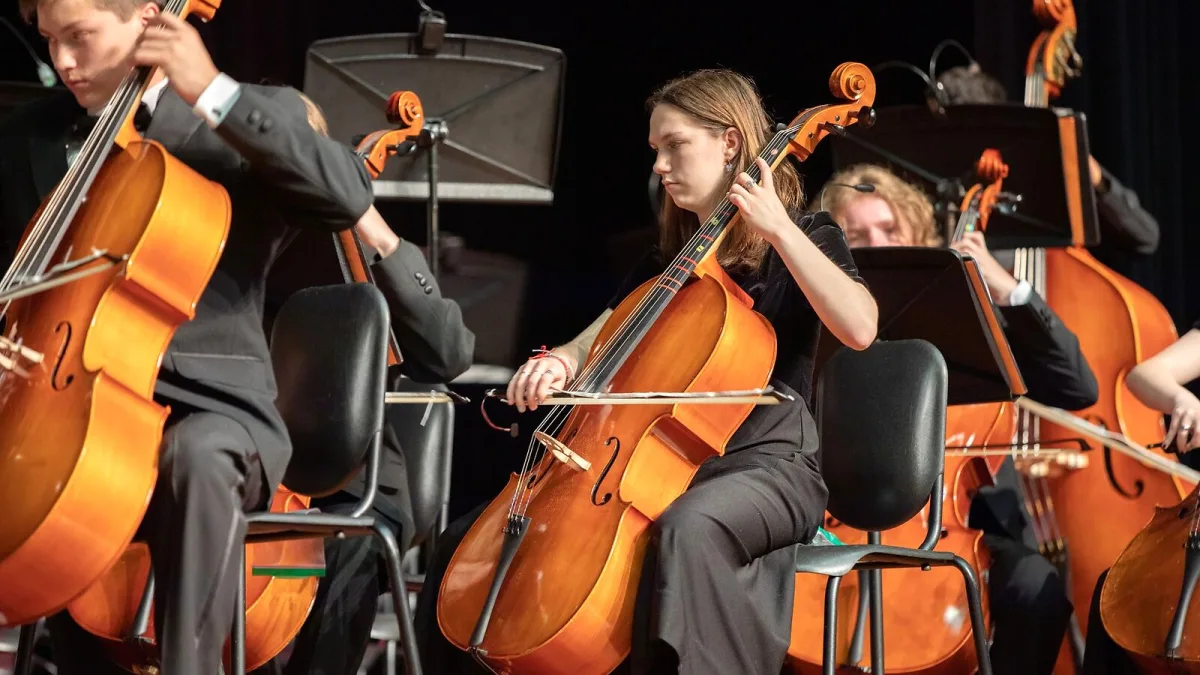
The electric cello occupies a curious and compelling position in the string world — an instrument that keeps the bow, the left-hand technique and the deep, expressive voice of its acoustic cousin, while jettisoning the resonant wooden body that defined that ancestor. This guide explains what the instrument actually is, how it works, and why an increasing number of players — from concert soloists to rock performers — are drawn to it.
What Makes a Cello "Electric"?
An acoustic instrument produces sound through a centuries-refined relationship between strings, bridge, soundpost and carved wood. Vibration travels from the strings into the top plate and is amplified by the resonant cavity of the body. An electric cello replaces that acoustic resonance with a pickup — most commonly a piezoelectric transducer (piezo) mounted at or beneath the bridge — converting mechanical vibration into an electrical signal that can go to an amplifier, mixing desk, audio interface or headphone amplifier.
Because the body no longer needs to project sound unaided, it can be reduced to a skeletal frame, a solid slab of wood, or something in between. Some designs retain partial resonance for natural feel whilst playing unplugged; others are entirely solid.
Piezoelectric Pickups: The Core Technology
Most instruments in this category rely on piezo pickups as their signal source. When string vibration stresses the crystalline material inside the pickup, it generates a voltage proportional to that pressure. The result is a bright, detailed signal with a good transient response — meaning the attack of each bow stroke registers clearly.
Piezo pickups have practical advantages for live performance. They reject airborne sound well, making feedback far less likely than with a microphone, and they are sturdy and reliable. Their main limitation is tonal character: without equalisation or careful preamp matching, a raw piezo signal can sound somewhat hard or glassy, particularly on the upper strings.
NS Design's Polar pickup system, used in their WAVc and other models, addresses this by detecting vibration in two axes — one optimised for arco (bowed) playing, the other suited to pizzicato (plucked) playing. The player can select modes or blend between them, giving more flexibility over the on-stage sound.
Silent Models and Solid-Body Designs
Within this category there are two principal design philosophies worth distinguishing.
- Silent models — such as Yamaha's SVC series — typically retain something closer to acoustic proportions, with a partial frame or skeletal body. They generate little usable acoustic sound when unplugged, making them well suited to headphone practice. The Yamaha SVC-110 has become one of the most recognisable in this category, associated with both serious silent practice and amplified performance.
- Solid-body designs — most associated with NS Design's CR and NXTa series — prioritise compactness, stage durability and a stable, consistent signal. Their shapes are often radically simplified: the NS Design CR measures approximately 94 cm in total length with a 69.5 cm scale length and weighs around 2.5 kg in its five-string version.
Both approaches require amplification for anything other than private practice, and both suit professional use — the choice between them often comes down to playing feel, ergonomics and whether headphone practice is a priority.
Key Manufacturers
Yamaha
Yamaha's SVC range has long represented the accessible end of the professional market for amplified strings. The instruments are associated with quiet practice, headphone monitoring and amplified performance. The Croatian duo 2CELLOS — Luka Šulić and Stjepan Hauser — brought amplified playing to mainstream pop and rock audiences, and Yamaha instruments were part of that story.
NS Design
NS Design was founded by instrument designer Ned Steinberger, whose work on compact guitar and bass designs in the 1980s established his reputation for ergonomic innovation. The company produces several relevant families:
- WAVc — an affordable, passive-electronics model with the Polar pickup.
- NXTa — a lightweight professional instrument suited to touring, available in four- and five-string versions, weighing approximately 1.9 kg in its five-string form.
- CR — the flagship series, with active electronics on some models and the most comprehensive on-board control options.
Four Strings and Five
Standard tuning runs from low C up through G, D and A. Many models offer a five-string option adding a low F below the C, extending the range downward by a perfect fourth. This is genuinely useful in solo and crossover contexts where a wider tonal palette matters.
The trade-off is slightly narrower string spacing, which can take adjustment — particularly in fast passages and double stops. The five-string NS Design WAVc weighs approximately 2.1 kg, compared with the four-string's 2 kg.
Amplification and Effects
The signal can follow several paths from instrument to listener. The most common for live performance is:
- Instrument output → high-impedance preamp or DI (direct injection) box
- Equalisation to shape the tone and reduce problem frequencies
- Effects — reverb, delay, chorus, distortion, octave or looper, as required
- Amplifier, monitor speaker, mixing desk or audio interface
A full-range keyboard or acoustic amplifier generally suits the instrument's frequency range better than a guitar amp, though many players make guitar amps work well with judicious equalisation. For recording, a direct connection to an audio interface — with reverb and ambience added in the mix — is standard practice.
Effects open up remarkable territory. With reverb and delay, the instrument can sustain and layer in ways no acoustic player can. Distortion brings it into rock and metal contexts. Loopers allow solo performers to build real-time multi-part arrangements. These possibilities are part of why amplified playing has attracted performers well beyond the classical sphere.
Who Plays One?
The user base is genuinely eclectic. Classical players use silent models for practice when acoustic volume would disturb neighbours. Theatre and touring musicians value the compact dimensions and reliable signal. Crossover performers — from 2CELLOS to artists working in metal, ambient and electronic music — exploit its tonal flexibility and stage presence. And plenty of players simply own one for the pleasure of amplified playing at home, through headphones, at whatever hour suits them.
Cellist and composer Tina Guo offers perhaps the most visible example of the instrument's reach into cinematic, metal and electronic performance — demonstrating that it is as at home in a recording studio or arena as in a chamber concert hall.
Is It Right for You?
The honest answer is that the electric cello complements acoustic playing rather than replacing it. The technique is the same — the bow arm, the intonation, the vibrato — but the tonal world and the practical context are different. If you need a quiet practice instrument, want to play amplified without fighting feedback, or have ambitions toward rock, film or electronic performance, this is an instrument that opens doors an acoustic simply cannot.
For deeper guidance on choosing a model, see our complete buyer's guide to electric cellos, our round-up of the best electric cellos for the money, and if you're just starting out, our beginner's guide.
The Bottom Line
The electric cello is a mature, versatile instrument with a well-established manufacturing tradition and a growing presence in live performance, recording and education. An electric cello shares its technique entirely with the acoustic instrument, but operates in a different sonic and practical world — one defined by pickups, amplifiers and effects rather than resonant wood and open air. Understanding how it works is the first step to deciding whether it belongs in your playing life.





Comments