


Electric Cello article
Electric Cello for Beginners: A Complete Guide
The electric cello plays exactly like an acoustic one — the tuning, the bow and the fingering are identical. What changes is everything around the instrument: the amplification, the silence, and the remarkable range of sounds available.
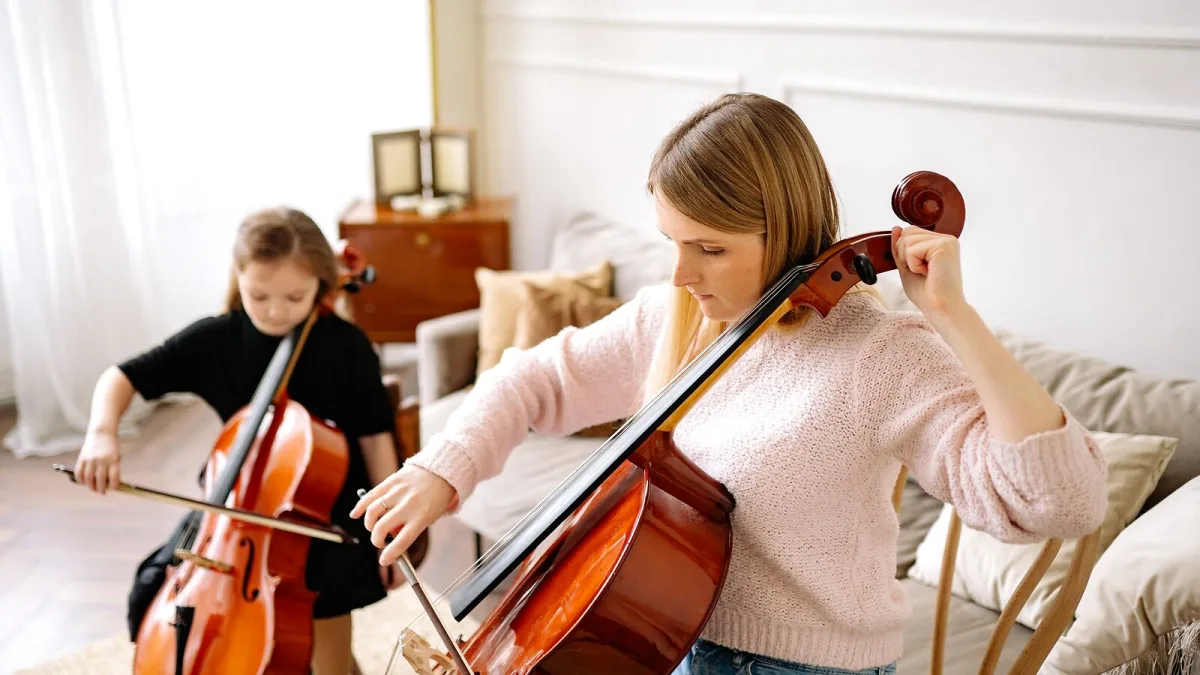
If you are drawn to the electric cello but unsure where to begin, you are in good company. The instrument rewards the same patience and attentiveness that any string instrument demands, but it also opens doors that no acoustic cello can — quiet practice at any hour, amplified performance without feedback, and a whole range of sounds that go well beyond the concert hall. This guide is for the player who is new to the electric format: what to expect, what to buy first, and how to get started without expensive mistakes.
Your Acoustic Skills Transfer Directly
The most reassuring thing to know at the outset is that an electric cello plays exactly like an acoustic one. The tuning is the same — C, G, D, A from low to high — the bow technique is the same, and the left-hand fingering positions are identical. If you already play acoustic cello at any level, you will be able to pick up the instrument and produce music immediately.
What does change is the sonic environment. There is no resonant body amplifying the strings acoustically, so when you practise unplugged, the instrument sounds thin and quiet — more like a wooden board with strings than the instrument you know. This is normal, and it is one of the format's great practical advantages: it is genuinely unobtrusive when not amplified.
Silent Practice: The First Practical Advantage
For many beginners, the most compelling reason to explore the electric cello is silent practice. Acoustic instruments carry. A cello in a flat is heard in every room, and quite possibly in neighbouring flats too. An electric model, played through headphones, produces almost no sound in the room at all.
To practise silently you need one of the following:
- A model with a built-in headphone output — Yamaha's SVC instruments include this as standard.
- An external headphone amplifier — a small, affordable device (sometimes called a headphone amp or practice amp with headphone socket) connected between the instrument and your headphones.
- A small mixer or audio interface with a headphone output.
It is worth checking headphone capability before buying any instrument. Some entry-level models — including the NS Design WAVc — use passive electronics and do not include a direct headphone output. This is not a dealbreaker, but it does mean budgeting for additional equipment.
Choosing Your First Electric Cello
As a beginner, you face a narrower decision than you might expect. The market for reliable, well-made instruments from reputable manufacturers is dominated by two companies: Yamaha and NS Design. Budget instruments from lesser-known brands exist and can provide a cheaper starting point, but their intonation, electronics quality and service support are harder to verify.
Yamaha SVC-110
If silent headphone practice is your primary motivation, the Yamaha SVC-110 is the most complete starting point. Its frame proportions are close to a full-size acoustic cello, which means your bowing angles and left-hand position will feel familiar. It comes with headphone and line outputs as standard, so you need nothing else to begin practising silently at home.
The price is higher than the NS Design entry-level, but you are paying for a self-contained, professionally designed instrument that requires no additional hardware to be immediately useful.
NS Design WAVc
The NS Design WAVc is the entry point in a range built by a company with a strong reputation for compact, stage-ready string instruments. The passive Polar pickup gives useful tonal flexibility for the price, and the construction quality is reliable. The trade-off, as noted, is the absence of a direct headphone output — but if you plan to practise via a small mixer or audio interface, this need not be an obstacle.
The WAVc is also available in a five-string version if the idea of extended low range appeals, though for a first instrument, four strings is the sensible and simpler starting point.
What You Will Need Beyond the Instrument
A new electric cello on its own is only part of the setup. Before you can hear yourself play properly, you will need:
- An amplifier or headphone solution — either a small practice amplifier (keyboard or acoustic instrument amplifiers work best), a headphone amplifier, or a small audio interface connected to a computer or headphones.
- A standard instrument cable — a quarter-inch jack cable connecting the cello to the amplifier or interface.
- A bow — if you do not already own one. Check that the bow is appropriate for cello (not violin or viola) and that the hair is in good condition.
- A case — most electric cellos are sold without one. A fitted hard case or padded gig bag is worth the investment for transport and storage.
The total cost of a working setup can be significantly more than the instrument price alone. Budget accordingly, and treat the full kit as the purchase rather than just the cello itself.
Getting a Good Sound from the Start
The first sounds a beginner makes through an amplifier can be alarming: every bow noise, finger squeak and hesitant tone is magnified. This is perfectly normal. Here are a few things that help:
- Set the volume modestly at first. A loud amplifier exaggerates every imperfection. Start quietly, find a comfortable tone, and turn up only as your confidence and control develop.
- Use a little reverb if available. Almost every acoustic environment adds natural reverb to cello playing. A small amount from a practice amp or effects pedal can make the sound feel more like the instrument you know.
- Equalise the bright edge. Piezo pickups — the technology used in most electric cellos — produce a brighter, more direct sound than an acoustic instrument's natural projection. Reducing the treble slightly on your amplifier, or gently boosting the midrange and low-mid frequencies, can make the tone warmer and more natural.
Effects: Worth Exploring, Not Worth Rushing
One of the pleasures of amplified string playing is the range of effects available. Reverb, delay, chorus, distortion and loopers all work well, and the sonic possibilities are genuinely exciting. A looper pedal (which records and plays back short phrases in real time) is particularly enjoyable for solo practice, allowing you to build up simple accompaniment layers.
That said, effects are a distraction if the basic technique and tone are not yet established. Spend a few months getting comfortable with a clean signal first. Once the intonation and bowing are consistent, effects reward rather than conceal.
Maintenance and Care
An electric cello requires less maintenance than an acoustic instrument in some respects — there are no seam joints to open, no bass bar to crack, no soundpost to shift. But the electronics need attention too:
- Battery checks — if your instrument has active electronics, replace the battery before it runs low during a performance.
- Jack socket care — the output jack can loosen over time. Check it periodically and tighten if needed.
- Strings — change them when the tone becomes dull, the intonation less stable, or the surface corroded. The same principles apply as to acoustic strings.
- Bridge and nut — these affect intonation and playability just as on an acoustic instrument. If anything feels off, consult a luthier familiar with electric string instruments.
A Gentle Encouragement
This instrument is not a compromise or a lesser version of its acoustic counterpart. It is a genuinely different format with a different set of possibilities — some of which are simply unavailable on a wooden box, however fine. Approached with curiosity rather than comparison, it opens up new ways to practise, perform and create that are well worth the initial unfamiliarity.
For more detailed guidance on what to look for when choosing a model, see our complete buyer's guide. For a broader picture of how the instrument works and who plays one, our ultimate guide to electric cellos covers the full picture. And when you are ready to think about the best specific models across different budgets, our round-up of the best electric cellos for the money is the next step.





Comments