


Tech House article
The History of Tech House
A record-shop label for tracks that didn't fit anywhere else ended up soundtracking festival main stages. Here's how that actually happened.
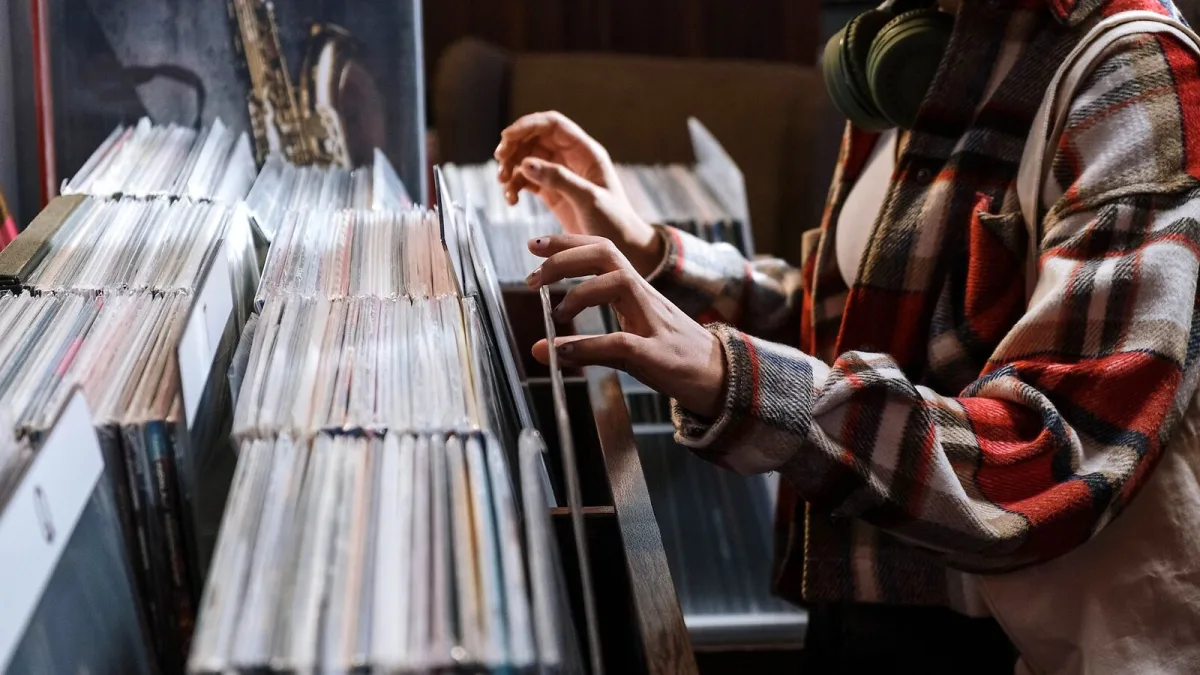
Every big dancefloor sound has an origin story that's messier than the Wikipedia version, and tech house is no exception. What started as a practical record-shop label for tracks that sat between two other genres has ended up soundtracking main stages at the biggest festivals on the planet. Here's how it actually got there, era by era.
The 1990s: A Name for Tech House Records That Didn't Fit
The term emerged in the 1990s as a way of describing records positioned between house and techno — not quite one, not quite the other. It drew on Chicago house, Detroit techno, acid house, dub, minimal techno and West Coast house, borrowing house's groove and techno's cleaner, more mechanical production.
Crucially, this was a DJ-driven style from the start, built for long club blends rather than radio airplay. Tracks were designed with percussion and bass carrying the momentum, leaving DJs room to shape a set through EQ, looping and gradual transitions.
London's Underground Club Scene
The UK side of the story centres on London. Terry Francis, Eddie Richards, Mr. C and Bushwacka! are the names most closely tied to the formative scene, with the Wiggle parties and label acting as a key platform, alongside Siesta Recordings and the club fabric. Across the Atlantic, Chicago artist Green Velvet brought a distinctive, vocal-led strand of house and techno hybrid production that fed into the same broader movement.
This period was less about a single hit record and more about a shared sensibility: sparse, hypnotic, built for the club rather than the charts.
The 2000s: A European Expansion
Through the 2000s, the sound spread and diversified via a wave of European labels. Germany's Matthias Tanzmann founded Moon Harbour, while Nick Curly built a reputation through 8bit and Cecille Records; Mobilee Records and Leena Music became important homes for a more polished, deep and minimal strand that overlapped with minimal techno and microhouse.
This era matters because it's where tech house's boundaries started to blur properly — a theme that has never really gone away since. If you want that blurring explained properly, our subgenres guide untangles which strands overlap with what.
From Underground Staple to Festival Main Stage
The sound's more recent chapter is its biggest. Streaming platforms and festival programming pushed a newer, higher-energy version of the style to a genuinely mass audience, with Fisher, Chris Lake, Cloonee and Michael Bibi identified by Beatport as the artists who carried it there. Modern commercial tech house releases often add big vocal refrains, festival-style drops and influences from bass house, Latin rhythms and hip-hop — a considerable distance from the sparse London club records of the 1990s, even if the DNA is recognisably the same.
Worth noting: that commercial explosion sits alongside, not instead of, an ongoing underground scene that still favours the older, more minimal approach. Both versions are valid; they're just aimed at very different rooms. For a proper introduction to the names driving both sides, see our guide to the essential artists.
A Timeline at a Glance
| Era | Key development | Associated names |
|---|---|---|
| 1990s | Term coined; UK/US club scene forms | Terry Francis, Eddie Richards, Mr. C, Bushwacka!, Green Velvet, Wiggle |
| 2000s | European labels expand and refine the sound | Matthias Tanzmann, Nick Curly, Moon Harbour, Mobilee |
| 2010s–2020s | Mainstream, festival-facing breakthrough | Fisher, Chris Lake, Cloonee, Michael Bibi |
Why the Timeline Isn't Tidy
Genre historians disagree on exactly who coined the term and precisely where it first took hold — London, Detroit and the broader transatlantic club scene all have a claim. That's not a gap in the research so much as an honest reflection of how dance music actually spreads: through interconnected scenes and record shops, not a single announced launch. If you're brand new to all this and want the plain-English version before the history lesson, our beginner's guide is the better starting point.
The Bottom Line
Three decades on from its record-shop beginnings, tech house is now one of dance music's most flexible and widely used labels — stretched by commercial success, but still recognisably built on the same house-meets-techno idea it started with in 1990s London.




Comments