


R&b Music article
A Beginner's Guide to R&b Music
R&B music began as an industry label in 1949 and grew into one of popular music's richest traditions. Here's a gentle, jargon-free introduction to what it is and how to hear it.
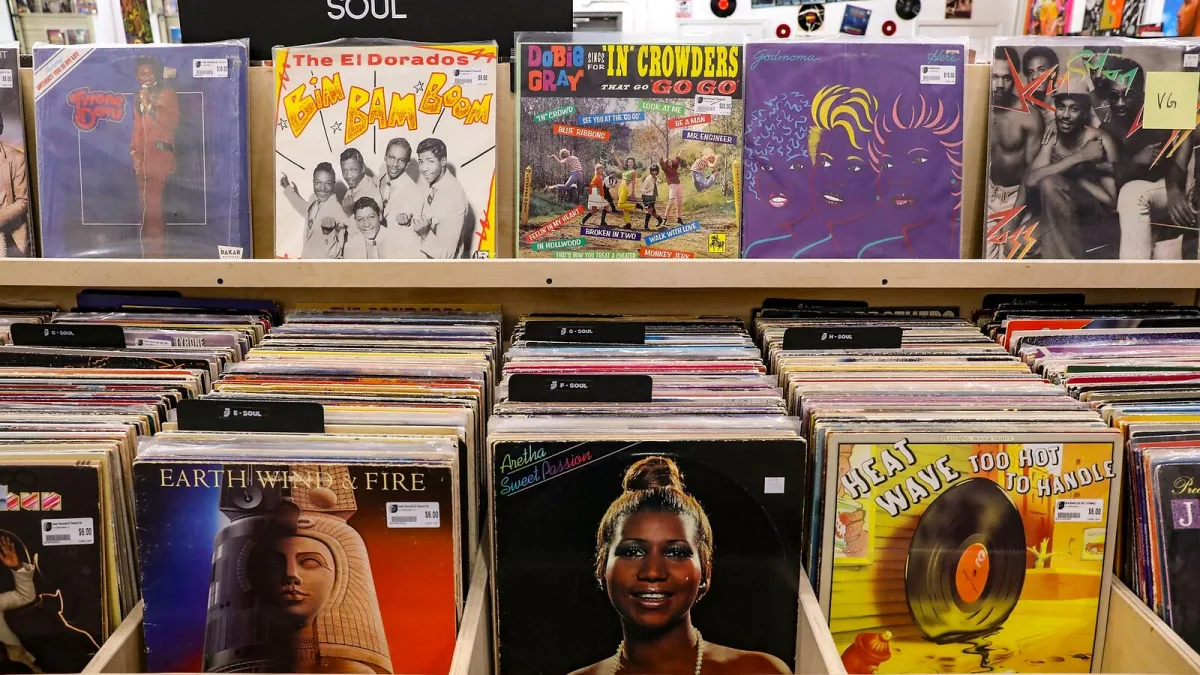
If you've ever wondered why a song gets filed under "R&B music" when it sounds like soul, or funk, or something altogether smoother, you're not alone. R&B is one of the broadest, most quietly influential genres in popular music, and it rewards a little patient listening. This guide walks you through what R&B actually is, where it came from, and what to listen for — gently, and without assuming you already know your Motown from your neo-soul.
What Is R&B Music?
R&B stands for rhythm and blues, and it began as an industry label rather than a single musical style. Billboard magazine started using the term in 1949, replacing the older and openly racist "race records" category that had been used to market music by Black artists. From the start, then, it was less a sound than an umbrella — a way of grouping together the blues, gospel, jazz and boogie-woogie traditions that African American musicians were blending in cities such as Chicago, Detroit, Memphis and New Orleans.
That broad origin is why the term still stretches so far today. R&B music can mean a raw 1950s jump blues record, a lush 1970s soul ballad, or a moody, bass-heavy track from an artist working right now. All of it shares a family resemblance in groove, feeling and vocal expression, even when the production couldn't sound more different.
Five Things to Listen For
You don't need any musical training to hear what makes it distinctive. Try tuning your ear to these five ingredients:
- Groove: listen to how the drums, bass and guitar or keyboard lock together. R&B leans hard on syncopation — accents that land just off the obvious beat — and a firm backbeat you can feel in your chest.
- Vocal phrasing: R&B singers rarely sit rigidly on the beat. Listen for melisma (several notes sung across one syllable), slides, call-and-response and gospel-style improvisation.
- Harmony: compared with a simple three-chord blues, R&B often reaches for richer chords — sevenths, ninths, suspended chords — borrowed from gospel and jazz.
- Arrangement: a verse might be sparse — just drums, bass and keys — before the chorus stacks up horns, strings, extra percussion or layered backing vocals.
- Production era: live horns and piano say 1950s; drum machines and synths say 1980s; samples and programmed beats say the 1990s onward. The tools change even when the feeling doesn't.
A Very Short History
R&B's story runs from the jump blues and doo-wop of the late 1940s and 1950s, through the soul explosion of the 1960s (think Ray Charles fusing gospel with the blues, and Aretha Franklin turning that fusion into a defining statement), into 1970s funk, 1980s new jack swing, and the neo-soul and contemporary R&B that followed. We've traced that whole arc, decade by decade, in our full history of R&B music, but the short version is this: every generation has taken the same rhythmic, vocal-led foundation and rebuilt it with the tools of its own era.
The Main Branches, at a Glance
Once you've got the basics, it helps to know that "R&B" isn't one thing but a family of overlapping styles. Doo-wop brought close vocal harmonies in the 1950s; soul added gospel intensity and orchestration; funk put the groove itself centre stage; new jack swing fused R&B singing with hip-hop's hard beats in the late 1980s; and neo-soul, from the late 1990s onward, brought back live instruments and jazz harmony. Our guide to R&B subgenres breaks each of these down properly, with the artists who defined them.
Who to Listen to First
If you want names to start with, you can't go far wrong with Ray Charles and Aretha Franklin for the soul-gospel foundation, Marvin Gaye and Stevie Wonder for songwriting depth, James Brown for rhythm, and D'Angelo or Erykah Badu if you want to hear where neo-soul took things in the late 1990s. We cover all of them, and plenty more, in our roundup of R&B artists worth knowing.
Where R&B Meets Other Genres
Part of what makes R&B so important is how much it fed into everything around it. Early R&B and blues performers were a direct antecedent of rock and roll. Funk's interlocking rhythms became a foundation for hip-hop sampling. And contemporary R&B has spent decades trading ideas with pop and hip-hop production, to the point where the boundaries between them are often more marketing than musical fact. Understanding R&B, in other words, helps you hear a great deal of modern pop music more clearly too.
The Bottom Line
R&B is best understood not as one genre but as a continuously evolving conversation — between blues and gospel, between the church and the club, between live musicianship and studio technology. Start with a handful of records from different decades, notice what stays constant (the groove, the vocal honesty) and what changes (the production), and you'll have a genuinely useful map of one of popular music's most important traditions. If you'd like a gentler, more practical starting point, our piece on where to start with R&B picks out a manageable first playlist.



Comments