


Pop Music article
The History of Pop Music
Seventy years of teenagers, technology and reinvention: how pop music actually got from the record shop counter to your phone.
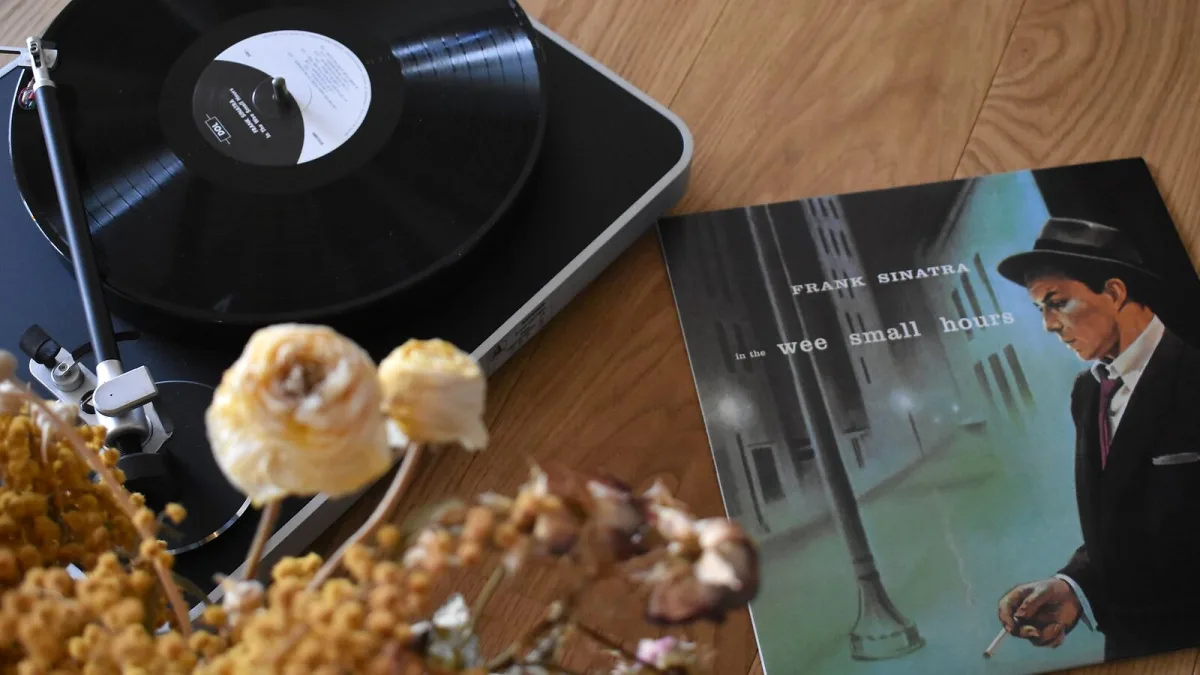
Ask ten people what pop music actually is and you'll get ten different answers, but nobody disagrees that it's been the sound of the mainstream for seventy years. That's a long, tangled story of technology, teenagers and reinvention. Here's how pop got from the record shop counter to your phone, decade by decade.
The 1950s: A New Category Takes Shape
Modern pop music, in the form we'd recognise today, developed in the mid-1950s in the United States and the United Kingdom. It drew on rock 'n' roll, rhythm and blues, country music and earlier commercial songwriting traditions, blending them into something aimed squarely at a growing, newly moneyed audience: teenagers.
What changed wasn't just the sound. It was the machinery around it. The single became the dominant commercial format, radio programming shaped what people heard, and television performances turned musicians into visible stars rather than disembodied voices on a record. Professional songwriting and production teams began treating hit-making as a craft with its own rules.
The 1960s: Bands Take the Wheel
The following decade broadened pop's ambitions considerably. Groups and solo artists increasingly wrote their own material rather than relying solely on staff songwriters, and producers and engineers pushed multitrack recording and overdubbing into genuinely elaborate territory. Studios stopped being places to capture a performance and became instruments in their own right.
Pop also became more international during this period, with British and American artists influencing one another back and forth, and European scenes beginning to feed into the wider conversation. The idea of pop as a single, geographically fixed sound started to dissolve.
The 1970s: Disco, Soft Rock and Studio Craft
Rather than settling into one direction, 1970s pop fractured usefully into several: disco, soft rock, funk-influenced material, adult contemporary and singer-songwriter records all coexisted under the same broad umbrella. Rhythm sections grew more sophisticated, orchestration returned as a serious tool, and electric piano and early synthesisers began appearing alongside guitars and strings.
It's worth remembering this as the decade where arrangement itself became a specialism — where deciding what an instrument does and when it enters a song was treated with as much care as the melody sitting on top of it.
The 1980s: Synths, Screens and a New Kind of Stardom
Synthesisers, drum machines and digital recording reshaped the mainstream sound almost overnight, while music video culture reshaped how artists were seen and sold. Suddenly, how a song looked mattered nearly as much as how it sounded, and electronic instruments opened up textures that simply hadn't existed in pop before.
This is the decade most people picture when they hear "classic pop" — and for good reason. It's when the genre first became genuinely inseparable from its visual presentation.
The 1990s: Crossover and a Global Audience
Pop spent the 1990s absorbing hip-hop, R&B, dance music, alternative rock and Latin influences more openly than ever before, refusing to sit neatly inside its own borders. Major labels also became more systematic about artist development during this period, building organised songwriting and production pipelines around their biggest names.
At the same time, pop's audience genuinely globalised. What counted as a mainstream hit was no longer decided by one or two national markets acting alone.
The 2000s to Now: Digital Tools, Hybrid Genres
Digital audio workstations, software instruments, pitch correction and home recording changed who could make a convincing pop record and where they could make it — a bedroom with a laptop became a legitimate studio. Online distribution then changed how that record reached anyone at all, bypassing the old single-format gatekeepers entirely.
Contemporary pop now crosses genre boundaries so freely that the line between "pop" and other mainstream styles is often more about marketing and audience than musical ingredients. A track can borrow hip-hop's rhythm, R&B's vocal phrasing and electronic production, and still be filed simply as pop.
What Actually Stayed the Same
For all that change, a few threads run through every decade of this history: a focus on memorable melody, a prominent hook, and production polished enough to hold up on whatever the dominant playback format happens to be — a radio, a Walkman, a phone speaker. If you want to understand how those ingredients actually work inside a song, our beginner's guide to pop music breaks down the structure and roles behind a typical pop record in more detail.
Where to Go From Here
History is easier to absorb through the artists and records that actually made it, rather than dates alone. Our piece on pop's most important artists puts names to each of these eras, and our guide to essential pop albums picks out specific records worth hearing from several of them. If the sheer range of styles feels overwhelming, our guide to pop's subgenres untangles synth-pop, dance-pop, K-pop and the rest.
The Bottom Line
Pop's history isn't a straight line from simple to sophisticated, or from authentic to manufactured — it's seventy years of the same basic instincts (a good hook, a clear structure, a sound that suits its moment) being rebuilt with whatever new technology and cultural mood happened to be available. That's exactly why it's still worth listening to.




Comments