


Bedroom Pop roundup
The Best Bedroom Pop Artists to Know
Same core idea, wildly different results. Here are the artists who matter most in the genre — the founders, the breakthrough acts and the ones still pushing it forward.
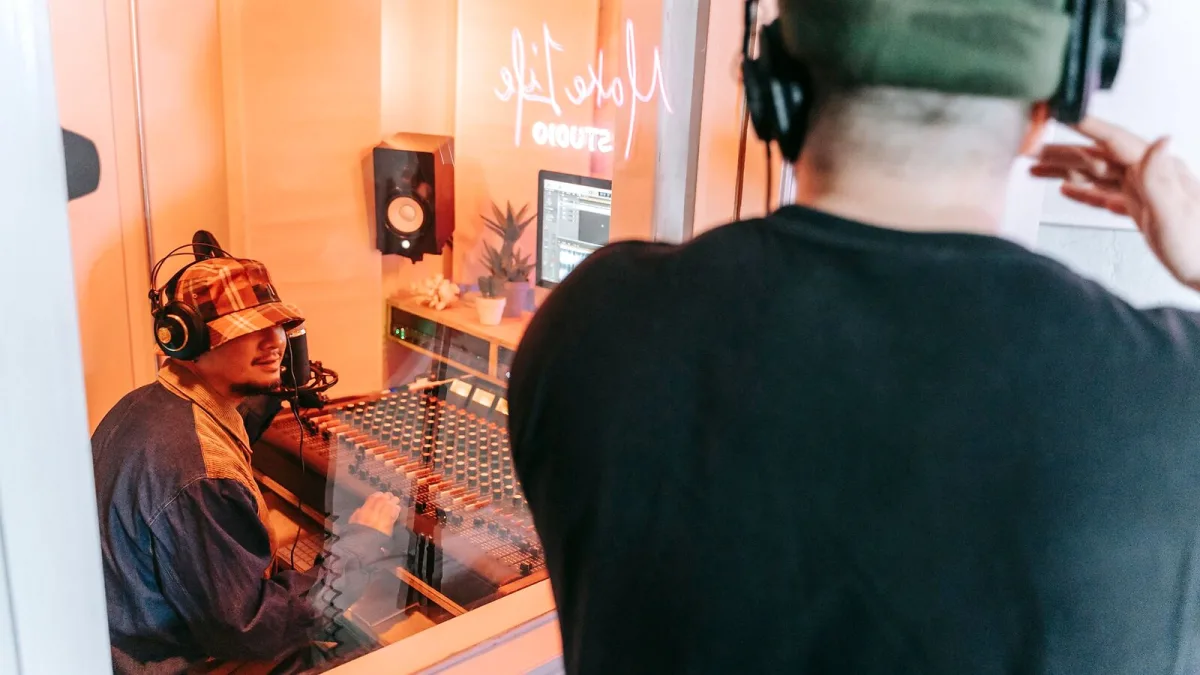
Part of what makes bedroom pop interesting as a genre is how differently its artists approach the same core idea. They're all working in personal spaces, on small budgets, with direct lines to their audience — but the results sound nothing alike. Here are the artists who built the genre and the ones who are defining what it's becoming.
Clairo
Claire Cottrill's early videos — particularly Pretty Girl, recorded in her teenage bedroom and shared on YouTube in 2017 — became one of the genre's defining origin stories. The casual, unpolished presentation was entirely deliberate: a MacBook camera, minimal setup, a song that felt like overhearing something private. It found millions of listeners. Her debut album Immunity (2019) moved to a more produced environment, but the emotional intimacy of the songwriting was unchanged. Her second album, Sling (2021), produced by Jack Antonoff, showed how far the bedroom sensibility can travel without losing what made it compelling in the first place.
Rex Orange County
Alexander O'Connor started releasing music on SoundCloud from his bedroom as a teenager in the UK. His early albums — bcos u will never be free (2015) and Apricot Princess (2017) — were largely self-produced, mixing jazz-influenced arrangements with lo-fi production and earnest, sometimes awkward songwriting. The appeal is the honesty: he sounds like someone working something out, not someone performing a polished product. His later work with professional production retained that quality, which is the real trick of bedroom pop at its best.
girl in red
Marie Ulven has been one of the most important voices in the genre's LGBTQ+ community dimension. Her early self-released singles — i wanna be your girlfriend (2018) and dead girl in the pool — built an enormous online following before her debut album if i could make it go quiet (2021). The sound is DIY guitar pop at its most direct: distorted chords, an unguarded vocal, lyrics that feel like diary entries read aloud. It is bedroom pop with the sensitivity dial turned all the way up.
beabadoobee
Bea Kristi began posting recordings to Instagram in 2017, initially as a personal project rather than a public one. Her early work — particularly the EP Patched Up (2018) — used guitar and voice in a way that was simultaneously indebted to 1990s indie rock and entirely contemporary in its method. She became much more widely known when her song Coffee provided the sample for Powfu's death bed, one of 2020's most-streamed songs. Her trajectory from bedroom recordings to international tours with major acts has been unusually rapid.
Steve Lacy
Steve Lacy's story is distinct from most others in the genre: he began producing on an iPhone, writing and recording music on GarageBand while still at school. His self-produced EP Steve Lacy's Demo (2017) showcased both his ear for texture and his ability to produce commercially viable music from minimal hardware. His contribution to Kendrick Lamar's DAMN. (2017), made on the same smartphone setup, was perhaps the most dramatic demonstration that bedroom pop tools were not just for the margins any more. His debut album Apollo XXI (2019) and later Gemini Rights (2022) have made him one of the most respected young producers and artists in contemporary pop.
Phoebe Bridgers
Phoebe Bridgers sits at the thoughtful end of the genre's spectrum — songwriting that draws on folk and indie rock, production that feels sparse and personal, an aesthetic that places the words and performance at the centre — the bedroom pop sensibility at its most literary. Her debut solo album Stranger in the Alps (2017) and the follow-up Punisher (2020) are benchmark records for intimate indie songwriting. She's also been a significant presence as a collaborator, working with boygenius and Better Oblivion Community Center.
For the records these artists made, the albums guide goes deeper. For the best individual songs, the songs guide is the place to start. And if you're new to the genre entirely, the beginner's guide gives the full context.




Comments