


Salsa Music article
A Beginner's Guide to Salsa Music
Feet move before the brain catches up — here's what salsa music is actually built from.
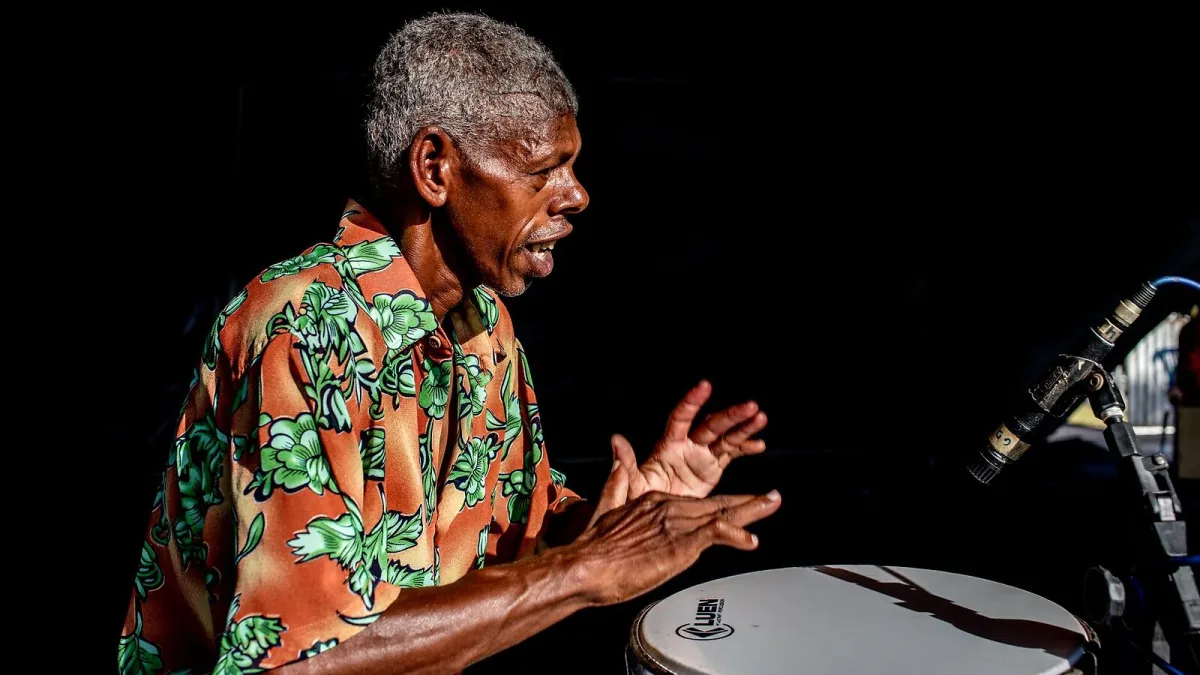
Put salsa music on in a room full of strangers and watch what happens: someone's feet move before their brain's caught up. That's not an accident. Here's what salsa actually is, what it's built from, and why it grabs a room the way it does.
What Salsa Music Actually Is
Salsa music isn't one single style — it's a broad Afro-Caribbean dance-music tradition built mainly on Cuban son, fused with related Cuban forms like son montuno, guaracha and mambo, and shaped hugely by Puerto Rican and New York musicians. The modern genre label took off in New York during the late 1960s and 1970s, largely through Fania Records, but the music underneath it reaches back decades further into Cuban tradition.
The Elements That Make It Work
- Clave: a repeating five-stroke pattern spread across two bars, arranged as either "3-2" or "2-3." Everything else in the arrangement organises itself around this cycle, even when you can't hear it directly.
- Percussion: congas, bongó, timbales, cowbell, güiro and maracas, each locking into its own layer of the groove.
- Piano montuno: a short, syncopated, repeating pattern that fills the spaces around the clave.
- Horns: trumpets and trombones delivering riffs, punches and answering phrases.
- Call-and-response: a lead singer trading lines with a chorus, often building into improvised vocal exchanges called soneo.
Where It's Not the Same as Its Neighbours
| Style | What sets it apart |
|---|---|
| Son | Salsa's main Cuban foundation; salsa is the later, broader category built on it |
| Mambo | Big-band horn writing from a specific historical period |
| Latin jazz | Leans harder on instrumental improvisation and jazz harmony |
| Merengue | A different rhythmic foundation and Dominican lineage |
| Bachata | Guitar-centred Dominican genre with its own conventions |
If you want that comparison in much more depth, our guide to salsa's subgenres and neighbours covers all of it properly.
New York and the Name
Cuban and Puerto Rican musicians working in New York's Latin neighbourhoods adapted Afro-Cuban music through the 1960s, blending it with jazz influence and the city's own dance-band culture. By the late 1960s, "salsa" had become the umbrella term for that New York-centred sound, pushed hard by Fania Records and its enormous roster of Cuban, Puerto Rican and pan-Caribbean musicians. Our full history of salsa tells that story properly, start to finish.
Who You'll Keep Hearing About
A handful of names come up constantly: Celia Cruz, Tito Puente, Eddie Palmieri, Willie Colón, Héctor Lavoe, Ray Barretto, Johnny Pacheco and Rubén Blades among the classic Fania-era figures, with Oscar D'León, Marc Anthony and Gloria Estefan carrying the sound to new audiences later on. Our guide to the genre's essential artists introduces every one of them properly.
The Bottom Line
Salsa music is Cuban son filtered through Puerto Rican and New York musicianship, held together by the clave and powered by percussion, piano and horns trading phrases with a singer and chorus. Once you can hear those pieces moving together, the whole genre opens up. If you're not sure where to actually start listening, our newcomer's guide lays out an easy path in.




Comments