


New Wave article
Essential New Wave Albums Explained
Playlists flatten everything into three-minute chunks. These are the albums where the era actually showed its ambition, explained one by one.
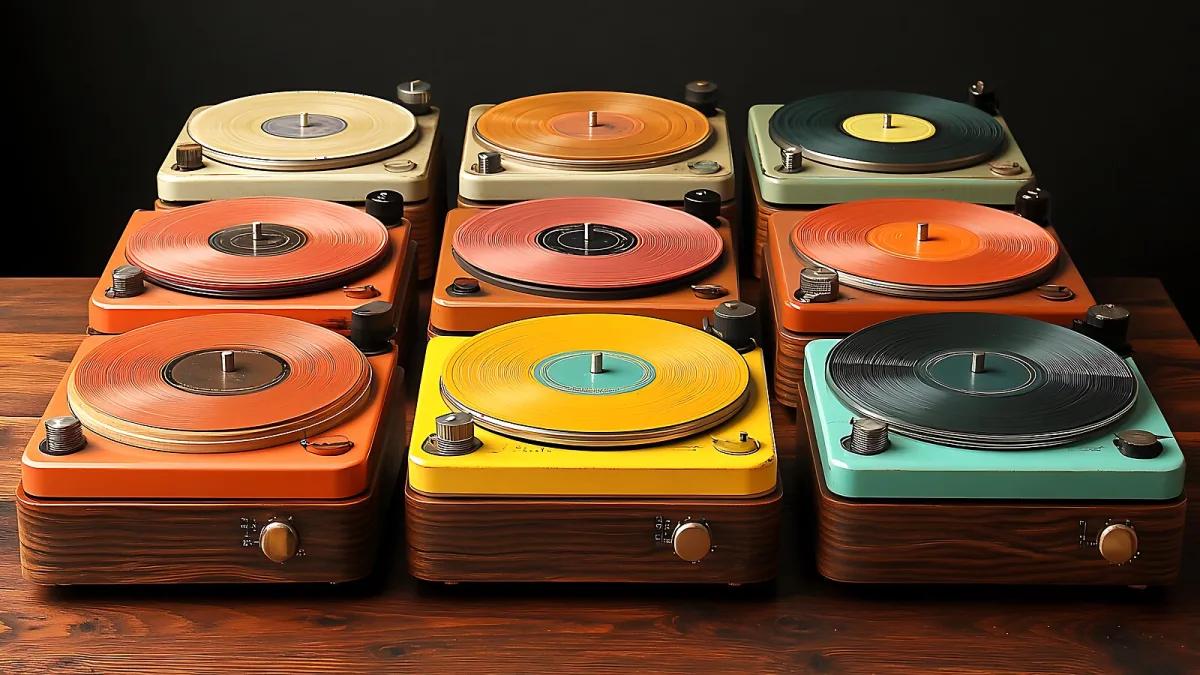
Streaming playlists are fine for a quick fix, but they flatten everything into the same three-minute chunks. Albums are where this era actually shows its ambition. These essential new wave albums are worth hearing start to finish, grouped roughly by when they landed and what they changed.
The Albums That Started It
Talking Heads: 77 – Talking Heads
Nervy, minimal and endlessly inventive, this debut set out the template: angular guitar, polyrhythms, and a vocal delivery that sounds like it's thinking out loud. Nothing about it sounds dated.
Parallel Lines – Blondie
The record where punk attitude and pure pop songwriting met and got along brilliantly. Disco, new wave and radio-friendly hooks sit side by side without any of it feeling like compromise.
Q: Are We Not Men? A: We Are Devo! – Devo
Mechanical rhythms, satirical lyrics and a genuinely strange visual identity. It's one of the most distinctive debuts of the era, and still funny in a deadpan way that hasn't aged.
When the Synths Arrived
The Pleasure Principle – Gary Numan
Cold, minimalist and enormously influential, this is the record most often cited as the moment synthesiser-led pop stopped being a novelty and started being a genuine commercial force.
Dare – The Human League
Proof that synthesisers could carry stadium-sized hooks as convincingly as any guitar. Every track feels built for the singles chart without losing any personality.
Architecture & Morality – OMD
Experimental electronic ideas dressed up as concise, melodic songs. It's a quietly ambitious record that rewards patience more than most from this stretch.
The 1980s Crossover
Rio – Duran Duran
Glossy, funk-inflected and built with music video in mind from the start. This is the sound of a band who understood image and songwriting as one job, not two.
Sweet Dreams (Are Made of This) – Eurythmics
Electronics, soul and genuine songcraft, anchored by one of the most instantly recognisable synth riffs of the decade.
Songs from the Big Chair – Tears for Fears
Sophisticated arrangements and unusually psychological lyrics for a record that also happened to dominate the charts. Ambitious pop, not just polished pop.
Power, Corruption & Lies – New Order
The moment guitar music and the dance floor properly met. It's as much a bridge into electronic dance music as it is a new wave album in its own right.
| Album | Artist | What It's Known For |
|---|---|---|
| Talking Heads: 77 | Talking Heads | Art-school minimalism and angular guitar |
| The Pleasure Principle | Gary Numan | Landmark synth-pop production |
| Rio | Duran Duran | Video-era gloss and funk-influenced rhythm |
| Power, Corruption & Lies | New Order | Guitar music meets the dance floor |
Honourable Mentions
A handful of other essential new wave albums deserve at least a namecheck. The Cars' self-titled 1978 debut gave American radio a sleek, guitar-and-synth hybrid that never oversold itself. Depeche Mode's Speak & Spell shows the band in their brighter, more accessible early phase, before they pushed toward darker, more textured electronic music on later releases such as Music for the Masses. None of these quite made the main list, but any of them would sit comfortably alongside it.
Why These Records Still Hold Up
What links these essential new wave albums isn't a shared production style — it's a shared willingness to treat pop songwriting as something worth taking seriously. Whether the arrangement is built from guitars or synthesisers, each of these records commits fully to its own idea instead of chasing a formula. That's a big part of why they still sound fresh rather than merely nostalgic.
Want the fuller cast of characters behind these records? Our guide to the artists worth knowing goes deeper on each act, and if you'd rather hear individual songs than full albums, our pick of the essential tracks covers that side of things.
The Bottom Line
You don't need all twelve of these to understand the era, but any three or four will show you how differently “new wave” could sound depending on who was making it — and why the label had to eventually split into narrower ones.



Comments