


Grindcore article
The History of Grindcore
Grindcore didn't arrive fully formed. Here's how DIY scenes on both sides of the Atlantic built it, piece by piece.
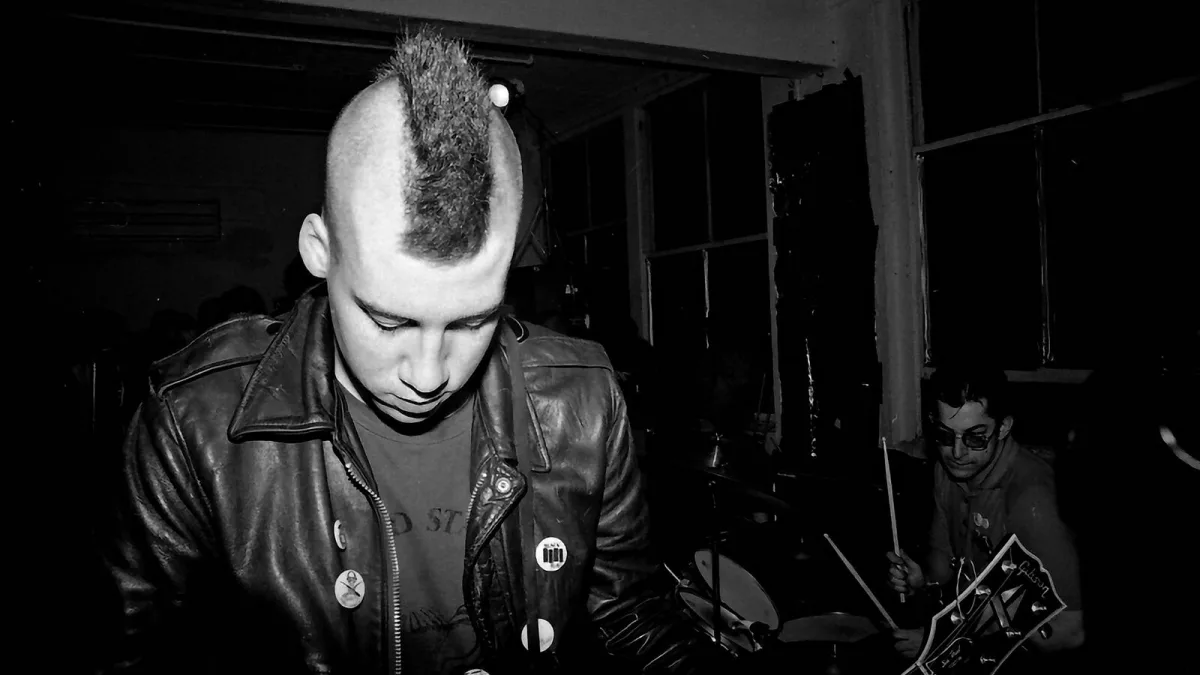
Grindcore didn't arrive fully formed. It came out of tape-trading networks, DIY shows and a handful of scenes on opposite sides of the Atlantic who had no real way of hearing each other yet somehow landed on the same idea at roughly the same time. That's the part of the story that gets lost when people reduce it to "the fastest, heaviest music ever made." Here's how it actually happened.
Punk and Metal, Colliding
The genre's roots lie in the meeting of British anarcho-punk and crust punk with American hardcore and extreme metal. From punk it inherited compact song forms, a DIY, anti-commercial ethic and confrontational politics; from metal it took distortion, weight and increasingly extreme vocal technique. Neither side arrived at this fusion in isolation — grindcore happened through overlapping, mostly independent scenes rather than one deliberate plan, which is a big part of why its early history reads more like several parallel stories than a single timeline.
Siege: The American Precursor
Before the genre had a name, the Massachusetts band Siege were already playing extremely fast hardcore compositions, later collected on the recordings known as Drop Dead. Siege were generally understood as part of the hardcore scene at the time rather than a self-consciously "grindcore" act, but the tempos and vocal aggression on those recordings anticipated what was coming.
Napalm Death and the Making of Scum
In Birmingham, England, Napalm Death grew out of a crust-punk and anarcho-punk environment. Over time, the band progressively stripped back conventional song structure, increased speed and density, and folded in noise and extreme-metal elements. That evolution culminated in Scum, recorded in 1986 and released in 1987 — commonly cited as the first full-length release to make this style of music genuinely unmistakable as its own thing.
Tellingly, the record's two sides don't even feature the same lineup. The first side documents an earlier, especially abrasive version of the band; the second reflects a later lineup with a somewhat different approach. It's a genre origin story that's messier and more human than the tidy "one band invented it" version often told.
Repulsion and Extreme Noise Terror
Around the same period, the American band Repulsion were developing a sound that's now frequently treated as a foundational bridge between death metal, hardcore and this new extreme style. Their album Horrified was recorded in 1986 but not released until 1989, which complicates any tidy chronology of "who came first" — the ideas were clearly circulating well before the records reached shops. Meanwhile in Britain, Extreme Noise Terror helped define a distinctly British strain of the sound, combining crust-punk aggression with extreme speed and a dual-vocal approach.
The Genre Starts to Splinter
By the late 1980s and into the 1990s, a single unified sound had already begun branching into recognisably different tendencies:
- A punk-oriented strain that kept short songs, raw production and political lyrics close to the genre's roots.
- Deathgrind, fusing that speed and structure with death-metal riffing and low growls.
- Goregrind, built on extreme distortion, pitch-shifted vocals and body-horror themes.
- A more technical strand, with complex meters and tightly controlled, intricate musicianship.
Our full guide to grindcore subgenres goes into each of these branches in far more depth.
The Labels That Carried It
None of this reaches listeners without infrastructure, and grindcore's infrastructure was largely independent. Earache Records became closely associated with spreading British extreme metal and grindcore internationally through the late 1980s and 1990s, while Relapse Records did the same for American and international deathgrind and experimental extreme music. Before any of that, though, it was DIY tape-trading networks that actually built the audience — a genuinely grassroots foundation that predates any label's involvement in grindcore altogether, and one that's easy to forget once a genre has record deals and distribution behind it.
No Single Inventor
It's tempting to want one clean origin story, but grindcore genuinely doesn't have one. There's no universally accepted single inventor: Napalm Death are usually credited with consolidating the sound into something recognisable, while Siege and Repulsion are treated as essential precursors who got there through their own, largely separate routes. Even the question of whether Scum was truly "the first grindcore album" depends on exactly how you define both words — a fair reflection of a genre that formed through overlapping scenes rather than a single moment.
Still Evolving
The splintering never really stopped. The sound has continued branching into further hybrids — crustgrind, cybergrind and other experimental combinations — decades after Scum first made the approach recognisable. If you want to know who actually carried each of these branches forward, our guide to essential grindcore artists is the natural next read, and if you're brand new to the sound itself, start with our beginner's guide instead.





Comments