


Grindcore roundup
The Best Grindcore Artists to Know
A handful of names keep recurring in any serious grindcore conversation. Here's what each one actually contributed.
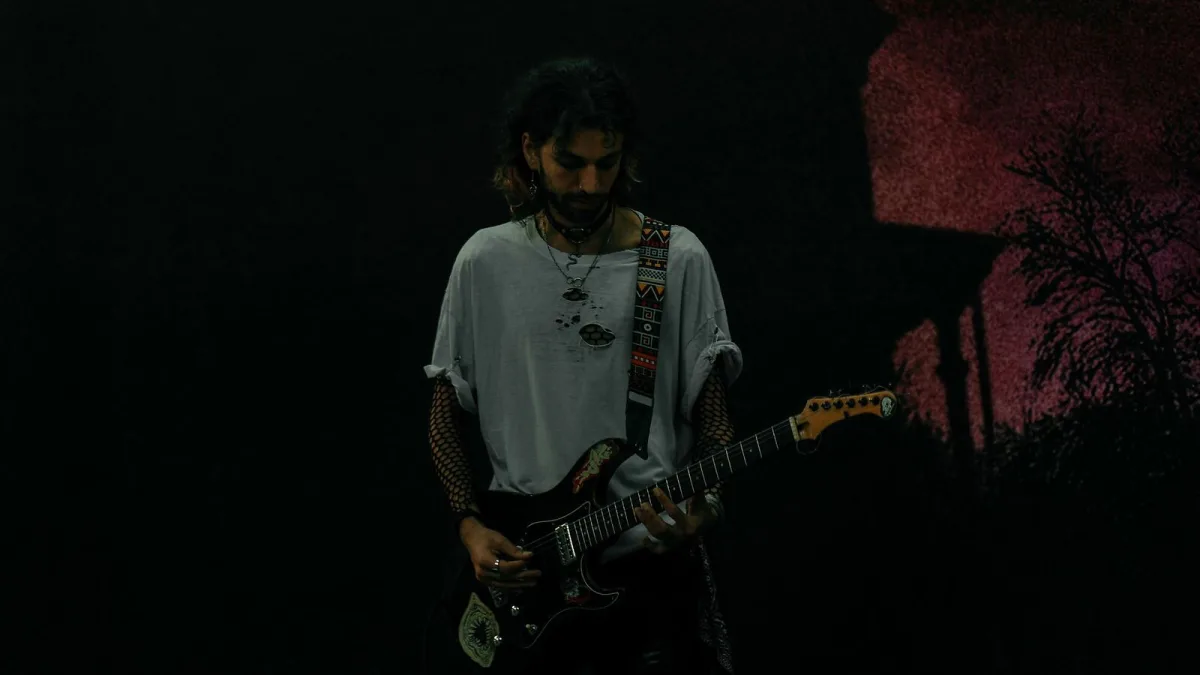
Every extreme genre has its canon of names that keep recurring in any serious grindcore conversation, and this list is shorter and stranger than most — a handful of bands, working largely in isolation from each other, who each nudged the sound in a different direction. Rather than treating them as a chronology, it's worth taking them one at a time, as distinct approaches to the same raw grindcore material.
The Pioneers
Napalm Death remain the name most people reach for first, and with good reason: their 1987 album Scum is widely treated as the record that made this style of music unmistakably its own thing, distinct from the hardcore and crust scenes it grew out of. What's less often mentioned is how internally varied that record already was — its two halves were recorded by different lineups, which tells you something about how unsettled and collaborative the genre's earliest moment really was.
Two American acts arrived at comparable ideas from a different angle. Siege, from Massachusetts, were playing extraordinarily fast hardcore before the genre had a name, later collected as Drop Dead. Repulsion occupy a similar in-between space, their album Horrified now read as a foundational bridge between death metal, hardcore and grind proper. Back in Britain, Extreme Noise Terror fused crust-punk aggression with dual, overlapping vocals to define a distinctly British strain of the sound.
Architects of Goregrind and Deathgrind
Carcass matter here in a way that's easy to underrate: their early releases, especially Reek of Putrefaction and Symphonies of Sickness, effectively invented goregrind's vocabulary — extreme distortion, pitch-shifted vocals and body-horror imagery that countless later bands would borrow, whether or not they credited the source. Terrorizer, meanwhile, took the genre's speed and married it to death-metal precision on World Downfall, a record that's become a genuine landmark of tightly played deathgrind and is still cited as a technical high-water mark decades on.
The 1990s Innovators
The genre's second wave pushed in several directions at once. Brutal Truth brought technical intensity and a willingness to experiment with structure that pushed well past the genre's punk-minimalist origins. Sweden's Nasum paired that same speed with unusually precise production and genuinely strong songwriting, making a case that grindcore could be tight and controlled without losing its bite. Agoraphobic Nosebleed went the other way, leaning into highly compressed, programmed and electronically intensified extremity that anticipated later, more experimental hybrids. Discordance Axis carved out yet another niche, known for technical complexity and dense, highly individual guitar writing that rewards close listening rather than passive intensity.
Carrying It Forward
Pig Destroyer represent grindcore's more recent, guitar-driven high-intensity strain, proof that the genre's founding ideas — speed, density, abrupt shifts — still have somewhere new to go decades after Scum. None of these artists sound much like each other, which is arguably the most useful thing to understand about this scene: it was never one band's formula copied outward, but several parallel answers to a similar question.
Why No Single Sound Defines Grindcore
Line these artists up and the differences are more striking than the similarities. Napalm Death's confrontational politics have little in common with Carcass's clinical body-horror imagery; Nasum's tightly produced songwriting sits a long way from Agoraphobic Nosebleed's programmed extremity. That range is precisely the point. Grindcore was never a single formula handed down from one founding band — it was, and still is, a shared set of tools (speed, distortion, abrupt structure, extreme vocals) that different artists have picked up and applied in genuinely different ways. Understanding that variety matters more than memorising a family tree, because it explains why two records both fairly described as grindcore can sound almost nothing alike.
At a Glance: Grindcore's Key Names
| Artist | Era | Known for |
|---|---|---|
| Napalm Death | Mid-1980s | Consolidating the genre's identity on Scum |
| Repulsion | Mid-1980s | Bridging death metal, hardcore and grind |
| Extreme Noise Terror | Mid-1980s | The British crust-grind strain |
| Carcass | Late 1980s | Inventing goregrind's vocabulary |
| Terrorizer | Late 1980s | Deathgrind precision on World Downfall |
| Brutal Truth | 1990s | Technical intensity and structural experimentation |
| Nasum | 1990s | Precise production married to real songwriting |
| Pig Destroyer | 2000s onward | Guitar-driven modern grindcore |
If you'd rather approach this list record by record, our essential grindcore albums guide breaks these artists down by their key releases, and for how these different approaches map onto actual subgenre labels, see our guide to grindcore subgenres. New to all this? Start instead with our beginner's guide.





Comments