


Enka article
A Beginner's Guide to Enka
Enka is Japan's most emotionally direct popular genre — built on melismatic vocals, nostalgia-soaked lyrics and lush studio arrangements that have endured for decades.
Japanese popular music has a habit of surprising outsiders. Enka — a genre built on heartbreak, nostalgia and emotionally raw singing — sounds unlike almost anything else in the global pop landscape, and yet it has been a mainstream force in Japan for decades. If you've stumbled across it and want to understand what you're hearing, this is your starting point.
What Is Enka?
Enka is a form of Japanese popular song characterised by slow or mid-tempo ballads, theatrical vocal style and lyrics that circle around familiar emotional themes: lost love, longing for home, the pain of separation, rainy nights and solitary drinking. The word itself originally referred to Meiji-era political speech-songs, but the modern genre has its roots in the commercial popular music — known as ryūkōka — that developed through the early and mid-20th century.
Think of it as Japan's answer to a country ballad or a classic torch song: it tells simple, direct stories about universal feelings, delivered with maximum vocal intensity.
How Does It Sound?
A few musical features give enka its instantly recognisable character.
Kobushi — the signature vocal ornament
Kobushi is the heart of this vocal style. It's a melismatic ornament — a deliberate bend, wobble or turn around a pitch — that a singer applies to emotionally weighted syllables. It sounds a little like a controlled catch in the voice, and it's what separates a performance in this tradition from a straightforward ballad delivery. Every major singer develops their own distinctive kobushi.
Pentatonic melody
Many of the melodies are built on the yona-nuki scale — a five-note pattern created by removing the fourth and seventh degrees from a standard major scale. The result is a melodic contour that sounds immediately familiar to Japanese ears, with a distinctive mixture of sweetness and melancholy. It's a useful description, though not a complete one: the melody is not restricted to five notes, and Western chromatic harmony is everywhere beneath the surface.
Lush Western arrangements
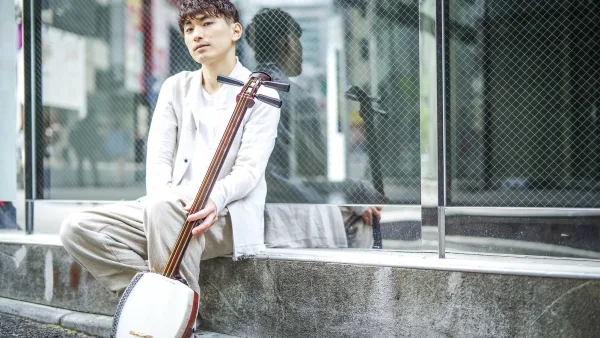
Arrangements typically combine electric guitar, bass, drums, piano, strings and brass with selective use of traditional Japanese instruments like the shamisen (a three-stringed lute) or shakuhachi (bamboo flute). The production tends to be dramatic and spacious, with the vocal placed front and centre in a reverberant mix.
Key Lyrical Themes
The lyrical vocabulary is highly codified. Snow, rain and autumn weather signal emotional desolation. Ports, railway stations and country roads represent departure and loss. Hometowns evoke nostalgia. Sake signals resigned sorrow. These symbols recur across hundreds of songs, functioning almost like a shared poetic shorthand.
This makes it sound formulaic on paper, but in practice the best songs use those familiar images with genuine craft, and the vocal performance transforms them into something deeply felt.
A Brief History
Modern enka took shape in postwar Japan, when singers such as Hibari Misora, Hachirō Kasuga, Michiya Mihashi and Hideo Murata defined its emotional and theatrical register. Keiko Fuji's 1969 debut is often cited as a significant marker in the genre's later development. By the 1970s and 1980s, the genre was a major commercial force, closely tied to television, record label promotion and karaoke culture.
It is more accurate to call it a hybrid modern genre than a survival of ancient Japanese music. Its sound owes as much to international studio pop as it does to traditional Japanese musical practice.
For a detailed account of how the genre evolved, see our piece on the history of enka.
Karaoke and the Genre
It's impossible to discuss enka without mentioning karaoke. The two have had a symbiotic relationship since the 1970s — its clear melodic lines, well-known repertoire and emotionally cathartic delivery made it a natural fit. For many Japanese people, this music is most familiar as a karaoke staple, sung by older relatives at New Year gatherings or company outings.
That association has made it seem old-fashioned to younger audiences, but it has also kept it alive. The genre's greatest songs remain in constant rotation, long after their original recording dates.
Enka Today
The genre continues to find new voices and new audiences. Kiyoshi Hikawa brought a younger, pop-friendly image to the genre from the late 1990s. In 2008, Victor Entertainment debuted Jero, an American singer of Japanese descent whose hip-hop aesthetic and trained voice attracted widespread attention as a cross-cultural statement.
Younger artists are experimenting with hybrid forms, blending the genre's vocal vocabulary with contemporary production. The emotional directness of enka — its refusal to hide what it feels — gives it a durability that outlasts commercial trends.
For the singers who shaped the genre, see our guide to the best enka artists to know. If you'd like to start listening straight away, our newcomer's guide maps out the first steps.
Why Enka Matters
Enka isn't a museum piece. It's a living record of what Japan's post-war generations needed from music: emotional honesty, beauty under pressure, and the dignity of naming grief out loud. Dismiss it as old-fashioned and you miss one of pop music's most distinctive vocal traditions, and some genuinely extraordinary singing.
Once you've heard kobushi done right, you'll notice how rarely Western pop singers take their voices anywhere near that level of expressive risk. That's what makes it worth knowing.




Comments