


Christian Music article
The History of Christian Music
Christian music didn't begin with a guitar amp. Its story runs from hymnals and spirituals through gospel, the Jesus movement and on to a 2025 Billboard breakthrough.
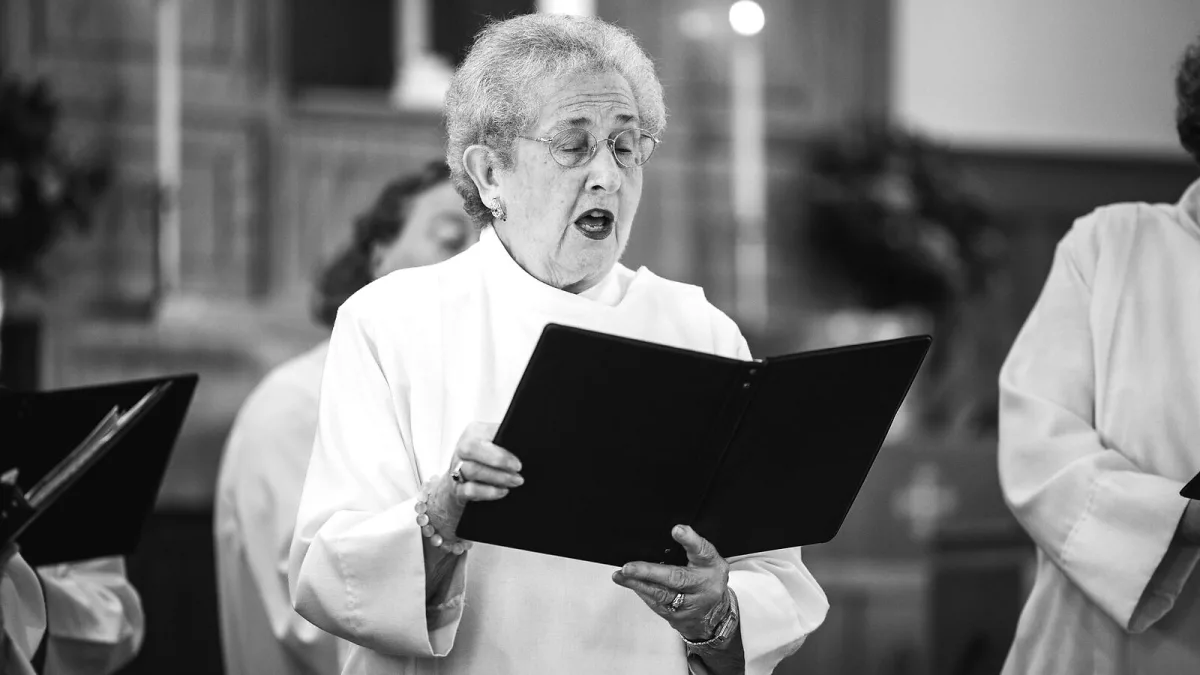
Every great pop story has a longer prehistory than people expect, and Christian music history is no exception. Long before anyone coined the phrase "contemporary Christian music", congregations were already singing their theology, and Black churches were shaping a sound that would eventually feed half of modern popular music. Here's how it actually unfolded.
Long before the charts: hymns and spirituals
The earliest chapter isn't really about an industry at all — it's about the hymn. English-language hymn writing stretches back through figures like Isaac Watts and Charles Wesley, whose sturdy, singable texts were built for a whole congregation, not a soloist. These songs prized clear theology and a melody a room could hold onto, and that basic idea — write something everyone can sing together — still underpins worship songwriting today.
Running in parallel, and just as formative, were the African American spirituals born under slavery: coded, communal songs of endurance and faith. Their call-and-response phrasing and emotional directness didn't stay confined to church walls. They fed straight into blues, jazz and, most directly, gospel.
Gospel finds its voice
Gospel as a distinct, recognisable style really crystallised in the early twentieth century, and Thomas A. Dorsey is usually credited as its key architect — a former blues pianist who brought that music's harmonic richness and emotional swagger into the church. Singers like Mahalia Jackson carried gospel to national and international audiences, while Sister Rosetta Tharpe's electric guitar playing did something else entirely: it planted a seed that rock and roll would later grow from.
Gospel never stood still. It kept absorbing soul, R&B and, later, hip-hop influences, producing a lineage that runs from choir-and-organ tradition right up to today's radio-friendly urban gospel.
The Jesus movement and the birth of Christian rock
The pivot most people mean when they say "Christian music started here" happened in the late 1960s and 1970s. The Jesus movement — a wave of young converts, many from the counterculture — wanted music that sounded like their own generation, not their grandparents' hymnal. Artists like Larry Norman, Keith Green, 2nd Chapter of Acts and Randy Stonehill answered that call, folding Christian lyrics into folk-rock and rock instrumentation.
Norman's 1969 record Upon This Rock is often named as an early landmark of Christian rock, though historians reasonably disagree on exactly which release deserves the "first" label — a familiar problem whenever a new genre is being born in real time rather than declared afterwards. What's not in dispute is Norman's line "Why should the devil have all the good music?", which became something close to a mission statement for the whole movement.
Building an industry around the music
Through the 1970s and 1980s, what had started as a grassroots scene turned into infrastructure: dedicated labels, Christian radio formats, magazines, festivals and eventually award shows. Amy Grant became the era's clearest crossover star, carrying Christian pop songwriting into the general market, while Michael W. Smith and bands like Petra kept the rock and worship sides developing in tandem. This was also a formative stretch of Christian music history in institutional terms — gospel bodies like the Gospel Music Association, home of the GMA Dove Awards, cemented their place as the industry's backbone.
Diversifying: rock, hip-hop, metal and beyond
From the 1990s onward, the story stops being a single thread. dc Talk and Jars of Clay pushed alternative and rock sounds further into the mainstream conversation. Christian hip-hop, led by artists such as Lecrae, built its own audience and credibility within rap culture rather than alongside it. Bands including Skillet took a harder rock and metal-adjacent sound to arena-sized crowds, and Christian country carved out its own quieter but steady lane. By this point, "Christian music" had stopped meaning one genre and had become more like a value system running through several.
Worship goes global, and the charts take notice
The 2000s and 2010s belonged largely to congregational worship as a commercial force — Hillsong, Bethel Music, Elevation Worship and Maverick City Music turned songs written for a single church into global standards sung from Lagos to Liverpool. Streaming flattened the old gatekeepers of radio and retail, letting a worship song spread through churches and playlists long before any chart noticed it.
And the charts eventually did notice. According to the Associated Press, two contemporary Christian songs — Forrest Frank's "Your Way's Better" and Brandon Lake's "Hard Fought Hallelujah" featuring Jelly Roll — reached the all-genre Billboard Hot 100 Top 40 in 2025, the first time that had happened in over a decade. It's the clearest sign yet in recent Christian music history that a story which began in hymnals and church basements has found a genuinely mainstream audience, without ever losing its original congregation.
The throughline
What ties Isaac Watts to Sister Rosetta Tharpe to Brandon Lake isn't a shared sound — it's a shared instinct to put faith into whatever musical language people are actually speaking at the time. That's the real shape of Christian music history: not one straight line, but a family tree with gospel, hymnody and CCM all as branches. For the finer detail on those branches, our piece on Christian music subgenres maps them out properly, and our guide to the artists worth knowing puts faces to this history.






Comments