


Christian Music article
A Beginner's Guide to Christian Music
Christian music can look like one big, confusing family tree from the outside. Here's the gentle, no-pressure map to help you find your way in.
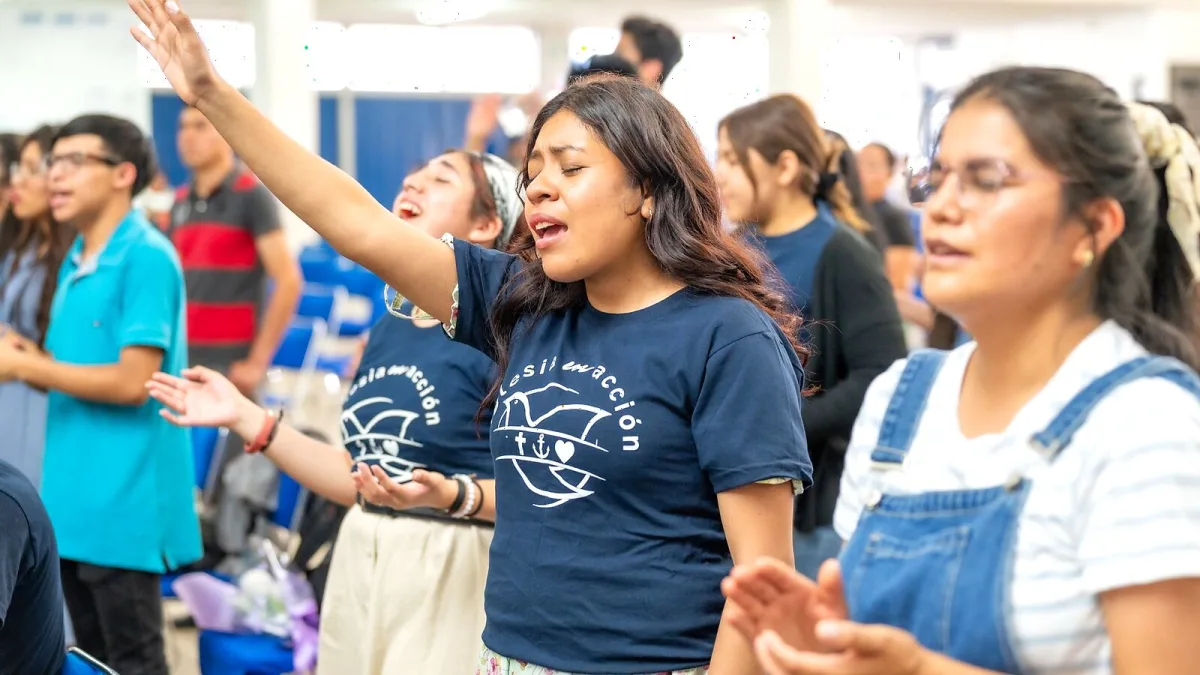
If someone says "Christian music" and you picture one tidy genre, I promise you it's much bigger and much friendlier than that. It's really an umbrella — covering hymns, gospel, contemporary worship, Christian pop, rock, hip-hop and more, all connected by the faith behind the words rather than a single sound. This guide is here to take the overwhelm out of it, so you know exactly what you're listening to and where to start.
What is Christian music, really?
At its simplest, it is any music created for worship, evangelism, personal devotion or storytelling rooted in Christian belief. That's a wide brief, and it's exactly why the term can feel slippery. A centuries-old hymn sung in a stone church and a synth-heavy worship anthem played through arena speakers both count — they just serve different moments and different congregations.
A useful first distinction is between it as the broad umbrella, and contemporary Christian music (often shortened to CCM), which is the modern industry term for Christian pop, rock and worship. Gospel music sits alongside both, with its own deep roots and traditions that overlap the wider field without being identical to it.
The main styles you'll meet
You don't need to memorise every branch on day one. Just knowing the shape of the tree helps enormously when you're deciding what to try next.
| Style | What it sounds like | A gentle way in |
|---|---|---|
| Hymns | Structured, text-led melodies, sung communally | Isaac Watts and Charles Wesley's classic texts |
| Traditional gospel | Call-and-response, choirs, organ and handclaps | Mahalia Jackson |
| Contemporary gospel | Gospel harmony blended with R&B and pop | Kirk Franklin |
| Contemporary worship | Repeated choruses built for a room to sing along | Chris Tomlin, Elevation Worship |
| Christian pop | Polished, verse-chorus songwriting | Amy Grant, Lauren Daigle |
| Christian rock | Guitars and drums, same energy as mainstream rock | Petra, Skillet |
| Christian hip-hop | Rap flow and programmed beats with faith-centred lyrics | Lecrae |
Notice how differently each row sounds. That's normal, and it's the whole point — nobody expects you to like every branch equally, any more than you'd expect to love every branch of pop.
A very short history, so nothing feels random
None of this appeared overnight in a recording studio. It grew out of biblical psalm-singing, European church music and, crucially, African American spirituals, which fed directly into gospel. Gospel itself was shaped by figures like Thomas A. Dorsey and singers such as Mahalia Jackson and Sister Rosetta Tharpe, whose guitar playing later rippled into rock music more broadly.
The more "contemporary" strand took off in the late 1960s and 1970s, during what's often called the Jesus movement, when artists started marrying Christian lyrics to the folk-rock and pop sounds of the day. Larry Norman's 1969 album Upon This Rock is frequently pointed to as an early landmark of Christian rock — though, as with most "first ever" claims, historians disagree on exactly where the line should be drawn. From there, dedicated labels, radio stations and award shows built up around the music, and artists like Amy Grant and Michael W. Smith helped carry it into wider public view.
Reaching far beyond the church hall
One thing worth knowing as a beginner: it isn't a niche curiosity any more. According to the Associated Press, two contemporary Christian songs reached the all-genre Billboard Hot 100 Top 40 in 2025 for the first time in over a decade — Forrest Frank's "Your Way's Better" and Brandon Lake's "Hard Fought Hallelujah" with Jelly Roll. That's a real sign of how far the sound has travelled beyond its traditional audience, even if it doesn't mean every corner of the scene has suddenly gone mainstream.
It's also genuinely global now. Worship songs get written in Nigeria, South Korea, Australia and the UK just as often as the United States, and streaming means a song can spread through churches and playlists long before radio ever notices it.
How to actually start listening
Here's the reassuring bit: there's no wrong door in. A few gentle suggestions if you're not sure where to begin:
- Start with a gospel recording to hear what call-and-response and choir arrangement really sound like.
- Try a hymn or a modern hymn reinterpretation for a sense of the older, text-focused tradition.
- Sample a well-known worship song to hear how a track is built for a whole room to sing.
- Branch into Christian hip-hop, rock or country once you've got your bearings, so you don't assume it only means one thing.
Take your time. It rewards a bit of patient exploring far more than it punishes a wrong first guess.
The bottom line
Christian music is best understood as a family of traditions united by faith rather than a single genre with fixed rules. Once you can spot the difference between hymns, gospel, worship and Christian pop, the rest starts falling into place quickly — and you'll find it's a far richer, friendlier world than the label first suggests. For a closer look at the individual branches, our guide to Christian music subgenres breaks each one down in more depth, and our fuller history piece fills in the story properly.






Comments