


Americana article
A Beginner's Guide to Americana
Americana blends country, folk, blues, bluegrass and rock into something else entirely. Here's a friendly, no-jargon way in for first-time listeners.
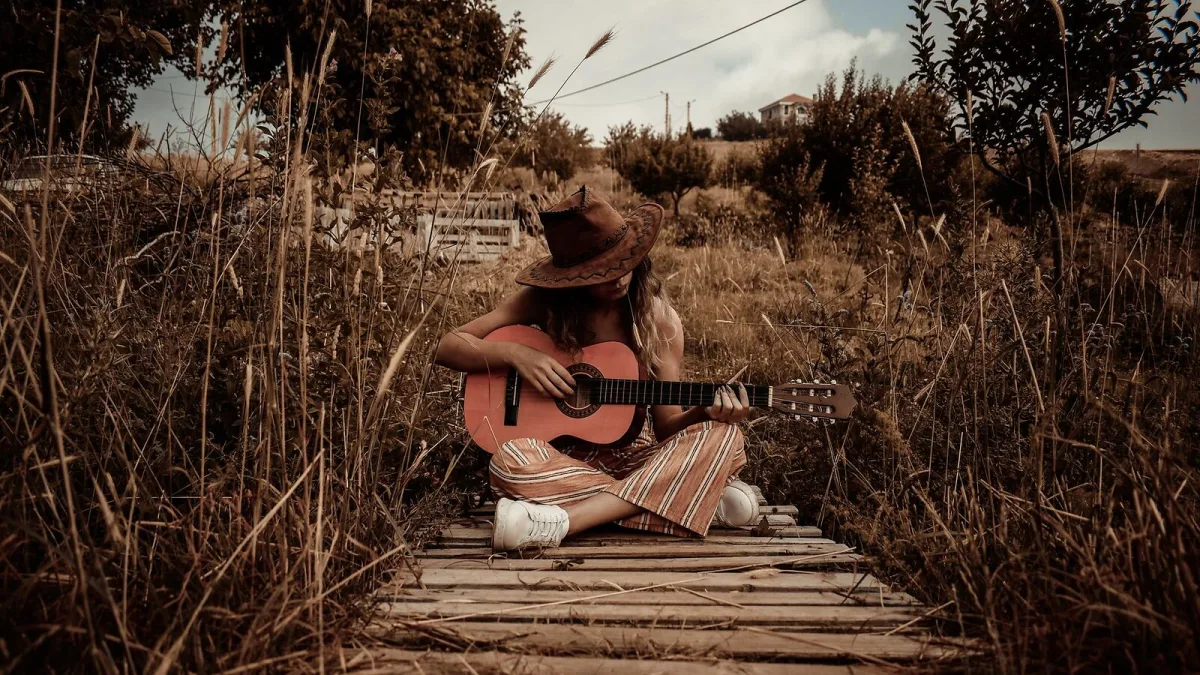
Americana is one of those words that sounds like it should be simple and turns out to be wonderfully messy. It is not a single sound so much as a meeting point — the place where country, folk, blues, bluegrass and rock all turn up to the same session. If you have ever liked a record without being able to say quite what genre it was, there is a fair chance it was this one. Here is a friendly, no-jargon route in.
So What Actually Is Americana?
The Americana Music Association (AMA), the genre's own trade body, defines it as contemporary music that draws on country, roots-rock, folk, bluegrass, rhythm and blues, and blues, blended into something that lives apart from the “pure forms” of any one of them. That is a useful definition because it explains why the music refuses to sit still. A record can be hushed and acoustic, or it can arrive with a full electric band, drums and all — both are still Americana, provided the roots are audible underneath.
Think of it less as a genre with strict rules and more as a family reunion. Everyone at the table grew up on slightly different music — church music, honky-tonk, front-porch fiddle tunes, electric blues — and this genre is what happens when they all start playing together.
Where the Family Comes From
Trace the lineage back and you find several older traditions feeding in: old-time and Appalachian string-band music, honky-tonk and outlaw country, folk singer-songwriting, blues, bluegrass, and gospel and soul. None of these arrived in isolation — musicians shared stages, studios and record shops for decades, which is exactly why the styles blend so naturally now. If you want the full timeline, our history of Americana traces how that mixing actually happened, decade by decade.
It is a bit like Coventry's own 2-Tone scene, where ska and punk collided and made something neither one could have managed alone — Americana is that same idea, just with a fiddle instead of a horn section.
What It Sounds Like
There is no single Americana line-up, but a typical band draws on some of the following:
- Acoustic guitar — the rhythmic backbone for most songs.
- Electric guitar — for fills, twang or full-on drive.
- Pedal steel or lap steel — the crying, sliding sound behind a country ballad.
- Fiddle, mandolin and banjo — the old-time and bluegrass end of the family.
- Upright or electric bass and drums — whatever the song needs.
- Piano or Hammond organ — bringing in gospel and soul colour.
Lyrically, this music tends to favour real places, real work and real people over abstraction — songs about family, memory, hardship and home turn up constantly. It is a genre that likes a good story, told plainly.
A Simple Listening Path for First-Timers
Rather than trying to hear everything at once, it helps to move through it roughly in order:
- Start with the roots. Early country and gospel recordings by figures like the Carter Family and Bill Monroe show where the raw materials came from.
- Move to the singer-songwriters. Woody Guthrie, Bob Dylan and John Prine put plain, observant lyrics front and centre.
- Hear the country-rock crossover. Gram Parsons, Emmylou Harris and The Band show country and rock learning to share a stage.
- Try the alt-country years. Uncle Tupelo, Son Volt and early Wilco roughed the sound up again.
- Finish in the present. Jason Isbell, Rhiannon Giddens, Margo Price and Tyler Childers show where it has landed today.
For a proper introduction to the people behind those records, our guide to the best artists to know is the natural next stop, and if you would rather start with individual songs, see our pick of essential Americana songs.
Do You Need Any Gear to Get Into This?
None at all — Americana is a listening genre first. But if the music tempts you towards picking up an instrument, a modest starting kit covers most of it:
- A comfortable steel-string acoustic guitar with medium or light strings.
- A clip-on tuner and a capo.
- A small pack of picks, and a slide if the blues side of things appeals.
- A basic dynamic microphone if you plan on singing along at open mic nights.
Pedal steel, banjo, fiddle and mandolin are wonderful but specialised — nobody expects a beginner to own one before they even know if they like this music.
Common Beginner Mix-Ups
A few myths trip newcomers up early on, so it is worth clearing them before you dive in:
- “It's just acoustic country.” Plenty of Americana is loud, electric and rock-adjacent.
- “It's the same as alt-country.” Alt-country is one important strand within it, not the whole picture — our guide to Americana subgenres, explained untangles the different strands properly.
- “It only comes from Nashville.” The scene stretches from Appalachia to Texas to the Pacific coast.
- “It's only made by white, rural artists.” Black musicians shaped the blues, gospel, soul and country traditions this whole genre depends on, and that history matters.
The Bottom Line
Americana rewards curiosity more than expertise. You do not need to identify every subgenre on a first listen — you just need to notice a good story, a well-played instrument and a band that means what it plays. Follow the listening path above, keep an open ear for the blend of country, folk, blues and rock underneath, and the rest follows naturally. For records rather than individual songs, our list of essential Americana albums, explained is a solid next destination.



Comments