


Indie Rock article
The History of Indie Rock
How a scrappy DIY release strategy turned into one of the most influential musical identities of the last fifty years.
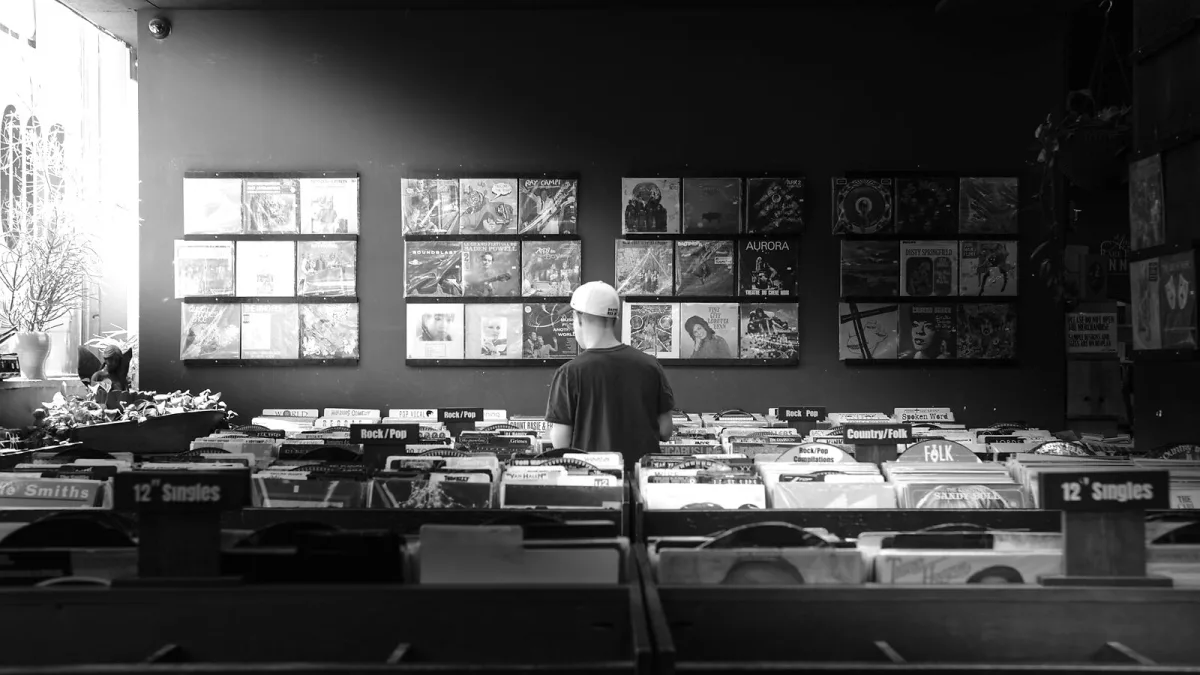
Every genre has a moment where the label starts meaning something more than a business arrangement, and for indie rock, that moment stretches across three decades and two continents. Here's how a scrappy DIY release strategy turned into one of the most influential musical identities of the last fifty years.
The Punk Blueprint
The philosophy came first, before anyone had settled on a name for it. Punk handed the movement its founding principles: cheap equipment, short production chains, self-organised gigs, and a flat refusal to wait for major-label approval before putting a record out. The Buzzcocks' 1977 EP Spiral Scratch, released independently by the band themselves, is frequently pointed to as an early, defining example of that DIY approach in action.
It's worth saying upfront — the movement's exact starting point is genuinely disputed. Some histories lean on Spiral Scratch, others point to the wider independent-label infrastructure or to American college radio's earliest days. These aren't competing claims so much as different entry points into the same sprawling story.
Britain Builds an Independent Scene
Through the late 1970s and into the 1980s, British labels such as Rough Trade, Factory Records, Mute and Industrial Records built the infrastructure that let alternative music survive and travel without major-label backing. Specialist record shops, mail-order distribution and a thriving fanzine culture all fed into it, giving artists a route to an audience that didn't run through commercial radio.
That scene reached a defining moment in 1986, when the British music weekly NME released a compilation called C86. It became closely associated with a particular strand of the sound — jangly guitars, compact, melodic songwriting and a deliberately modest, unglamorous presentation. It's important not to overstate its reach, though; C86 captured one strand of a much wider scene, not a complete definition of it.
America Finds Its Own Route: College Radio
Across the Atlantic, commercial radio simply wasn't built for guitar bands working outside pop and rock formats, so college radio stepped into that gap. R.E.M., the Replacements, Hüsker Dü, Sonic Youth and the Pixies all found early audiences this way, connecting punk's independent spirit to a wider American listenership than the underground scene alone could reach.
"College rock" and "alternative rock" got used more or less interchangeably with the term at the time, though they were never quite the same thing. Alternative rock went on to become a major commercial category through the 1990s, while the independent identity held onto its ties to underground scenes and DIY culture even as the crossover happened.
The 1990s: Indie Rock Splits Into Substyles
By the 1990s, what had started as a fairly loose scene had fractured into genuinely distinct substyles — lo-fi, twee pop, noise rock, slowcore and post-rock among them. Pavement, Guided by Voices, Neutral Milk Hotel, Sleater-Kinney, Built to Spill and Modest Mouse each pushed the sound in a different direction, from deliberately rough home recordings to angular guitar interplay and emotionally raw songwriting. Our guide to the genre's subgenres unpacks each of these branches properly, if you want the fuller picture.
The 2000s Guitar Revival, and What Came After
The early 2000s brought a fresh wave of indie rock built partly on post-punk's old bones — the Strokes, Interpol and Yeah Yeah Yeahs led a guitar revival that reintroduced the sound to a mainstream audience largely raised on nu-metal and pop. Arcade Fire pushed things in a more expansive, orchestral direction, Vampire Weekend folded in African pop and chamber-pop influences, and later acts like the National and Alvvays kept finding new corners of the sound to explore.
Digital recording and streaming have since worn down the old wall between major-label and independent music almost entirely. Any artist can self-release globally now, though discoverability, playlist placement and touring remain just as real a challenge as they ever were — arguably more so, with so much more music competing for the same attention.
Why the Story Still Matters
Knowing this history changes how you hear indie rock today. It explains why a band signed to a major label can still sound and feel independent, and why the sound has never settled into one fixed shape — it was built by scenes reacting against different things in different places, not by a single musical rulebook. For a working sense of who actually built this history, our guide to the best artists to know puts names and records to everything above, and our piece on essential albums traces the same arc through specific records worth actually hearing.






Comments