


Drum and Bass article
The History of Drum and Bass
From warehouse raves to a Mercury Prize win, here's how drum and bass actually took shape, era by era.
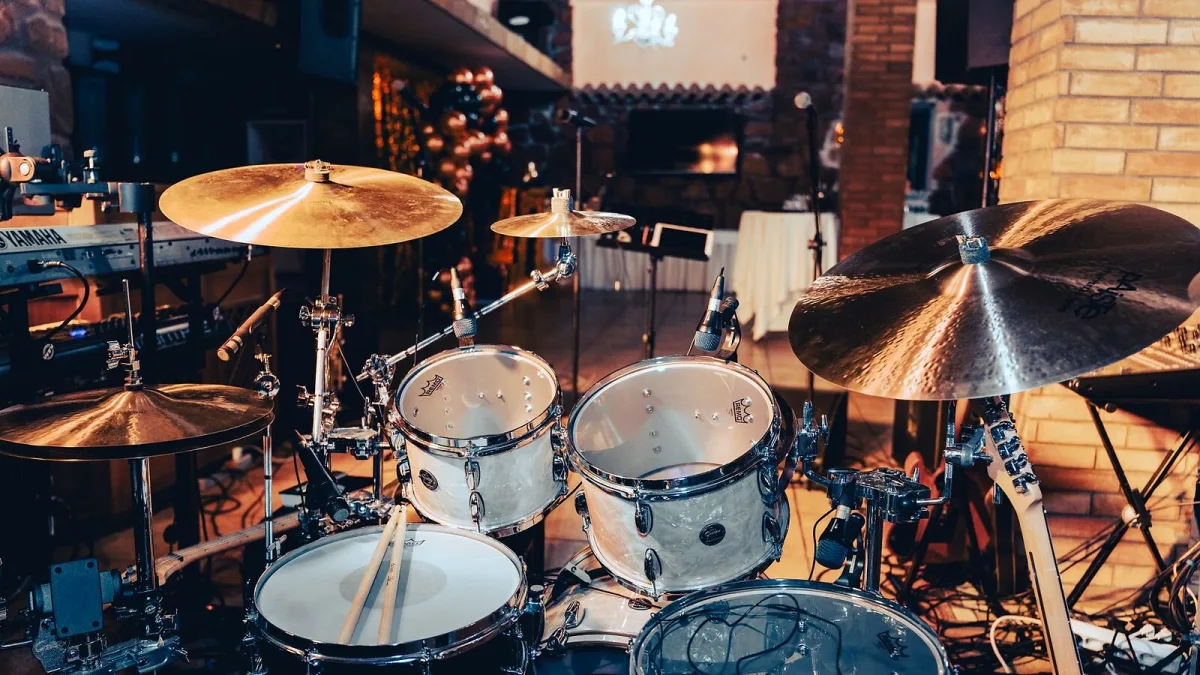
Drum and bass didn't arrive fully formed. It was built, piece by piece, out of warehouse raves, pirate radio, and a small number of drum breaks that got sliced up more times than anyone could count. Here's how the genre actually got from hardcore raves to the festival main stage, in roughly the order it happened.
The Rave Roots: Hardcore and Breakbeat
The story starts in the UK's early-1990s rave scene, where DJs and producers were speeding up and layering breakbeats — sampled drum passages, usually lifted from old funk and soul records — over heavy, rave-style bass and euphoric synth stabs. This sound, known as hardcore and later breakbeat hardcore, was raw, fast and built for warehouses rather than radio. It laid down the two habits that would define everything that followed: chopped-up drums, and bass you could feel in your chest.
The Rise of Jungle
Out of hardcore came jungle, a heavier and more overtly Jamaican-influenced strand that leaned into reggae and dancehall basslines, ragga vocal samples and increasingly intricate breakbeat editing. Producers didn't just loop a break; they chopped it into individual hits and rearranged them into new, more syncopated patterns. No source got chopped up more than the Amen break — six seconds of drumming from The Winstons' 1969 track "Amen, Brother" — which became the rhythmic backbone of an entire generation of tracks. By the mid-1990s, "jungle" and the newer umbrella term were being used almost interchangeably, though some scenes and artists still treat jungle as its own distinct tradition rather than simply an early chapter of DnB.
The Mid-1990s Split
As the sound matured, it pulled in several directions at once. One camp, associated with producers like LTJ Bukem and his label Good Looking Records, pushed toward spacious, jazz- and soul-inflected production that came to be known as "intelligent" or atmospheric DnB. Another camp went the opposite way: techstep, championed by acts like Ed Rush and Optical, stripped everything back to dark, mechanical drums and synthetic bass design. A third strand, jump-up, kept things simple and direct — loud bass hooks built for an immediate dancefloor reaction. Meanwhile, drumfunk producers pushed breakbeat editing to its most intricate extreme.
The Labels That Shaped the Sound
| Label | Known for |
|---|---|
| Metalheadz | Dark, experimental and technically ambitious DnB, founded by Goldie |
| Good Looking Records | Atmospheric, melodic DnB associated with LTJ Bukem |
| Moving Shadow | Foundational releases spanning hardcore, jungle and early DnB |
| V Recordings | Jungle, liquid and the genre's broader development |
| No U-Turn | Central to the rise of darker techstep |
| Hospital Records | A major home for liquid and melodic DnB |
| RAM Records | Associated with Andy C and influential modern DnB |
Proving It Could Fill an Album
By the mid-1990s, the genre had a point to prove: that it could sustain a full album, not just a 12-inch single. Goldie's 1995 album Timeless, released on Metalheadz, did exactly that, pairing ambitious, extended compositions with the genre's rhythmic vocabulary. Two years later, Roni Size and his Bristol collective Reprazent went further still, winning the 1997 Mercury Prize for their album New Forms — a genuinely significant moment that put the genre in front of an audience who'd never have found it on pirate radio.
The 2000s: Going Overground
Through the 2000s and into the 2010s, a new generation of acts pulled the genre toward the mainstream. Pendulum brought rock energy and festival-scale production; Sub Focus and Chase & Status crossed over into pop and radio play while keeping serious bass weight; and Netsky, High Contrast and London Elektricity kept the melodic, liquid side of the genre thriving for a new audience. The sound had learned to fill arenas without losing the low end that started it all.
Where It Stands Today
The genre now runs on two tracks at once — a technical, club-focused underground still pushing neurofunk and jungle revival sounds, and a polished, festival-ready mainstream carried by acts working in dancefloor and crossover styles. Both trace back to the same warehouse raves and the same chopped-up breaks. For a closer look at the people behind these eras, our guide to essential DnB artists picks up where this leaves off, and our rundown of essential albums covers Timeless and New Forms in more depth.
The Bottom Line
Every strand of drum and bass you hear today, however polished or however dark, traces back through jungle to the same handful of chopped-up funk breaks and warehouse basslines. Knowing that history makes the genre's constant reinvention make a lot more sense.



Comments