


Drum and Bass article
A Beginner's Guide to Drum and Bass
Fast, bass-heavy and built on chopped breakbeats — here's what drum and bass actually is, and how the pieces fit together.
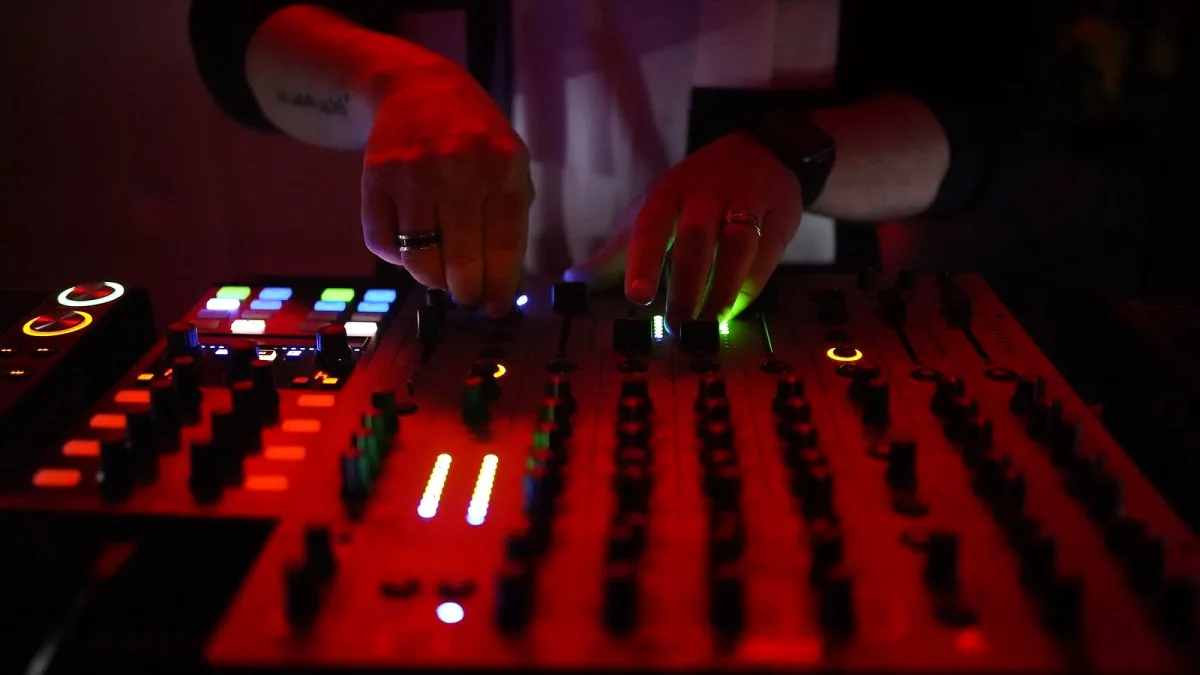
DnB is one of those genres that announces itself within about two seconds — a tempo that feels almost too fast to dance to, and a bassline that seems to come from somewhere below the floor. Most people call it DnB for short, and once you know what you're listening for, it stops sounding chaotic and starts sounding like one of the most carefully engineered forms of dance music around. Here's what it actually is, how it's built, and where to go next.
What Is Drum and Bass?
DnB is a UK-born electronic genre defined by fast, chopped-up breakbeats and heavy low-end bass, usually running somewhere between 160 and 180 beats per minute — most commonly around 170 to 176 BPM. Unlike house or techno, which lock onto a steady four-on-the-floor kick, DnB gets its identity from a syncopated, restless drum pattern that rarely sits still for two bars in a row. It grew out of UK rave culture in the early 1990s, and the name itself simply describes its two most obvious ingredients: intricate drums up top, and weight underneath.
The Rhythm That Makes It Tick
Speed is only half the story. A DnB track at 172 BPM often feels, to the body at least, like it's moving at half that — around 86 BPM — because the ear latches onto the bass and snare pattern rather than counting every fast hi-hat. This "half-time feel" is one of the genre's quiet tricks, and it's why the music can sound both frantic and strangely easy to move to at the same time.
The drums themselves are usually built from a breakbeat — a sampled or programmed drum passage, chopped into individual hits and rearranged rather than left as a simple loop. The single most influential source of these breaks is the Amen break, a few bars of drumming from a 1969 funk record that's been sliced, pitched, distorted and reassembled more times than almost any other sound in music history.
A Very Short History
DnB didn't appear from nowhere. It grew out of hardcore and breakbeat hardcore raves in the early 1990s, which in turn gave rise to jungle — a heavier, reggae- and dancehall-inflected style built on those chopped breaks. By the mid-1990s, the sound had splintered into several directions at once: atmospheric, jazz-influenced production on one side, and darker, more mechanical "techstep" on the other. Our full history of the genre covers that journey properly, from rave culture through to the genre's mainstream years.
The Subgenres, in Brief
Once DnB splits into its many dialects, things can get confusing fast, so here's the short version:
- Jungle — the earlier, sample-heavy, reggae-connected root of the genre.
- Liquid — melodic, soulful and often vocal-led.
- Jump-up — bouncy, bass-hook-driven, built for an immediate reaction.
- Techstep — dark, stripped-back and mechanical.
- Neurofunk — heavily processed, precise, and aggressive.
- Dancefloor DnB — polished and festival-ready.
Our dedicated guide to DnB subgenres goes into each of these properly, with what to listen for in each one.
A Few Terms Worth Knowing
| Term | What it means |
|---|---|
| Breakbeat | A sampled or programmed drum passage used instead of a straight kick pattern |
| Amen break | The most sampled drum break in electronic music, taken from a 1969 funk recording |
| Reese bass | A thick, detuned bass sound built from layered oscillators, closely tied to jungle and DnB |
| Drop | The moment the main drums and bass return in full after a breakdown or build-up |
| Two-step | A syncopated drum feel where the snare holds a strong backbeat against a shifting kick |
Where to Go From Here
If you'd rather ease in through people and records than theory, our guides to the essential DnB artists, the essential albums and a set of defining tracks are all good next stops. And if you want a gentler, more practical route in, our piece on where newcomers should start is built exactly for that.
The Bottom Line
DnB rewards a bit of patient listening more than almost any other electronic genre — the details in the breakbeats and the sub-bass only really land once you know they're there. Learn the shape of it once, and you'll hear it everywhere afterwards.





Comments