


Music Stand article
Music Stand Explained: Features, Types and Tips
From church-hall rehearsals to orchestra pits, the humble music stand does more work than it gets credit for. Here's what it actually is, and what to look for.
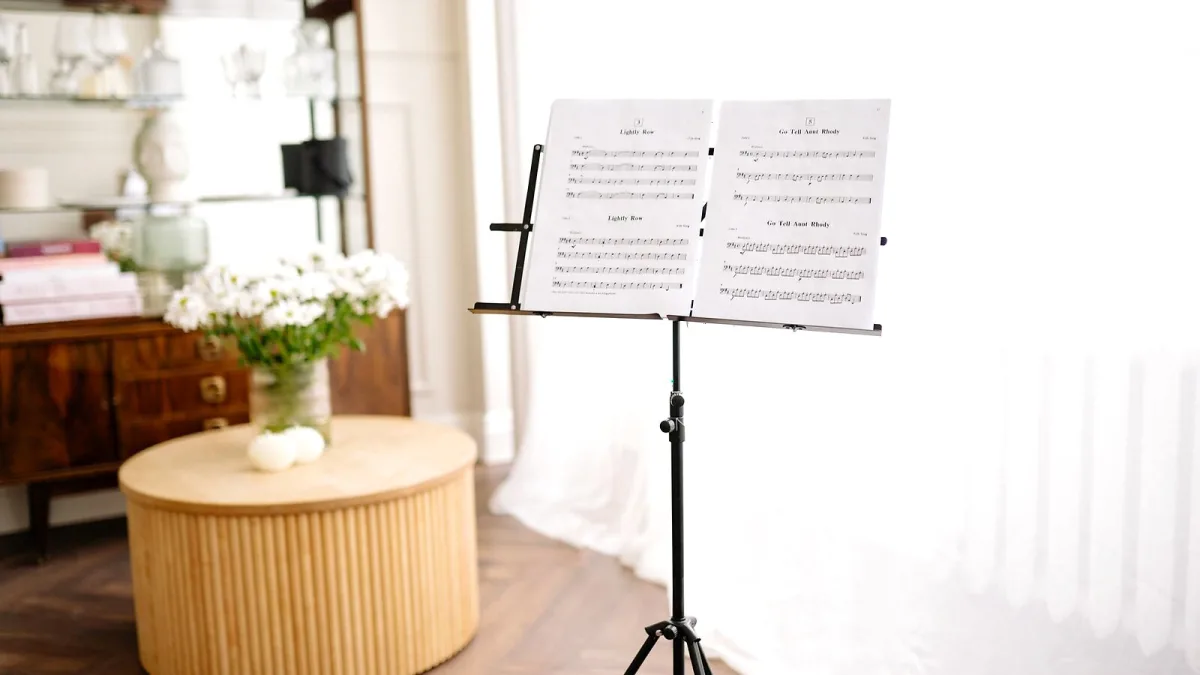
I remember sitting at the back of a church hall in London watching a community orchestra tune up, and what struck me wasn't the instruments — it was the forest of black stands in front of every player, each one holding a slightly different stack of paper at a slightly different angle. A music stand looks like the least interesting object in the room. It's also one of the few things almost every musician, from a nervous eight-year-old with a recorder to a touring cellist, actually owns and uses every single day.
What a music stand is actually for
At its simplest, a music stand is an adjustable support that holds sheet music, a songbook or a tablet at a height and angle you can read comfortably while you play. That sounds obvious until you try practising without one — propping pages on a chair, a windowsill or your knee, craning your neck to see the notes. A good stand solves that problem quietly and then gets out of the way.
It matters more in a group setting than most people expect. In an orchestra, a wind band or a church ensemble, players need to see their part clearly while still keeping half an eye on a conductor or a section leader. Height and tilt aren't fussy extras here — they directly affect posture, sightlines and how quickly you can find your place after a page turn.
The two families: portable and non-portable
Nearly every stand on the market falls into one of two broad camps. Portable stands fold down small, weigh very little and are built to travel — ideal for students, teachers and gigging musicians who move between home, lessons and rehearsal rooms. Non-portable stands are heavier, sturdier affairs meant to live permanently in an orchestra pit, a classroom or a studio.
If you're weighing up which camp suits you, our complete buyer's guide goes through the decision in more depth, but the short version is this: buy for where you'll actually use the thing most, not for the occasional exception.
Solid desk or perforated desk?
The "desk" is the flat platform that holds your pages, and its construction says a lot about how a stand will behave. Solid-backed desks are more resistant to wind, which matters if you ever play outdoors, at a wedding marquee or on a bandstand. Perforated or wireframe desks are lighter and pack away more easily, which is exactly why so many portable stands use them.
- Solid desk: heavier, better at holding pages still, good for outdoor or exposed settings.
- Perforated desk: lighter, folds smaller, better suited to musicians who travel often.
Neither is objectively "better" — it's a trade-off between weight and weather resistance, and the right answer depends entirely on where your music stand will actually spend its time.
Height, tilt and getting the angle right
A stand's height range needs to suit both the player and the instrument. A seated cellist and a standing trumpeter need very different desk heights, and a stand that only adjusts within a narrow band will frustrate one of them eventually. Tilt matters too — angling the desk slightly can cut glare from stage lighting or a tablet screen and make the notation easier to read at a glance.
One detail worth checking before you buy: how the height adjustment actually works. Some stands use a simple friction clutch you can loosen and tighten with one hand while still holding your instrument, which is far more practical mid-rehearsal than it sounds.
From printed pages to tablets
The classic music stand hasn't been replaced by digital sheet music so much as it's quietly adapted to it. Plenty of players now clip a tablet holder onto an ordinary stand rather than buying a dedicated digital display, alongside accessories like clip-on lights, page clips and pencil trays. If you're setting up for tablet use, it's worth checking that any holder won't block the device's controls or charging port, and that a heavier device doesn't make a lightweight stand top-heavy.
Materials, in brief
Most stands are made from steel, aluminium or plastic, sometimes in combination. Steel is heavy but durable; aluminium keeps weight down while resisting corrosion, which is why it's common in portable designs; plastic keeps the price low but varies enormously in quality. What tends to matter more than the material itself is the quality of the hinges, clamps and locking mechanism — the bits that see the most wear.
Choosing the right stand for you
If you're a beginner working out what to buy for the first time, our beginner's guide keeps things simple and reassuring. If you'd rather see how different price tiers compare, have a look at the best music stands for the money. And if you'd like to avoid the pitfalls other buyers have fallen into, our piece on common mistakes to avoid is worth five minutes of anyone's time before they part with any cash.
The bottom line
A music stand is unglamorous, but it earns its keep every time you sit down to play. Get the basics right — a desk that suits your repertoire, a height range that fits how you actually sit or stand, and enough stability for where you'll use it — and it'll disappear into the background exactly the way it should, leaving you free to focus on the music in front of you.



Comments