


Music Stand roundup
Music Stand: A Complete Buyer's Guide
There's a genuine engineering trade-off in that folding frame. Here's how to work through the decision properly, step by step.
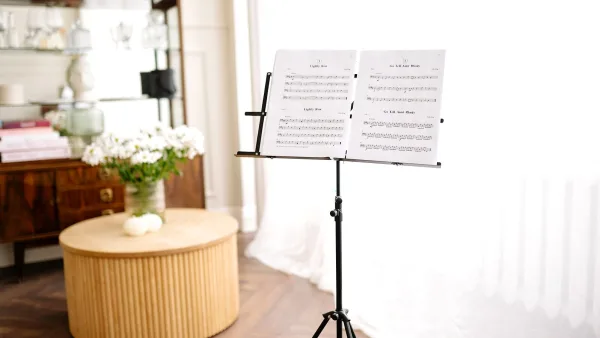
Buying a music stand looks like a five-minute decision until you actually try to make one. There's a genuine engineering trade-off buried in that folding frame — weight against stability, portability against desk size — and getting it wrong means either lugging around something too heavy for a Tuesday lesson, or watching your sheet music slide off a desk that's too flimsy for the job. Here's how to work through the decision properly.
Step one: work out where your music stand will actually live
Before anything else, be honest about where this stand spends most of its life. A stand that stays in one room — a home studio, a teaching space, a rehearsal hall — can prioritise size and stability over weight. A stand that travels to lessons, gigs or outdoor gatherings needs to fold small and survive being knocked about in a car boot. Buying for the wrong use case is the single most common reason people end up disappointed with a purchase they'd otherwise researched carefully.
If you're new to this altogether and want the simplest possible starting point, our beginner's guide strips the decision right back.
Desk size and construction
The desk is the flat ledge on a music stand that actually holds your sheet music, and its dimensions matter more than most buyers expect. A narrow desk is fine for a single sheet but frustrating for a bound book, a binder or several pages spread out for a longer piece. Orchestral players in particular tend to want a wider desk with a reasonably deep front lip so pages don't slide.
| Desk type | Pros | Trade-off |
|---|---|---|
| Solid-backed | Wind-resistant, holds heavier books | Adds weight, bulkier folded |
| Perforated / wireframe | Light, compact when folded | Less resistance to a breeze outdoors |
| Tabletop / desktop | Very compact, no legs needed | Needs a surface to sit on |
Height adjustment: check the mechanism, not just the range
Every stand advertises a height range, but the mechanism matters just as much as the numbers. A one-handed friction clutch — the kind you can loosen and reset while still holding your instrument — is genuinely useful mid-rehearsal, whereas a stiff screw collar that needs both hands is a minor irritation every single time you use it. If you can, test the adjustment in person before buying rather than trusting the spec sheet alone.
Stability: what actually keeps a stand upright
Stability in a music stand isn't one feature, it's the sum of several: the width and geometry of the tripod base, the weight of the desk itself, the quality of the locking collar, and whether the feet have proper rubber grips. A wider base is worth prioritising if you play a heavier instrument that might catch the stand, if you use thick binders, or if you'll ever set up outdoors where a gust of wind can do real damage to an unstable frame.
- Wide, low tripod base — harder to tip over
- Rubber feet — grip on smooth floors, less sliding
- Solid desk — adds ballast and resists wind
- Secure locking collar — stops the desk sagging under a heavy book
Portability: folded size, weight and the case
If your music stand needs to travel, check the folded length before you buy — some designs fold to a neat baton shape while others remain awkwardly long. A carry bag is worth having even if it seems like an unnecessary extra; it protects the hinges, which are usually the first thing to wear out on a stand that's assembled and packed away every week.
Materials and build quality
Steel gives you durability at the cost of weight. Aluminium is the usual compromise for anything meant to travel — light, corrosion-resistant and stiff enough for most jobs. Plastic keeps the price down but quality varies wildly between models, and it's usually the plastic components — not the metal tubing — that fail first. Whatever the material, pay close attention to the hinges, clamps and height-locking mechanism, since these see the most repeated stress over the life of the stand.
Printed music versus a tablet
If you read from paper, prioritise desk width, depth and a decent lip to hold pages in place. If you're mounting a tablet, check the clamp's width range, whether it blocks the charging port, and whether the extra weight up top makes a lightweight frame feel unstable. A heavier base or a wider tripod generally copes better with a tablet than the lightest folding option on the shelf.
What this actually costs you
For a sense of how these trade-offs play out across different budgets, our roundup of the best stands for the money breaks things down by price tier rather than by brand alone. And if you'd like the full context on how these products evolved and what each type is actually for, the overview piece is a useful companion read.
The bottom line
Buy a music stand for the job you'll actually ask it to do most often, not the one job it might occasionally need to cover. A sturdy, slightly heavier stand for a room it never leaves; a genuinely portable one for a case that goes everywhere with you. Get that one decision right and most of the rest — desk size, base width, material — falls into place naturally.



Comments