


Powered Mixer article
Powered Mixer Explained: Features, Types and Tips
A powered mixer combines a mixing console and power amplifier in one unit. Here is how they work, the different types available, and what the specifications actually mean.

A powered mixer combines a mixing console and a power amplifier in a single unit. Rather than running a separate mixer, power amp rack and speaker system, you connect your microphones and instruments to the unit, connect your passive speakers to its amplifier outputs, and you have a complete PA system. This guide explains how they work, what types exist and when they make sense.
How This Unit Works
The signal path runs in sequence: input → channel processing (EQ, effects) → master mixing section → built-in power amplifier → speaker outputs. Everything that a separate mixer plus power amp combination does, this unit does in one chassis. The convenience is real and the cost saving over buying components separately is usually significant.
Types and Form Factors
Integrated Console Format
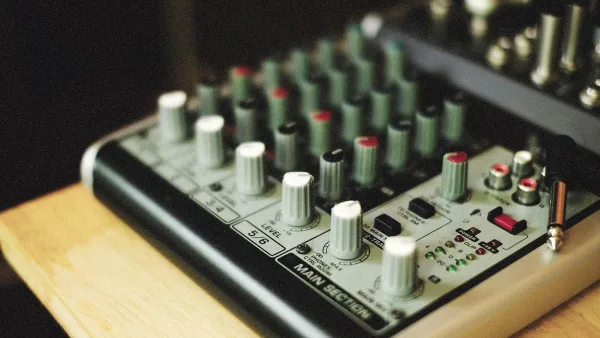
The most common format: a mixing desk with the amplifier section built in below or behind the faders. Yamaha's EMX series, QSC's TouchMix range and Behringer's PMP series are well-known examples. These look broadly like standard mixing desks with power output specifications added — typically expressed in watts per channel, with outputs for main speakers and sometimes monitor sends.
Compact and Portable Units
Smaller units — four to eight channels, self-contained, with carry handles — suit acoustic performers, solo singers, small ensembles and mobile setups where the PA needs to fit in a car boot alongside the rest of the gear. These tend to have simplified EQ and fewer channels but are lightweight and fast to set up.
Rack-Mount Units
Some models are designed for rack mounting, with fewer channel strips and a focus on amplifier power and routing flexibility. These suit permanent installation contexts — small venues, houses of worship, meeting rooms — where the mixer sits in a rack and is accessed less frequently.
Key Specifications
Channel Count
Most units are described by their total input channels — including mono microphone/line inputs and stereo line inputs. A "12-channel" unit might offer eight mono inputs and two stereo pairs. Consider how many microphones, instruments and returns you need to accommodate at your typical event.
Power Output
Power is specified in watts per channel, at a given impedance (4Ω or 8Ω). A 500W per side unit into 8Ω passive speakers is a fundamentally different system than 1,000W per side. Match the power output to your speaker's power handling and the size of the venue. The relationship between watts and perceived volume is logarithmic — doubling wattage adds approximately 3dB of headroom, not double the loudness.
Built-In Effects and DSP
Most modern units include onboard digital signal processing: reverb, delay, compression and sometimes feedback suppression. Yamaha's DSP models offer particularly effective feedback control. Built-in effects reduce the need for external effects units and simplify the signal chain significantly for smaller setups.
All-in-One vs. Separate Components
A powered mixer is a good choice when simplicity, portability and cost are priorities. A separate mixing desk and power amplifier — or an active speaker system — offer more flexibility and, in some configurations, better performance at the top end. The trade-off is weight, complexity and cost. For most small to medium live sound applications, a quality all-in-one unit is a practical and capable solution.
For a buying decision, the buyer's guide covers what to look for at each price point. The best picks highlights the standout options across different budgets.
The Bottom Line
A powered mixer is a practical, all-in-one solution for live sound applications that do not need the full complexity of a separated system. Understanding the channel count, power specification and DSP features on offer makes the buying decision considerably clearer.




Comments