


Line Array roundup
The Best Line Arrays for the Money
The line array market is full of options. These are the systems that genuinely deliver at their price point — no marketing fluff, just what holds up in real-world use.
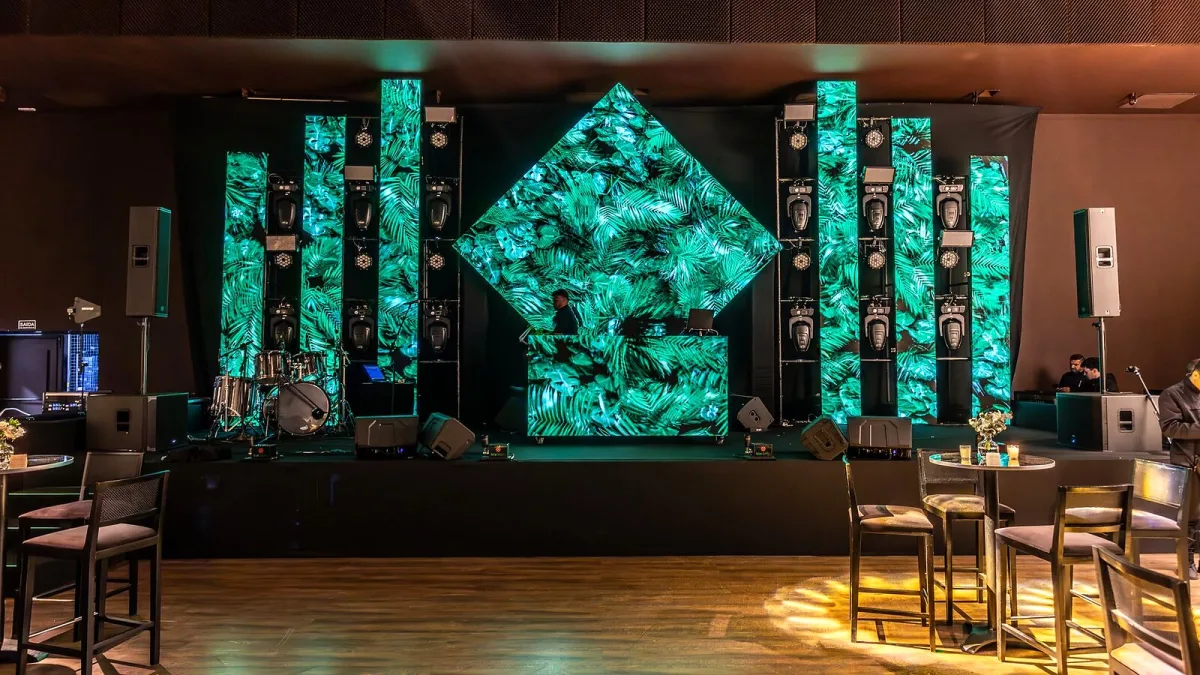
The market for line array systems runs from compact self-powered rigs at a few thousand pounds to touring-grade systems that cost more than most houses. This guide cuts through the catalogue noise and identifies what actually delivers value at each price point — the systems that punch above their weight, and the ones that have earned their reputation.
Best Entry-Level Option: QSC KLA Series
QSC's KLA12 (and the larger KLA181 subwoofer) has become the benchmark for entry-level self-powered systems that actually behave as a proper line array. Horizontal coverage is 110 degrees, the DSP is well-implemented, and the rigging system is one of the most user-friendly at this price point. At around £700–£900 per element, a six-box array plus two subs gives you a capable system for clubs up to 400 capacity. Honest about its limitations, and it rarely lets you down in practice.
Best Compact Portable: LD Systems CURV 500
For genuinely portable applications — conference rooms, wedding hire, acoustic acts — the CURV 500 system from LD Systems offers real directional control at an impressively low price. The elements are lightweight, the setup is fast, and the companion subwoofer handles low-end adequately for speech and acoustic music. It is not a substitute for a professional system at high SPL, but in its application range it is extremely good value and consistently reliable.
Best Mid-Market: dB Technologies DVA M10
dB Technologies' DVA series has been a fixture in regional touring and event hire for over a decade, and the M10 is the best all-rounder in the range. The self-powered elements are robust, the coverage is even, and the low-mid output is genuinely good for a compact package. Paired with the matching DVA S30N subs, a six-element array covers rooms to 600–800 capacity with headroom to spare. It handles both music and speech well, which matters for hire companies that can't carry different systems for different gigs.
Best for Installation: Nexo GEO M620
In fixed-installation applications where long-term performance and serviceability matter, Nexo's GEO M620 is hard to beat at its price point. The passive design allows separate amplification to be installed in a rack room, the elements are compact and unobtrusive, and the NXAMP series amplifiers provide exactly the processing the system needs. Nexo's support and spares availability are excellent, which counts for considerably more in a fixed install than it does in touring. Used systems hold their value well.
Best Professional Touring: L-Acoustics KARA II
The KARA II is L-Acoustics' mid-format touring system and one of the most versatile professional systems available. It covers everything from theatre sound to outdoor festivals at 5,000+ capacity, flown in arrays of four to twelve or more elements. The LA4X amplified controllers provide DSP that is both powerful and well-supported. Buy used if budget is a concern — KARA (first generation) systems are widely available from hire companies upgrading their inventory and remain fully supported.
Best Value Professional: d&b audiotechnik V-Series
d&b audiotechnik's V-Series line array (V7P and V10P) offers professional-grade performance and the company's characteristically precise documentation and alignment tools. The d&b ArrayCalc prediction software is the most accurate in the industry for array design and prediction, which makes the engineering process genuinely easier. Used V-Series elements are commonly available and represent excellent value for buyers who understand the system's requirements. The D80 amplifier is the matching unit of choice and should be bought to current firmware spec.
For a complete technical explanation of how these systems work, the ultimate guide to line arrays covers the physics and specifications. Purchasing considerations are in the complete buyer's guide. For setup fundamentals, line array for beginners covers the essentials.
How This List Was Compiled
These recommendations are based on sustained real-world use in live sound applications, not specification sheets. A line array earns a place on this list by delivering consistently in the applications it claims to handle, by holding up under regular use, and by offering value relative to alternatives at similar price points. Hype without performance is common in pro audio; these systems have neither.




Comments