


In Ear Monitoring article
In Ear Monitoring Explained: Features, Types and Tips
In-ear monitoring delivers a personal mix directly to a performer's earpiece, replacing traditional wedge monitors. Learn how the system works and why it's the professional standard.

If you've ever watched a live band and wondered how musicians know what to play when they can't hear themselves in the room, the answer is almost certainly in-ear monitors. An in-ear monitoring system is essentially a private audio channel that delivers a custom mix directly into a performer's earpiece, independent of what the audience hears. Instead of relying on wedge speakers pointed at the stage (which amplify stage volume and create feedback), in-ear monitoring moves the monitoring source right into the ear canal, giving singers, guitarists, drummers and other performers exactly the mix they need to stay locked in with the band and confident in their performance.
How In-Ear Monitoring Works
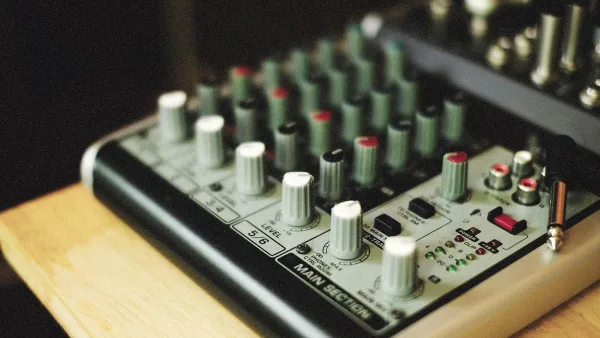
A typical in-ear monitoring system has three core components. The mixing console creates a separate monitor mix, distinct from the main audience mix. This feeds an IEM transmitter, a wireless unit that broadcasts the signal by radio to a bodypack receiver—a small unit clipped to the performer's belt. The receiver feeds the signal through a cable to the earpieces, compact earphones designed specifically for stage use. The performer controls their own mix level with buttons on the bodypack, so if they need more vocals or more kick drum, they adjust it without asking the engineer.
Wired versions of in-ear monitoring skip the radio link and connect the performer directly to a headphone amplifier via cable. These are simpler and cheaper, but they restrict movement. Wireless systems give performers freedom to roam the stage without losing their mix, which is why most touring acts use them.
Why Performers Choose In-Ear Monitoring
The advantages over traditional wedge speakers are substantial. In-ear monitoring reduces stage volume, which means less amplified sound bouncing around, fewer feedback problems, and a cleaner overall sound for the audience. Each performer gets a personalised mix: the lead singer might have mostly their own vocals and drums, while the bass player gets a kick drum and snare-focused mix to lock in the rhythm section. No two monitor mixes need to be identical.
Performers also gain mobility. Without wedges tied to specific positions, a singer can move across the stage knowing their mix moves with them. This freedom changes what's possible in a performance—more engaging stage presence, tighter choreography, less anxiety about losing reference points. For serious monitoring work, in-ear monitoring is simply the professional standard. Touring acts, broadcast performers, worship leaders and any act playing venues with proper sound systems expect it.
The Challenge: Adapting to Isolation
In-ear monitoring isn't automatically superior to everything else. The main challenge is psychological: performers hear a relatively isolated mix in their ears rather than the blended, room-filling sound of a wedge or the natural acoustics of the venue. Singers might feel disconnected from the audience, especially in their first experiences with in-ear monitoring. Drummers need a clear, unambiguous click track or kick drum reference or they'll drift. The mix matters enormously—a poorly built monitor mix will make a performance harder, not easier. Some performers never adjust to the sensation; others find it liberating.
Mono, Stereo and Mix Modes
In-ear monitoring systems commonly offer different operating modes. Mono places the entire mix in both ears—simple, reliable, and ensures no important element gets panned away from one ear. Stereo allows left-right placement: lead vocal centre, guitars left, keyboards right. This requires careful engineering, but it improves clarity when done well. Some modern systems offer a mix mode, letting the performer blend two different monitor mixes from the bodypack. A vocalist might combine a band mix with a vocals-only mix without requiring the engineer to change the console.
Universal versus Custom Earpieces
In-ear monitoring earpieces come in two types. Universal-fit models use interchangeable silicone or foam tips that work immediately—you buy them, insert a tip, and go. They're cheaper, replaceable and shareable. The downside is that seal and comfort vary depending on ear shape; movement can break the seal and change the frequency response, particularly bass. Custom-moulded earpieces are made from impressions of the performer's specific ears. They offer superior isolation, consistent seal and long-session comfort when correctly manufactured. The trade-off is cost, manufacturing time, and the fact that they can't be easily shared—a custom mould is personal.
Driver Types and What Matters
In-ear monitoring earpieces use various driver technologies: dynamic drivers (which provide strong low-frequency output), balanced-armature drivers (compact and used in multi-driver designs), and hybrid combinations that cover different frequency ranges. A common misconception is that more drivers automatically mean better sound. That's untrue. A single well-designed driver can outperform a multi-driver earpiece if the acoustic design, crossover and tuning are superior. What matters is seal, frequency response, durability and comfort—not driver count.
Hearing Safety
In-ear monitoring isolation can reduce the need to compete with loud stage sound, but it can also damage hearing if monitor levels are excessive. Safe practice starts with careful gain structure: always begin at a low level, ask the engineer for more of a missing source rather than turning the whole mix up, and use soundchecks to eliminate feedback and level jumps. A limiter can help, though it's not a substitute for sensible mixing. Custom earpieces fitted by a reputable manufacturer and properly maintained spare cables are essential—desperate improvisation in the middle of a show is how unsafe monitoring happens.
Wireless System Practice
Wireless in-ear monitoring requires careful frequency coordination before the show. Professional setups need accurate transmitter and receiver frequency settings, appropriate antenna placement, fresh batteries, separation between IEM frequencies and other wireless systems in the venue, and a backup wired monitoring option. A radio link can fail even if the earpieces are functioning perfectly—interference, dead spots, antenna shadowing and RF congestion are real risks in complex venues. The best live-sound teams carry backup wired monitors and have a plan for every failure mode.
In-ear monitoring is as much a discipline as a technology. It demands reliable equipment, careful engineering, proper frequency coordination, and performers who understand how to work with an isolated mix. When all of those elements align, the results are professional, flexible and dependable. That's why it's become the standard for anyone serious about live performance.




Comments