

8 Channel Mixer article
8 Channel Mixer for Beginners: A Complete Guide
The front panel looks complex but follows a consistent logic. Here's what each section does and how to use it — from plugging in your first microphone to running a live mix.
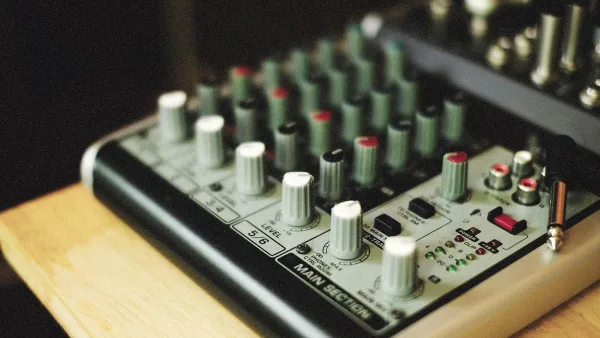
If you've never used a mixing console before, the front panel can look more complex than it is. Everything on a desk follows the same logical structure: audio comes in at the top of each channel strip, gets processed as it moves down through the controls, and exits through the master fader at the bottom right. Once you understand that flow, most of what you see makes sense.
The Signal Path Explained
Each channel strip represents one audio source. Audio enters at the top — via XLR for a microphone or jack for a line-level source. The gain trim (the knob at the top of the strip) sets the input sensitivity: too low and the signal is quiet and noisy; too high and it clips. A good signal level shows green or amber on the channel's level indicator. Below the gain trim sits the EQ section — typically three bands (high, mid and low) for shaping the tonal character of each source. Aux sends route audio to a secondary output (for a monitor speaker or effects unit) independently of the main mix. The channel fader at the bottom controls the level in the main stereo mix.
Setting Up Your First Mix
Start with all faders down and gain trims at their minimum. Connect your sources, then bring the gain up on each channel while someone plays or speaks into each microphone at the level they'll use during the performance or recording. Aim for a consistent level hitting the channel meter — green for most of the time, amber occasionally, never red. Once gains are set, bring the faders up to unity (the 0dB mark) and adjust the main output fader to a comfortable listening level through the PA or headphones. The EQ should be set flat (all knobs at centre) to start; adjust by ear once the mix is running.
Understanding an 8 Channel Mixer in Live Context
An 8 channel mixer in a live setting most commonly drives two types of output simultaneously: the front-of-house (FOH) mix going to the PA speakers, and a monitor mix going to the performers' stage monitors. The aux sends handle the monitor feed — each aux knob on a channel controls how much of that source goes to that aux output, independent of the main fader. This allows the vocalist to hear more of themselves in their monitor without that change affecting the main mix.
Phantom power (the 48V switch on most mixers) should only be enabled on channels where condenser microphones are connected — it's harmless to most dynamic microphones and ribbon microphones may be damaged by it, so engage it selectively. For a complete guide on what to buy, see the buyer's guide to 8 channel mixers.





Comments