
4 Channel Mixer roundup
4 Channel Mixer: A Complete Buyer's Guide
The right mixer format depends on your signal sources, not the channel count. Live sound, DJ performance, USB recording and line mixing all use four channels differently, and buying the wrong type is the most common avoidable mistake.

Buying the right 4 channel mixer depends on defining your signal flow before you look at any product. The format you need — live sound, DJ, USB recording or line — determines almost everything else. Buying the wrong type and then discovering the missing feature is the most common and easily avoided mistake in this category.
Define Your Signal Sources First
List every source you need to connect: microphones, instruments, keyboards, media players, turntables or computers. Each source has a signal level — microphone, instrument, line or phono — and a connector type. A microphone needs a preamp with phantom power if it is a condenser. A turntable needs a phono preamp. A keyboard or laptop outputs line level. Match these requirements against the inputs on any model you consider before looking at anything else.
Live Sound Mixing
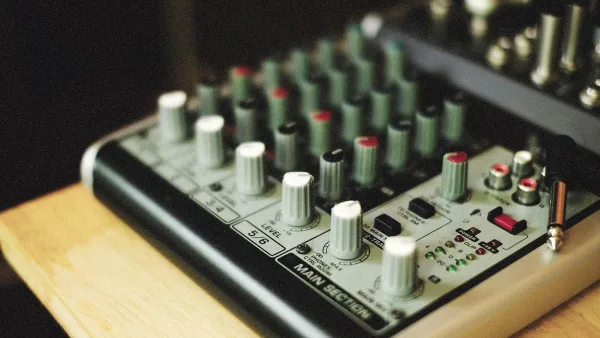
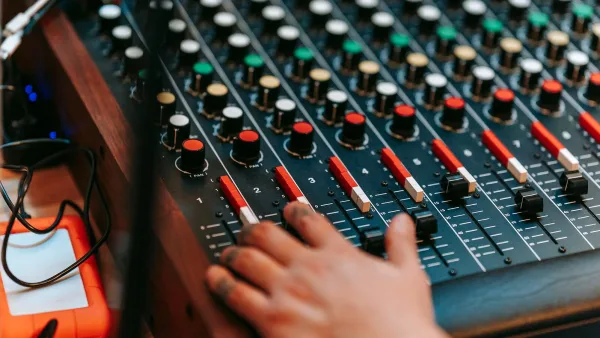
For small performances — a vocal duo with backing tracks, a podcast recording studio or a small presentation set-up — a compact live 4 channel mixer with microphone preamps, phantom power, basic EQ and balanced main outputs covers most needs. Behringer, Mackie, Yamaha and Soundcraft all offer models in this category. Look for a direct output or USB recording output if you want to capture the session as well as amplify it.
DJ Mixing
A four-channel DJ mixer is designed for decks, media players and samplers. It is not the same product as a live-sound mixer. The controls prioritise performance: channel faders, a crossfader, three-band EQ with full-cut behaviour, phono/line switching and cue monitoring. Pioneer DJ, Allen & Heath, Rane and Denon DJ are the main manufacturers at serious and professional levels. If you mix from turntables, confirm which channels have phono preamp switching.
USB Recording Architecture
USB-equipped mixers vary widely in what they actually offer. Some send only a stereo mix to a computer; others provide individual channels for multitrack recording in a DAW. If separate tracks are important, read the USB specification carefully: look for the number of input channels listed in the model's audio interface specification, not just the presence of a USB connector. Class-compliant models work without drivers on most operating systems; others require proprietary software.
Outputs: What to Look For
Balanced XLR main outputs are important for any live-sound application — they reject induced noise over longer cable runs. A headphone output is essential for monitoring. Auxiliary sends allow you to feed a separate monitor mix or effects unit without affecting the main output level. A tape or record output lets you connect an external recorder independently of the main output.
Budget Calibration
At under £100, a 4 channel mixer typically means compact analog live models or basic USB designs with limited preamp quality. Between £100 and £300, the preamp quality and build improve significantly, and USB multitrack capability becomes available. Above £300, the DJ mixer market opens up, and analog live mixers in this bracket have better preamps and more routing. The right budget depends on whether preamp quality, DJ performance features or USB architecture is your priority.



Comments