


Stereo Amplifier article
Common Stereo Amplifier Mistakes to Avoid
Most amplifier buying errors come down to the same handful of misconceptions about watts, impedance and what amplifier class actually means. Here is what to watch out for.
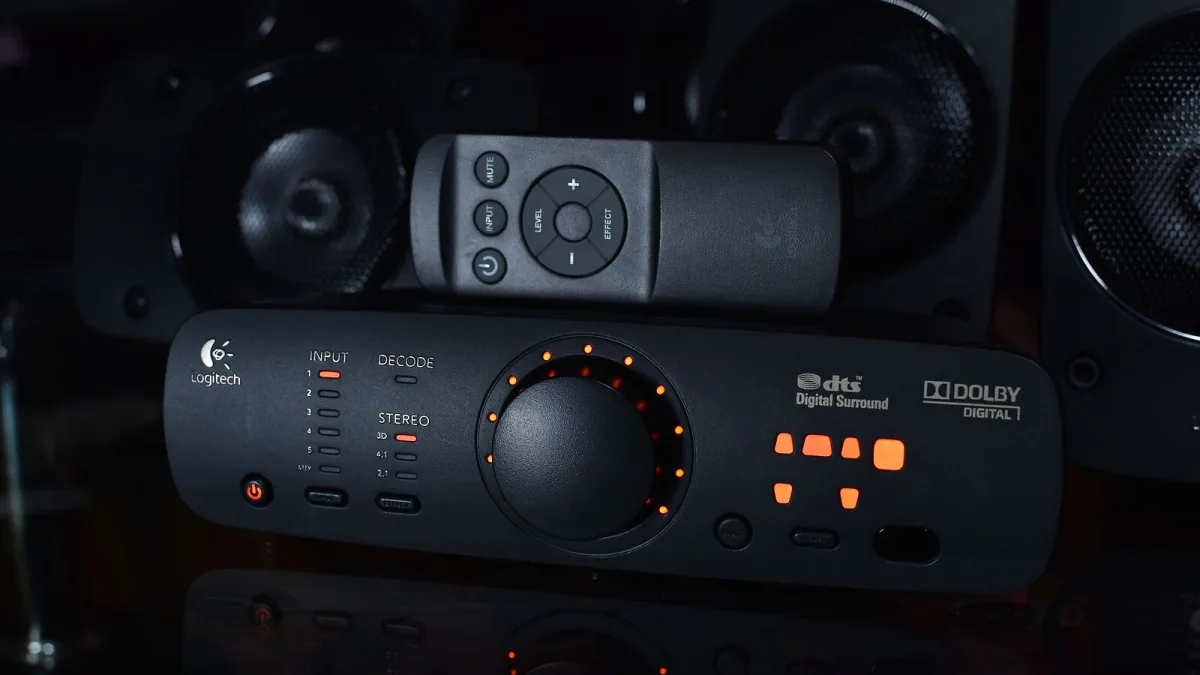
Most stereo amplifier buying mistakes come down to the same handful of misconceptions — about watts, about impedance, about what amplifier class actually means, and about which specifications matter compared with which ones are largely marketing. This article runs through the most common errors, explains why they happen, and shows you what to do instead.
Mistake 1: Choosing an Amplifier by Wattage Alone
The wattage fixation is the most persistent mistake in hi-fi. A hundred-watt amplifier is not twice as powerful in any perceptible sense as a fifty-watt one — doubling power produces roughly 3 dB of additional headroom, which is a small and often barely audible step. The headline watt figure is also frequently misleading: peak power, music power and RMS power are not the same thing, and a quoted figure without the measurement conditions (impedance, both channels driven, distortion level, frequency range) is nearly meaningless for comparison.
What actually determines how loud your system plays is your speakers' sensitivity — the dB/W/m figure that tells you how loud the speaker produces per watt of input. A speaker rated at 90 dB/W/m needs far less amplifier power to reach a given volume than one rated at 84 dB/W/m. In a typical domestic room, speaker sensitivity is usually more significant than an extra twenty or thirty watts.
Mistake 2: Ignoring Speaker Impedance
This is where real damage can happen with any stereo amplifier. A speaker's nominal impedance — usually 4, 6 or 8 ohms — describes its average electrical load, but the actual impedance varies across the frequency range. A nominal 6-ohm speaker may dip to 3 ohms at certain frequencies.
If you connect a speaker to an amplifier that is not rated for that minimum load, the amplifier works harder than it was designed to, runs hotter, and may shut down via its protection circuitry — or, in worse cases, sustain component damage. Always check:
- The speaker's nominal impedance
- The speaker's minimum impedance (if published)
- The amplifier's minimum rated load impedance
An amplifier rated for 4-ohm loads will happily drive 8-ohm speakers; an amplifier rated only for 8-ohm loads may struggle with demanding 4-ohm designs.
Mistake 3: Treating Amplifier Class as a Sound Quality Ranking
Class A, Class A/B, Class D — these descriptions generate enormous amounts of online debate and marketing copy. Here is what the letters actually mean: they describe how the output transistors conduct during the audio waveform cycle. They do not rank amplifiers by musical quality.
Class A amplifiers conduct continuously throughout the cycle. They are theoretically linear but inefficient — they convert a lot of mains power into heat rather than audio output, and they are large and hot at any useful power level. Class A/B is the standard hi-fi topology: a compromise that operates mostly in Class A at low levels and shifts toward Class B at higher outputs, managing efficiency and distortion reasonably well. Class D uses rapid switching and filtering, producing high efficiency and low heat. A modern, well-designed Class D amplifier can outperform a mediocre Class A/B design in every measurable parameter.
Buy a specific model whose measurements and reviews you trust, not a circuit topology label.
Mistake 4: Forgetting the Phono Stage
If you have a turntable and the amplifier you buy does not include a phono stage, you will get a very thin, quiet and tonally incorrect signal from your records. A phono stage provides RIAA equalisation — a specific frequency correction that vinyl playback requires. Many integrated amplifiers include one (look for a PHONO input on the back panel); many do not.
The fix is simple: check before you buy. If the amplifier does not include a phono stage, either choose a model that does, use a turntable with a built-in phono stage, or add an external phono preamp to the system. It is not an expensive problem to solve, but it is an embarrassing one to discover after unboxing.
Mistake 5: Not Checking Available Inputs
Count your sources before buying any stereo amplifier. It sounds obvious, but it is one of the most common return reasons in hi-fi retail. An amplifier with two line-level inputs will not comfortably accommodate a CD player, a streamer and a television. Common input types to check:
- How many line-level (RCA) analogue inputs are there?
- Is there an optical or coaxial digital input for a TV?
- Is Bluetooth included, and which codecs does it support?
- Is there a USB input for computer audio?
- Is the headphone output decent quality, or a secondary feature?
A stereo amplifier with a single-digit number of analogue inputs is fine for a simple system. If you have many sources, make sure the input count matches your actual setup before committing.
Mistake 6: Underestimating Ventilation Requirements
Stereo amplifiers generate heat, particularly Class A and Class A/B designs. Stacking other equipment directly on top of a power amplifier is asking for thermal protection shutdowns, reduced component lifespan and, at worst, heat-related failures. Leave clear ventilation above and around the amplifier. Do not place it inside a sealed cabinet without adequate airflow. Class D amplifiers run considerably cooler and are more tolerant of confined spaces, but even they benefit from reasonable air circulation.
Mistake 7: Buying Separates Too Early
Separate preamplifiers and power amplifiers are a legitimate upgrade path, and at high system levels they offer genuine benefits in terms of power supply isolation and component-level upgradeability. But for most listeners building or improving a first or second system, the argument for separates does not hold up. An integrated stereo amplifier combines both functions coherently, costs less than equivalent separate components and involves fewer cables and boxes. The performance ceiling of a good integrated design is higher than most systems' other components would reveal. Separates are worth considering when you have maxed out what an integrated amplifier can do for your specific speakers and listening priorities — not as a starting point because it sounds like the "proper" thing to do.
Mistake 8: Trusting Peak Power Figures
A useful stereo amplifier continuous power specification states the watts per channel, the impedance used, the number of channels driven simultaneously, the frequency range and the distortion level at that output. Many published figures omit one or more of these conditions. "Peak" or "music" power figures describe brief transient capability rather than sustained output, and are not directly comparable to RMS/continuous ratings. When comparing two amplifiers by power, look for continuous RMS specifications measured under comparable conditions — or, better, trust independent measurements from specialist publications over manufacturer data alone.
The Bottom Line
Buying any stereo amplifier well is mostly a matter of avoiding a handful of well-documented traps: reading watts in context, checking impedance compatibility, understanding what amplifier class actually describes, confirming the inputs match your sources, and matching the amplifier's capabilities to what the rest of your system actually demands. Get those right and the rest tends to take care of itself. For more guidance, see our complete buyer's guide, the full technical guide to stereo amplifiers, and our beginner's guide.





Comments