


Yamaha Music article
Everything You Need to Know About Yamaha Music
One company, almost every corner of the music world. Here's how Yamaha Music actually fits together, guitars included.
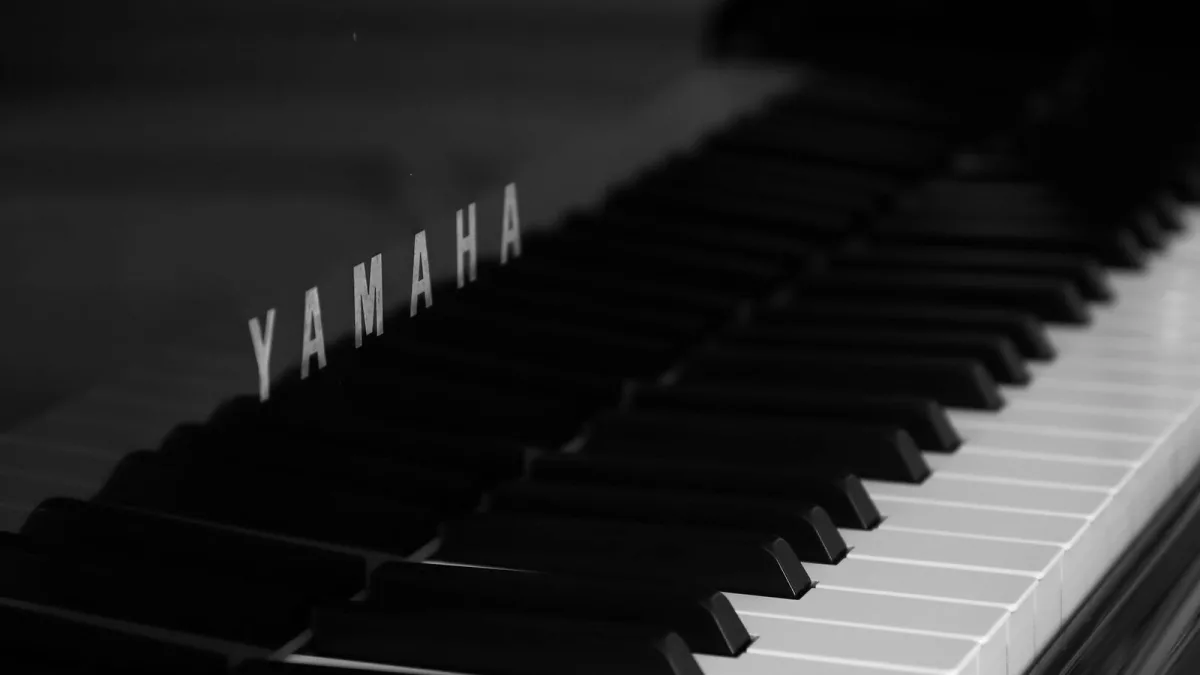
Say "Yamaha" to a guitarist and they'll picture an FG acoustic. Say it to a pianist and they'll picture a grand. Say it to a drummer, a sax player or a live sound engineer and you'll get three more completely different answers. That's the thing about the company behind it — it isn't one product line wearing a badge, it's one company genuinely present across almost the whole of the music world. Here's how that came to be, and where the guitar side fits into the bigger picture.
A Company Older Than the Electric Guitar
Yamaha's story starts in 1887, when Torakusu Yamaha repaired a broken reed organ and then, rather than stopping there, built one of his own. The company he founded was originally called Nippon Gakki Co., Ltd., long before it adopted the Yamaha name the world knows now. That instrument-repair-and-build instinct from the very start explains a lot about how the company still operates: it treats music-making as a genuinely broad, practical problem, not a single product category to defend.
Not to Be Confused With Yamaha Motor
This trips people up constantly, so it's worth clearing up early: Yamaha Corporation, the music and audio company, and Yamaha Motor Co., Ltd., the motorcycle and marine-engine business, are two separate companies. They share historical roots and a similar badge, which is exactly why the confusion persists, but they are not the same business and haven't been interchangeable for a very long time.
Just How Broad Is Yamaha Music?
Genuinely broad. The current portfolio spans acoustic and digital pianos, keyboards and synthesizers, guitars and basses, acoustic and electronic drums, brass and woodwind instruments, orchestral strings, professional audio equipment, and music-production software through its affiliated Steinberg brand. A pianist meets the company through a grand piano, a producer through a synthesizer or studio monitor, a live engineer through a mixing console, and a guitarist through the instrument line this article actually sits under.
On the Guitar Side Specifically
Yamaha's acoustic guitars are best known through the long-running FG and FS families — dreadnought-style and smaller-bodied designs respectively — a line the company extended in September 2026 with the new FG7 and FS7, pitched at singer-songwriters wanting a higher-end acoustic. Beyond acoustics, Yamaha also makes electric guitars and basses, and its instruments have built a reputation over decades for being genuinely dependable rather than flashy, which is exactly why so many players' first "proper" guitar carries this badge.
Beyond Guitars: Where Else Yamaha Shows Up
The company's reach becomes obvious once you look past guitars. On the synthesis side, Yamaha's history includes the legendary DX7 and the FM synthesis technology behind it, developed with composer and researcher Dr. John Chowning, who received a Technical Grammy Award for that work in early 2026. On drums, the EAD — Electronic Acoustic Drum — series aims to keep the feel of a real kit while adding electronic sound and performance options, extended in September 2026 with the EAD20. On the professional-audio side, September 2026 also brought new DM5 digital mixing consoles and R Series utility I/O devices, aimed at live sound, installation and broadcast use.
The Business Behind the Instruments
Yamaha isn't a small operation propping up a famous name — for the fiscal year ending March 2026, the company reported roughly ¥465.3 billion in revenue. It's also actively investing beyond conventional instrument-making: Yamaha Music Innovations, its Silicon Valley business-development and venture arm, runs a reported US$50 million fund and hosts the TRANSPOSE Innovation Challenge, a global contest focused on new ideas in sound, music and entertainment. None of that changes what a guitarist actually plays, but it explains why the company keeps showing up in places you might not expect for an instrument brand.
Where to Go From Here
If you're specifically weighing up buying into Yamaha's range, our buyer's guide covers the practical decisions worth making first. New to the brand entirely? Our beginner's guide is the friendlier starting point, our best-for-the-money roundup breaks recommendations down by category, and our piece on common mistakes to avoid is worth a read before you commit to anything.
Whatever instrument actually gets you into Yamaha Music, you're plugging into a company that's been solving the same basic problem — helping people make music reliably — for well over a century.






Comments