


ESP Guitars article
Esp Guitars Explained: Features, Types and Tips
Say ESP and most guitarists think metal, but there's more under the badge than pointy headstocks. Here's the honest, no-hype rundown.
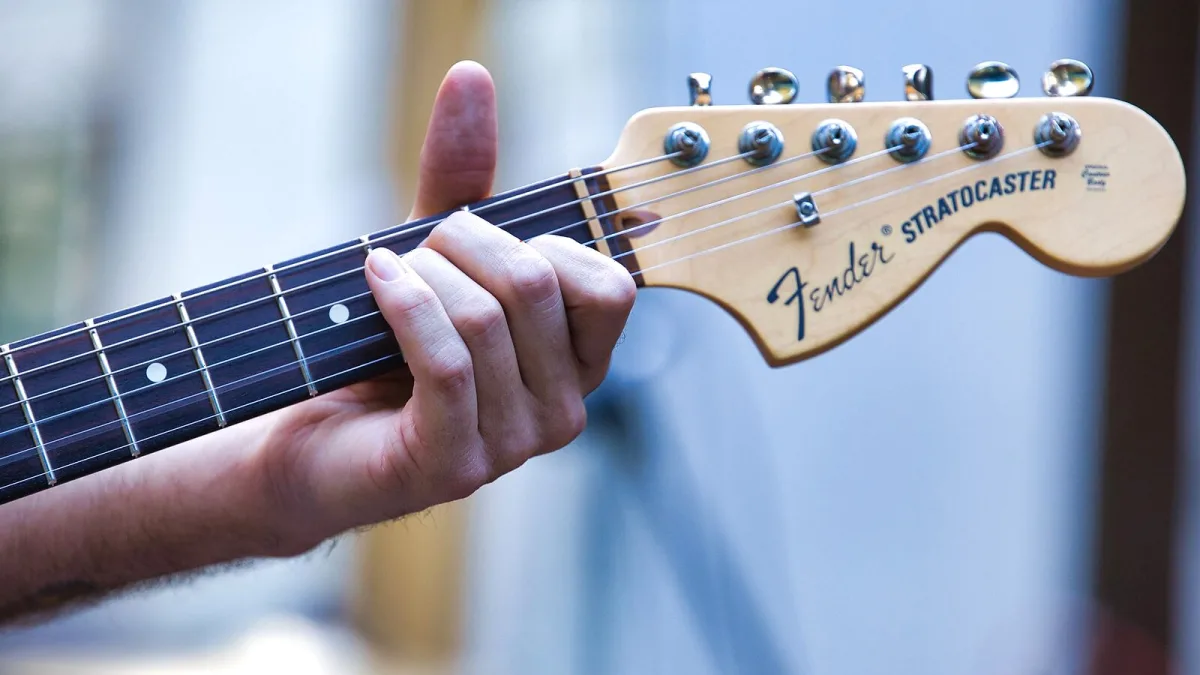
Say the letters ESP to most guitarists and one word comes straight to mind: metal. That reputation is well earned, but there's more going on under the badge than pointy headstocks and black hardware. Here's the honest, no-hype rundown of what ESP guitars actually are, how the range is structured, and why the name on the headstock matters less than you'd think.
A Japanese Company Built on Custom Work
ESP guitars started life in Japan, built from custom instruments and replacement parts before the company grew into a full manufacturer in its own right, and that custom-shop DNA still shapes the brand today. Its strongest identity comes from technically demanding players — metal and hard rock guitarists who need reliable tuning, fast necks and pickups that can handle serious gain. Names like James Hetfield and Kirk Hammett of Metallica, Stephen Carpenter of Deftones and George Lynch have all shaped ESP's design language over the years, pushing the brand toward extended-range instruments, aggressive body shapes and artist-specific specifications.
The Tiers: What “ESP Guitars” Actually Covers
This is the bit most players get wrong, so it's worth getting straight early. “ESP” isn't one price point — it's a hierarchy of several distinct lines, and knowing which one you're looking at matters more than the badge alone.
| Line | Made in | Positioning |
|---|---|---|
| ESP Custom Shop / ESP Original | Japan | Highest-end, highly specified instruments |
| ESP E-II | Japan | High-end production, direct successor to the older ESP Standard line |
| ESP USA | United States | Premium American-made instruments |
| LTD Deluxe / 1000 Series | Outside Japan | Professional-grade, more affordable |
| Other LTD series | Outside Japan | Intermediate to beginner-friendly |
LTD launched in 1995 specifically to make that same playability more affordable, built in places like Korea, Indonesia, China and Vietnam depending on the model and year. A guitar wearing the LTD badge isn't a lesser imitation — it's a genuinely different production tier aimed at a wider budget.
The Shapes You'll Actually See
- Eclipse — ESP's single-cutaway design, often set-neck with mahogany construction, comparable in outline to a traditional single-cut but with ESP's own specifications.
- Horizon — a versatile double-cutaway superstrat, 24 frets, usually a 25.5-inch scale.
- M Series — another fast-playing superstrat shape, geared toward high fret access and modern electronics.
- Arrow — a sharply angular V shape, closely tied to Alexi Laiho's signature instruments.
- Viper — an offset double-cutaway with a distinctive lower horn.
- FRX — a sculpted, futuristic body, often built neck-through with premium hardware.
- ST and TE — strat- and telecaster-inspired shapes suited to rock, blues and studio work beyond metal.
Why the Metal Reputation Runs So Deep
It's not marketing spin. Angular body shapes, high-output pickups, jumbo frets, locking tremolos, neck-through construction and seven-string or baritone options are all genuine, recurring design choices across the range. That said, it's a mistake to think ESP guitars only do one job — the Eclipse, Horizon, ST and TE families all handle blues, rock, fusion and studio work perfectly well when fitted with the right pickups.
Pickups, Bridges and Scale: The Short Version
You'll find both active pickups, such as EMG and Fishman Fluence, and modern passive options like Seymour Duncan or DiMarzio, depending on model. Bridges range from simple fixed designs, through Floyd Rose locking tremolos, to EverTune's constant-tension system for rock-solid pitch stability. Scale length matters too: 25.5 inches is the familiar standard, while ESP's baritone models stretch to 27 inches specifically to keep string tension sensible in very low tunings. None of these choices are purely academic — they change how a guitar responds under your hands far more than the finish or the logo ever will.
Where to Go From Here
Once you understand the tiers, the real decision is personal: what will you actually use it for, and what's your budget? Our buyer's guide walks through exactly what to check before you spend anything, and if this is your first proper electric guitar, the beginner's guide is a gentler starting point. Curious which models suit which player? We've rounded up the best options by use case, and it's worth reading about common mistakes before you buy.
Strip away the pointy headstocks and black hardware, and ESP guitars are really just a well-organised set of choices — country of manufacture, construction, pickups and bridge — aimed at players who take their tone seriously.





Comments