


Yamaha Bass article
The Ultimate Guide to Yamaha Basses
Yamaha's bass range explained properly — the families, the electronics, and the players who shaped its most distinctive models.
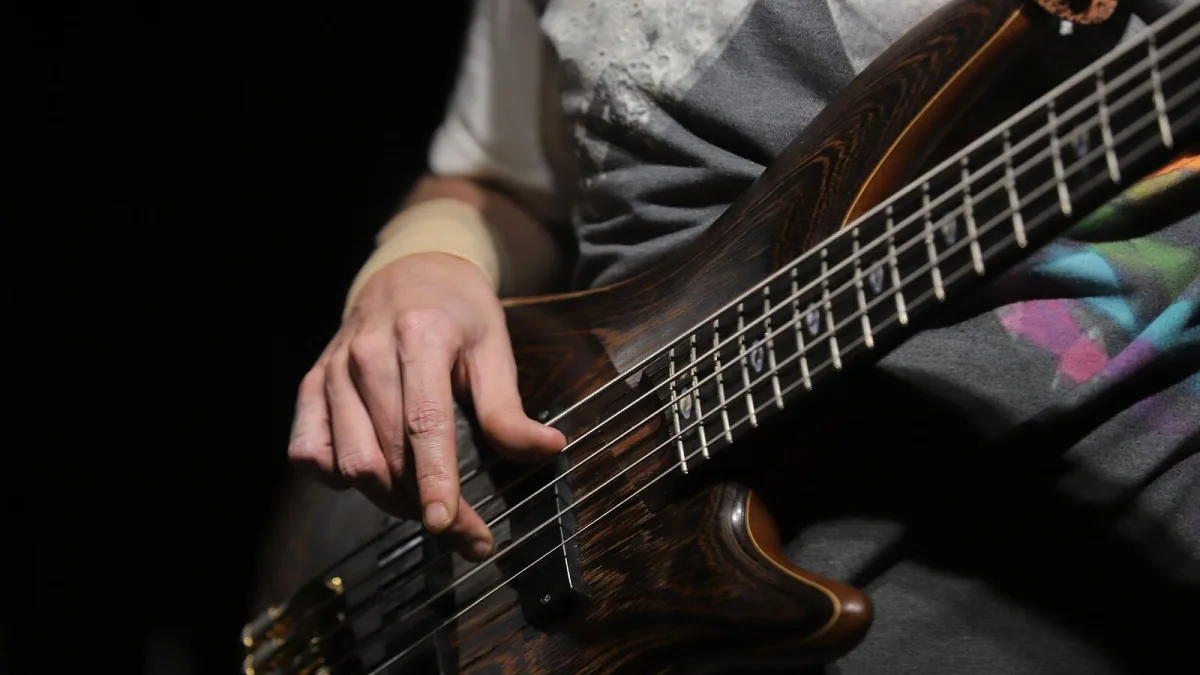
Yamaha doesn't get talked about with the same reverence as Fender or Music Man in bass circles, and I've never really understood why. The company has been building basses since the 1960s, refined the formula into one of the most reliable ranges on the market, and somehow still gets treated as the "sensible" choice rather than the exciting one. This guide pulls apart what a Yamaha bass actually is, how the range breaks down, and why several of the world's most technical players have built entire careers on one.
Where It All Started: 1977 and the BB Series
Yamaha had already been making electric basses for over a decade, but the launch of the BB series in 1977 is the moment the company's low end really found its identity. The BB platform leaned into familiar electric-bass ergonomics and a strong, present midrange rather than chasing anything experimental, and that basic philosophy has carried through to the current BB line largely unchanged. It's the instrument most players picture when someone says "Yamaha bass."
In 1990, Yamaha opened Yamaha Guitar Development (YGD), a dedicated facility for professional-grade instruments and artist collaborations. Its first major project was a signature bass for a player who'd go on to define a whole approach to the instrument — which brings us to the current model families.
The Main Families, at a Glance
Every current Yamaha bass sits within one of four families, and knowing which is which saves a lot of confused browsing.
| Family | Character | Typical player |
|---|---|---|
| BB | Traditional platform, strong midrange, modern refinements | Rock, pop, funk, session work |
| TRBX | Sculpted contemporary body, wide price range | Beginners through gigging professionals |
| TRB | Extended-range, high-specification builds | Jazz, fusion, five- and six-string players |
| Attitude | Billy Sheehan's specialised signature design | Aggressive rock, stereo rigs, technique-driven playing |
The TRBX range is the one most newcomers meet first, running from simple, affordable four-string models up to the TRBX604FM and 605FM, which add flamed-maple tops, a five-piece maple/mahogany neck and active/passive electronics. The flamed top looks lovely, but it's worth remembering it's mostly cosmetic — pickups, electronics and setup do far more for the actual sound than the veneer on the body.
Active Electronics, Explained Simply
Several higher-end models, including the TRBX600 series, offer active/passive switching with a three-band EQ covering bass, middle and treble. In active mode, an onboard preamp powered by a 9V battery gives you real tonal control at the instrument itself. Switch to passive and you lose that shaping power but gain a useful fallback if the battery ever dies mid-gig. The midrange control matters more than people expect — it's what lets a bass cut through a full band mix rather than disappearing under the guitars.
The Artists Who Shaped the Range
Billy Sheehan's Attitude is the strangest and most distinctive instrument Yamaha makes: a neck-position "woofer" pickup for a huge low end, stereo output jacks that can split his signal to two amps, and an unconventional scalloped, wide fingerboard built entirely around his technique. It's less a general-purpose instrument than a tool built for one specific player's approach, first developed through YGD in the early 1990s.
Nathan East's signature models grew out of earlier BB-NE and BB-N5A designs and lean toward polished, contemporary five-string tone suited to pop, R&B and studio session work. John Patitucci's instruments, meanwhile, pushed Yamaha's extended-range and high-end development further, aimed at jazz, fusion and players who need serious upper-register clarity across five or six strings.
Four, Five or Six Strings?
A standard four-string bass remains the right call for most players, and there's no shame in never needing more. A five-string adds a low B for extended downward range, useful in modern worship, metal and some funk and fusion contexts. Six-string models add a high C on top as well, which suits chordal playing and solo work but comes with a wider neck and a steeper learning curve — genuinely useful for some players, unnecessary for most.
Getting Started With One
If you're weighing up which Yamaha bass actually suits you, our buyer's guide walks through the practical decisions in detail, and our roundup of the best models by budget is a good shortcut if you'd rather skip straight to recommendations. First-timers should start with our beginner's guide instead.
The Bottom Line
What makes a Yamaha bass worth taking seriously isn't any single flagship model — it's the sheer consistency across a genuinely wide range, from an affordable first instrument right up to Billy Sheehan's very personal signature design. Whatever you actually need from a bass, there's very likely a Yamaha built specifically to do that job well.




Comments