


Preamp Amp article
Common Preamp Amp Mistakes to Avoid
Most preamp amp problems trace back to a handful of repeat offenders. Here they are, why they happen, and the quick fix for each.
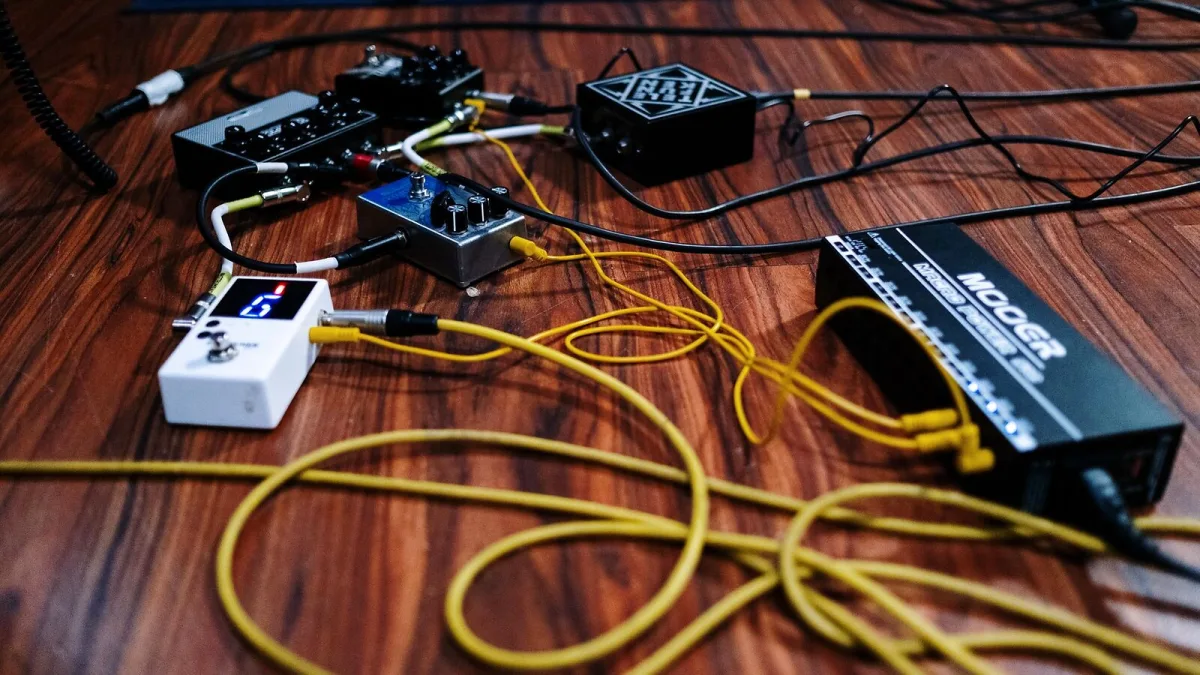
Most preamp amp problems are not gear failures — they are the same handful of mistakes turning up again and again, usually because two units that were never designed together are suddenly expected to behave like one. Here are the ones I see most often, why they happen, and the quick fix for each.
Mistake One: Treating an Overdrive Pedal as a Full Preamp
Not every gain pedal is a preamp, even when it is marketed as one. A genuine preamp typically covers EQ, gain and level all in one, while a simple overdrive pedal usually only adds grit on top of whatever comes after it. If a pedal has no tone controls beyond a single “tone” knob, it is probably an overdrive rather than a proper preamp replacement. Read the manufacturer’s description carefully — “amp-in-a-box” pedals are genuinely built to act as a preamp amp on their own, but plenty of ordinary drive pedals borrow similar language without offering the same tone-shaping.
Mistake Two: Sending a Preamp Straight Into a Passive Speaker
A preamp’s output is not powerful enough to drive a passive cabinet to any useful volume, and it presents the wrong kind of load besides. If you want to hear real volume out of a real cabinet, a power amp has to sit between the two.
Mistake Three: Running the Reverse — Speaker Level Into a Pedal or Interface
This is the more dangerous version of mistake two. A power amp’s output carries far more voltage and current than a pedal, interface or line input is built to handle, and connecting the two directly can damage equipment on both ends. Speaker-level cable only ever goes from a power amp to a cabinet.
Mistake Four: Stacking Two Preamps Without Realising It
Plugging a preamp pedal into the normal input of a full amplifier means the signal still passes through the amp’s own preamp stage afterwards. That is not automatically wrong, but it does mean you are hearing two gain stages and two tone stacks in series, which can sound muddled or oddly compressed. Trying the same pedal into the amp’s effects return instead, where that is available, often clears things up considerably. It is one of the quickest ways to turn a muddy pairing into a proper preamp amp setup that actually behaves the way you expect.
Mistake Five: Assuming a Preamp Pedal Includes Power Amp and Cabinet Behaviour
A preamp pedal shapes and boosts a signal; it does not automatically simulate a power amp’s compression or a speaker’s frequency response on top. For direct recording or a PA feed, check specifically for cabinet or impulse-response simulation rather than assuming it is bundled in because the pedal sounds like an amp through headphones.
Mistake Six: Fixing Clipping by Turning Down the Wrong Knob
If the sound is distorting unpleasantly, the instinct is often to pull the master volume down. That rarely helps, because the signal is usually already clipping earlier in the chain, at the gain stage. Reduce the gain first, then set the volume to taste afterwards — the order matters more than either setting on its own.
Mistake Seven: Comparing Gear at Different Volumes
Louder very reliably sounds “better” to our ears, regardless of whether it actually is. When comparing two preamps, two pedals or a preamp against an amp’s own channel, match the output level as closely as you can first. Skip this step and you are really just comparing loudness, not tone. A cheap meter app on your phone is enough to get close, and it is far more reliable than trusting your ears mid-comparison, since even a couple of decibels can flatter the louder option without you noticing.
Mistake Eight: Trusting the Word on the Box Over Your Own Ears
“Valve,” “analogue,” “Class A” and “boutique” describe how something is built, not automatically how good it sounds. They are useful information, not a verdict. Judge a preamp amp purchase on what you hear at a fair volume, with your own instrument, rather than on the language used to sell it.
How to Avoid Most of These at Once
Most of this list boils down to a short set of habits worth building into any preamp amp rig, whatever gear you end up choosing:
- Know which stage — preamp or power amp — is doing which job in your specific rig.
- Check impedance and wattage before connecting a power amp to a cabinet.
- Fix gain staging before touching the master volume.
- Compare gear at matched volumes, every time.
If you want the fuller picture before you build a rig from scratch, our overview of preamp amp setups covers how the signal chain fits together, and our buyer’s guide goes through what to check before you spend anything.
New to This? Start Simpler
Most of these mistakes come from rushing into a bigger setup than you actually need yet. If you are just starting out, our beginner’s guide keeps things to one pedal and the amp you already own, which sidesteps several of these entirely.
The Bottom Line
Nearly every preamp amp mistake on this list comes down to the same root cause: treating two separate stages as if they were interchangeable, or as if one could quietly do the other’s job. Learn which stage does what, keep your levels sensible, and most of this list simply stops applying to you.





Comments