


Blues Junior Amp article
The Ultimate Guide to Blues Junior Amp
Thirty years in, the Blues Junior amp is still one of Fender's best-loved small combos. Here's exactly what you're getting under the tweed or vinyl.
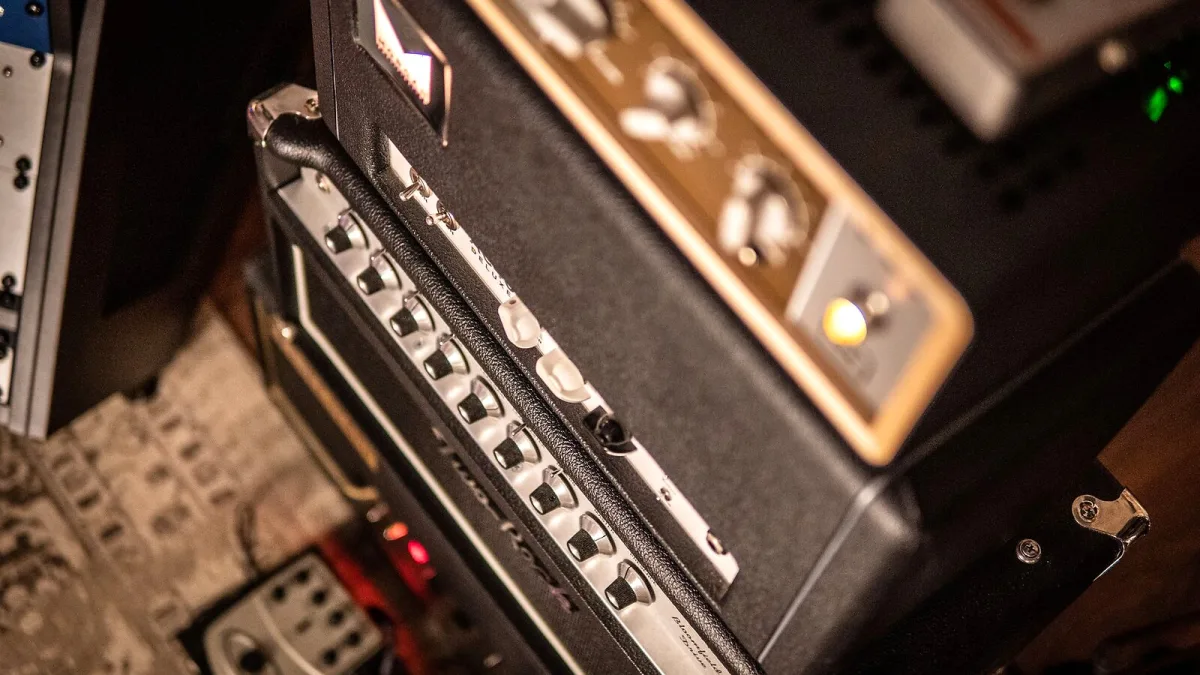
If you have spent any time browsing small valve combos, you will have bumped into the Blues Junior amp sooner or later — it is one of Fender's longest-serving compact amplifiers, and for good reason. This guide pulls apart what it actually is, what is happening inside the chassis, how the different editions differ, and where it genuinely shines versus where it falls short.
What Is the Blues Junior Amp?
It is a compact, single-channel valve combo from Fender — "valve" being the British term for what American manufacturers call a vacuum tube, the glowing glass component that does the amplifying work instead of a chip. A "combo" simply means the amplifier and speaker live together in one cabinet, rather than a separate head and cabinet.
It first appeared as part of Fender's Tweed Series alongside the Blues Deluxe, Blues DeVille and Pro Junior, and reached its 30th anniversary in 2025. Guitar World's anniversary coverage called it a "modern tube amp classic," and that reputation is built on a formula Fender has barely needed to change: keep it small, keep it all-valve, and keep it honestly Fender in tone.
What's Actually Inside It
Strip away the tweed or black vinyl and the current Blues Junior IV is a straightforward, well-understood circuit. Here is the spec sheet in one place:
| Feature | Detail |
|---|---|
| Circuit | All-valve preamp and power amp |
| Preamp valves | Three 12AX7 |
| Power valves | Two EL84 |
| Output | 15 watts RMS |
| Speaker (standard IV) | 12-inch Celestion A-Type, 8 ohms |
| Controls | Volume, Treble, Middle, Bass, Master, Reverb, FAT switch |
| Channels | One |
| Weight | Roughly 14kg (31lb) |
| Built | Mexico |
Those EL84 power valves matter more than the spec sheet lets on. They are a different beast to the 6V6 or 6L6 valves in Fender's classic Deluxe Reverb or Princeton Reverb, and they tend to break up earlier, with a more compressed, upper-mid-forward character. The Blues Junior amp is not a miniature version of those blackface amps — it is its own thing, closer in spirit to the British EL84 amps than to Fender's own vintage lineage.
The FAT Switch and Spring Reverb, Explained
Two controls confuse newcomers, so a quick explanation: the FAT switch is a footswitchable boost that adds midrange and extra gain, useful for pushing a rhythm tone into lead territory without reaching for a pedal. Spring reverb is a genuinely mechanical effect — the signal runs through a small metal spring tank inside the cabinet, giving that splashy, slightly wobbly ambience associated with vintage Fender amps, rather than a digital simulation of one.
The Different Editions
Fender has never left this amp alone for long, and the exact specification changes depending on which one you are looking at:
- Blues Junior IV — the current standard model, with the revised preamp, smoother reverb taper and Celestion A-Type speaker.
- Blues Junior Lacquered Tweed — a vintage-cosmetic version that has, across various runs, shipped with different speakers, including Jensen units.
- Blues Junior IV 30th Anniversary — a limited edition built for the model's milestone year, fitted with a Celestion G12M-65 Creamback.
Because specifications have shifted across editions and production years, always check the rear panel, the speaker label and the official manual for the exact unit you own or are considering — do not assume every unit on a shelf is identical inside. If you are deciding between these editions, our breakdown of the best Blues Junior amps for the money goes tier by tier.
Strengths and Limitations
No amp is all things to all players, and this amp is refreshingly honest about its trade-offs.
- Strengths: genuinely portable at around 14kg; real valve compression and breakup rather than a modelled approximation; a useful three-band EQ plus built-in reverb; excellent compatibility with overdrive and fuzz pedals; enough volume for rehearsals, small venues and home recording; wide availability of replacement valves and speakers.
- Limitations: only one channel, so there is no independent clean and dirty setting to flick between; no effects loop for time-based pedals; limited clean headroom against a loud drummer; a fixed-bias power section that needs a technician's attention when the power valves are replaced.
Who It Suits
It earns its keep as a clean pedal platform for players who prefer their own stompboxes to an amp's built-in gain, as a naturally overdriven small combo when pushed harder, and as a manageable recording amp that will not overwhelm a small room. If you are choosing your very first valve amp, our beginner's guide walks through the practical first steps. Thinking about buying one? The complete buyer's guide covers what to check before you hand over any money, and our common mistakes to avoid piece is worth a read before you go modding anything.
The Bottom Line
Thirty years on, the Blues Junior amp has not needed to reinvent itself — it is still a compact, all-valve combo that does the fundamentals well: honest Fender clean tones, a pedal-friendly personality, and enough natural compression to feel alive under your hands. It will not replace a full-headroom gigging rig for a loud band, but as a practice, recording and small-venue amp with genuine valve character, it remains one of the most sensible ways into that world.





Comments