


Bass Amp Head article
Common Bass Amp Head Mistakes to Avoid
The most common bass amp head mistakes involve impedance mismatch, under-powered heads for live use, incorrect gain settings and neglecting the DI output. Here's what goes wrong and how to prevent it.
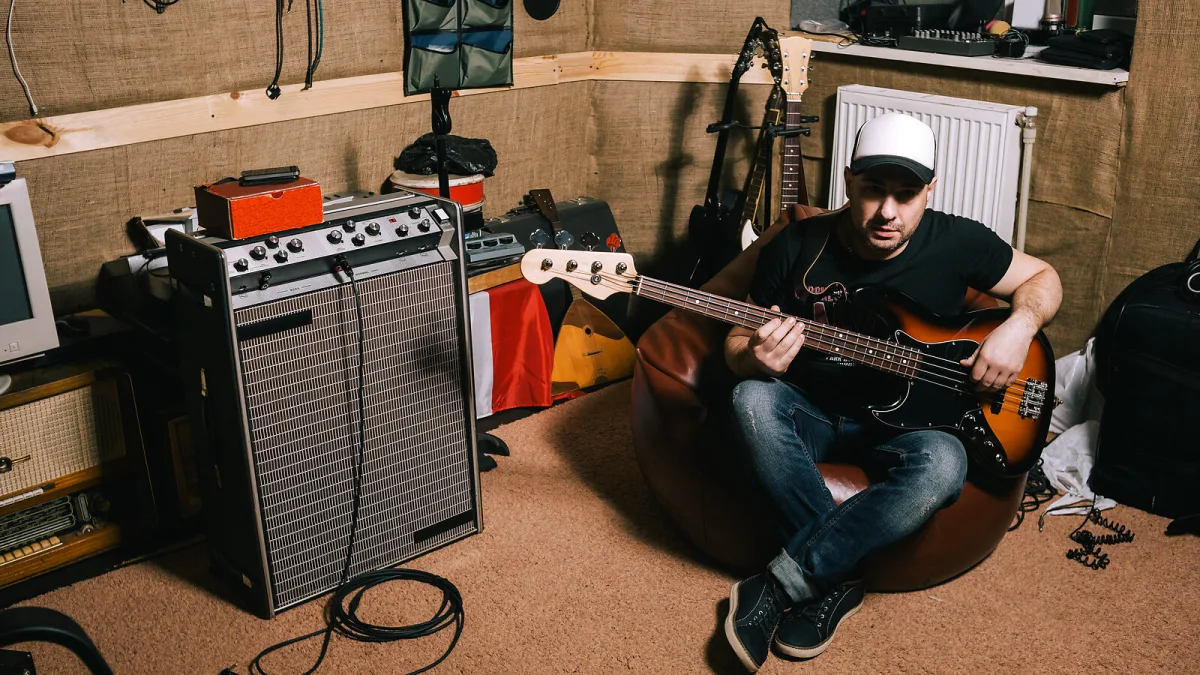
Getting the most from a bass amp head requires understanding not just how to use it, but what can go wrong. Several mistakes come up repeatedly — some involve buying the wrong thing, some involve using the right thing incorrectly, and some are wiring and signal-chain errors that cause premature equipment damage. Here's what they are and how to avoid them.
Mistake 1: Ignoring Impedance Matching
This is the most technically consequential mistake and potentially the most expensive. Every bass amp head has a minimum rated load — usually 4 ohms or 8 ohms. Running a speaker load below that rating (for example, connecting two 4-ohm cabinets in parallel, giving a 2-ohm total load, into a head rated to 4 ohms minimum) can damage or destroy the amplifier's output stage.
Always check the impedance of your cabinet or combination of cabinets before connecting. Two 8-ohm cabinets in parallel give a 4-ohm total. Two 4-ohm cabinets in parallel give 2 ohms. Most heads handle a single 8-ohm cabinet comfortably, and many are rated to 4 ohms. Know your head's minimum before adding a second cabinet.
Mistake 2: Under-Buying on Power for Live Use
Players often choose an amp head based on home rehearsal needs and then find it underpowered when they start gigging. In a live context with a loud drummer and guitar players, you need headroom — not just the ability to get loud, but the ability to get loud cleanly without the amplifier clipping at peak transients.
For small venues: 300–500W into an efficient cabinet. For medium venues or louder contexts: 500W–800W. For large venues: 800W or more. It is far better to have unused headroom than to drive a head into clipping constantly, which produces a compressed, indistinct tone and puts the amplifier under sustained stress.
Mistake 3: Switching On Without a Cabinet Connected
Valve bass amp heads must never be powered on without a speaker load connected. Running a valve amp with no load, or with an inadequate load, can damage the output transformer — an expensive repair. Solid-state and class-D heads are more tolerant of this, but good practice is to always connect the cabinet before powering on and disconnect only after switching off.
Mistake 4: Setting Gain Too Low or Too High
Gain and master volume are two separate controls on a head unit, and the relationship between them matters for tone. Setting the gain very low and compensating with a high master volume means the preamp is barely working — you miss the natural compression and character the preamp stage contributes. Setting the gain very high produces audible preamp distortion regardless of master volume.
The correct approach: set the gain so the clip indicator just barely flickers at your loudest playing. This means the preamp is working at its optimal point. Then use the master volume to set the room level. The same principle applies to hybrid and valve heads, though valve preamps tolerate (and benefit from) being driven harder before it becomes unmusical.
Mistake 5: Ignoring the DI Output
Many players use a bass amp head on stage and rely entirely on the stage volume reaching the room. In most mid-size and larger venues, this does not work — the PA needs the bass signal. The DI output on the head (usually an XLR) feeds a clean signal to the mixing desk.
Know whether your head's DI is pre-EQ or post-EQ, or whether it has a switch for both. Pre-EQ DI sends a flat signal; the engineer shapes the tone at the desk. Post-EQ DI sends the signal after your EQ and gain settings — which gives the sound engineer a more processed signal to work with. There is no universal right answer; discuss it with the engineer at soundcheck.
Mistake 6: Buying for Spec Rather Than Sound
Wattage figures, frequency response ranges and noise floor specifications do not tell you what a head actually sounds like. Two heads rated at 500W can sound dramatically different — different preamp voicings, different EQ characters, different responses to playing dynamics. Specifications tell you what a head is capable of; only listening tells you what it sounds like in practice.
Before committing to a specific bass amp head, listen to recordings made through it (many manufacturers provide demos; YouTube has an enormous library of real-world tests), or better yet, borrow or try one at rehearsal. For a thorough overview of how different heads are voiced and what the main differences are, the complete overview covers it in full. And for a structured buying decision, see the buyer's guide.
Bottom Line
Most mistakes made with a bass amp head are avoidable with basic knowledge: understand impedance before connecting, buy enough power for the real use case, set gain correctly and use the DI in live situations. The equipment rewards correct use and punishes bad habits consistently.






Comments