


Bass Amp Head roundup
Bass Amp Head: A Complete Buyer's Guide
A practical buyer's guide to bass amp heads — covering power ratings, solid-state vs valve differences, budget tiers from entry-level to professional, and the key features worth prioritising.
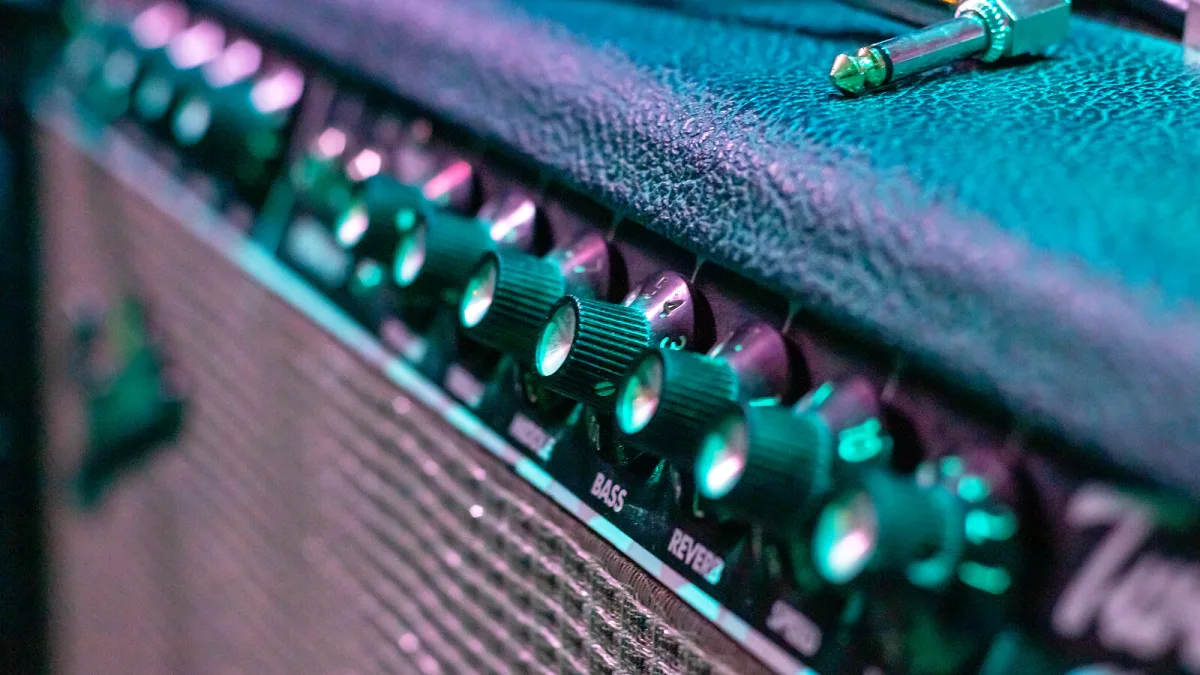
Buying a bass amp head is one of those decisions that feels more complicated than it needs to be — there are hundreds of options across an enormous price range, and the language around watts, impedance and preamp topology can obscure what actually matters. Charlotte Bennett's advice: start with how you're going to use it, and everything else falls into place.
First Question: What Are You Playing and Where?
The answer shapes every other decision. A player who rehearses at home, jams acoustically with friends and occasionally plays small café gigs needs a very different head than someone gigging loud rock venues three nights a week.
For home use and small, quiet venues, 100–200W solid-state or hybrid heads are sufficient and much easier to manage. For gigging with a loud drummer in medium venues, 300–500W is more realistic. Large venues or anyone who needs to push big cabinets hard should look at 500W–1000W options.
Bass Amp Head Power: What the Numbers Actually Mean
Wattage in a bass amp head is not a simple loudness rating. A 500W head does not sound twice as loud as a 250W head — the human ear perceives a 3dB increase as roughly twice as loud, and doubling wattage gives you only 3dB. The real value of higher wattage is headroom — the ability to handle transient peaks (like a hard-plucked low B string) without the amplifier clipping audibly.
Cabinet sensitivity matters as much as wattage. A cabinet rated at 103dB/W/m will sound considerably louder than a 97dB/W/m cabinet driven by the same head.
Budget Tiers: What to Expect at Each Price Point
The market for bass amplifiers roughly breaks into three tiers:
- Entry-level (£150–£300): Solid-state heads from TC Electronic, Hartke and Orange's cheaper line. These are functional and reliable, with adequate tone shaping for most playing situations. Sound quality at this price point has improved substantially in the last decade.
- Mid-range (£300–£600): The Ampeg PF-500, Gallien-Krueger MB500 and MarkBass Little Mark III live here. This is where you start getting more sophisticated EQ, higher build quality and genuinely excellent tones. Most gigging players can meet their needs in this bracket without compromise.
- Professional (£600–£2000+): Full valve heads (Ampeg SVT, Orange AD200B), high-powered class-D heads (Mesa/Boogie WD-800, Aguilar Tone Hammer 700) and boutique options. The investment brings more nuance, better dynamics and, in the case of valve heads, a sound that is genuinely difficult to replicate with transistors.
Solid-State vs Valve: The Buying Perspective
If you want clean, consistent, lightweight and affordable, solid-state is the right choice for this type of amplifier. Modern class-D solid-state designs are extraordinarily light — some professional-grade heads weigh under 2kg — and they translate well to a direct signal.
If you want warmth, a degree of natural compression when you dig in, and the character of a genuinely vintage-sounding rig, a valve or hybrid head is worth the premium. The weight (an SVT can exceed 30kg) and the ongoing valve replacement cost are the trade-offs that solid-state avoids.
Features Worth Prioritising
Beyond power and topology, look for:
- Flexible EQ — three bands (bass, mid, treble) is the minimum; a semi-parametric midrange control is significantly more useful for cutting through a mix.
- A good DI output — essential for live use. A pre/post EQ switch lets you send a flat signal to the engineer or an EQ'd signal depending on context.
- Tuner output — a silent tuner send keeps the signal chain cleaner.
- Effects loop — if you use rack effects or external processors, an effects loop makes integration cleaner than going in through the front input.
Matching Head to Cabinet
Check impedance compatibility. Most heads specify a minimum load (typically 4 ohms). Running a 4-ohm cabinet into a head rated to 4 ohms is fine; running a 2-ohm load into a 4-ohm-minimum head risks damage. When running two 8-ohm cabinets in parallel, the combined load is 4 ohms — which most heads handle comfortably. For full context on how the head fits into the wider picture, the complete guide covers it in detail. And before you buy, the common mistakes to avoid is worth reading too.
The Bottom Line
A bass amp head purchase should start with honest assessment of how it will be used. Matching wattage to the demands of your venues, choosing solid-state or valve based on the sound you're after, and ensuring impedance compatibility with your cabinet will get you to the right decision faster than chasing specifications in a vacuum.






Comments