


Powered Amplifiers article
The Ultimate Guide to Powered Amplifiers
Powered amplifiers is a genuinely overloaded term. Here is what it actually covers, and the numbers worth understanding before you spend anything.
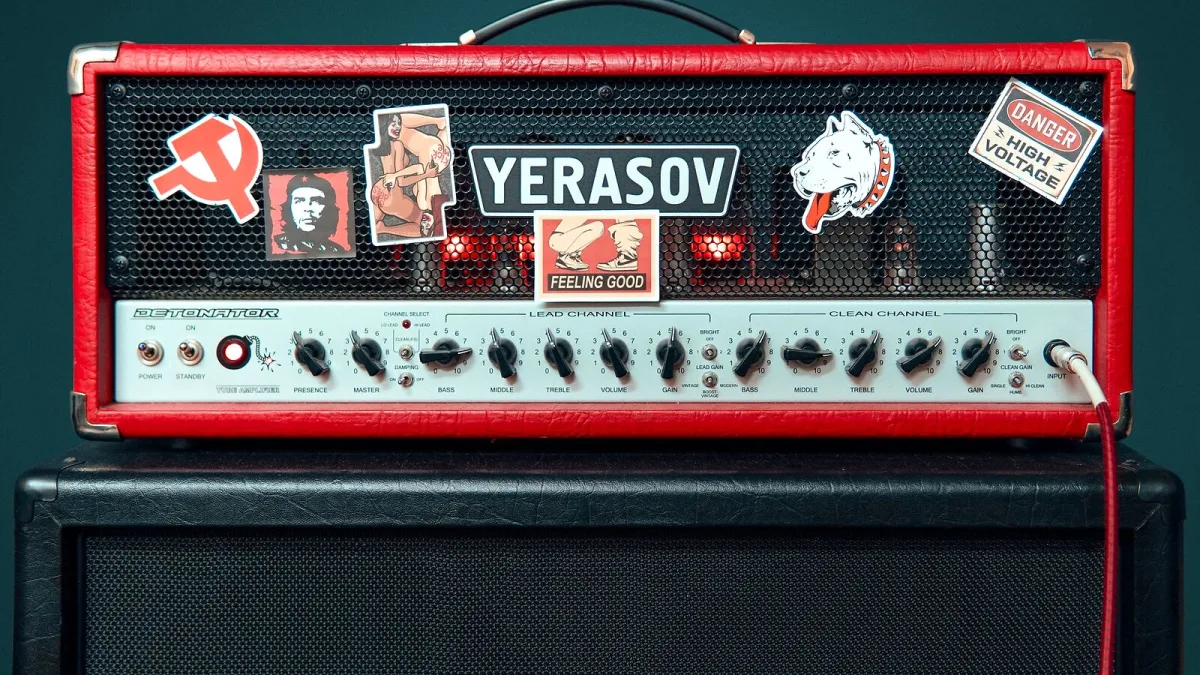
Ask five different musicians what a "powered amplifier" actually is and you will get at least three different answers, and all of them will be correct. It is a genuinely overloaded term in audio gear, which is exactly why it causes confusion at the point of buying. This guide untangles what the phrase actually covers, how the technology works underneath, and the handful of numbers worth actually understanding before you spend anything.
What a Powered Amplifier Actually Does
Whatever form it takes, a power amplifier's job is simple to state: it takes a weak audio signal from a mixer, preamp or instrument and boosts its voltage and current enough to physically move a loudspeaker cone. A typical signal chain looks like this: source, into a preamp or mixer, into the power amplifier, through a crossover, and finally out to the loudspeaker drivers themselves. All powered amplifiers sit at that same point in the chain, even when the packaging around them looks completely different.
Two Meanings You Will Bump Into
In practice, "powered amplifier" covers two genuinely different products, and knowing which one you actually need matters:
| Consideration | Powered (active) speaker | Passive speaker + separate power amp |
|---|---|---|
| Setup | Faster, fewer cables | More components to connect and configure |
| System matching | Amplifier and drivers are factory-matched | You choose the amplifier and speaker pairing yourself |
| Flexibility | Limited if internal electronics fail | More modular — swap the amp without replacing the speakers |
| DSP | Usually built in | Needs a separate processor or amp-side DSP |
| Servicing | Electronics are built into the cabinet | Components can be replaced independently |
Neither option is objectively better — a touring engineer who needs modularity will lean toward separate amps and passive cabinets, while a small venue or mobile DJ will usually value the speed and simplicity of a powered, active speaker instead.
Tube, Solid-State and Class D: What Is Actually Different
The other major fork in powered amplifiers is the technology doing the amplifying itself, and it splits most powered amplifiers into three broad families:
- Tube amplifiers use vacuum tubes in the signal path and are prized, particularly in guitar and bass gear, for their overload behaviour and harmonic distortion when pushed hard. They need more maintenance, including occasional tube replacement.
- Conventional solid-state amplifiers use semiconductors instead of tubes, need no warm-up, and are generally lighter, cheaper to run and lower-maintenance — a common choice where clean headroom and reliability matter more than a particular overdriven character.
- Class D amplifiers use a high-speed switching output stage rather than continuously varying conduction. That is why Class D designs dominate modern PA systems and bass rigs: they are small, light, efficient and produce comparatively little heat for their output.
None of these is universally "best" — a metal guitarist chasing tube compression wants something different from a touring engineer who needs to fly a rack of amplifiers on a lighting truss.
Making Sense of the Wattage Numbers
Wattage claims on powered amplifiers are notoriously slippery, and the headline "peak" figure is usually the least useful one for comparison. A responsible spec sheet separates out:
- Continuous (RMS) power — sustained output under stated test conditions, and the most useful figure for real comparisons.
- Program power — an attempt to reflect real musical material, with its peaks and pauses, usually higher than the continuous figure.
- Peak power — short-duration output that varies enormously by manufacturer's test method, and should never be compared directly between brands.
QSC's K.2 Series powered loudspeakers illustrate how this is properly specified: the manufacturer quotes a peak rating of 1,800 watts Class D for the low-frequency section and 225 watts Class D for the high-frequency section — two separate amplifier channels doing two clearly defined jobs, rather than one vague headline number.
Impedance: The Number That Actually Matters
A powered amplifier must be matched to its speaker load, measured in ohms — typically 4, 8 or 16 ohms in most instrument and PA gear. Lower impedance draws more current from the amplifier, and connecting speakers incorrectly can push the total load below the amplifier's safe rating. Two identical 8-ohm speakers wired in parallel present a combined 4-ohm load, for example — never assume an amplifier rated safe at 4 ohms will also tolerate 2 ohms without checking the manual first.
Our complete buyer's guide to powered amplifiers goes much further into matching an amplifier to a specific speaker safely, and our rundown of common mistakes to avoid covers exactly what goes wrong when that matching is ignored.
The Bottom Line
"Powered amplifier" is really shorthand for a whole family of gear united by one job: turning a weak signal into something with enough electrical muscle to move a speaker safely. Understand the difference between active and passive systems, the amplifier class doing the work, and how to read a wattage spec properly, and the rest of the buying decision gets much easier. If you are just starting out with any of this, our beginner's guide to powered amplifiers is a calmer, more practical place to pick things up.






Comments